

Summary Points
- NASA announced the Artemis III crew on June 9, 2026.
- Crew members include astronauts from NASA and ESA participating in the mission.
- They will demonstrate Orion spacecraft’s docking capabilities during the mission.
- Testing involves American commercial landing systems by Blue Origin and SpaceX.
Artemis III Crew Announced – NASA
NASA has officially named the crew for the Artemis III mission, marking a significant step in lunar exploration. This announcement came on Tuesday, June 9, 2026. The mission aims to return humans to the Moon and test new technologies essential for future Mars exploration.
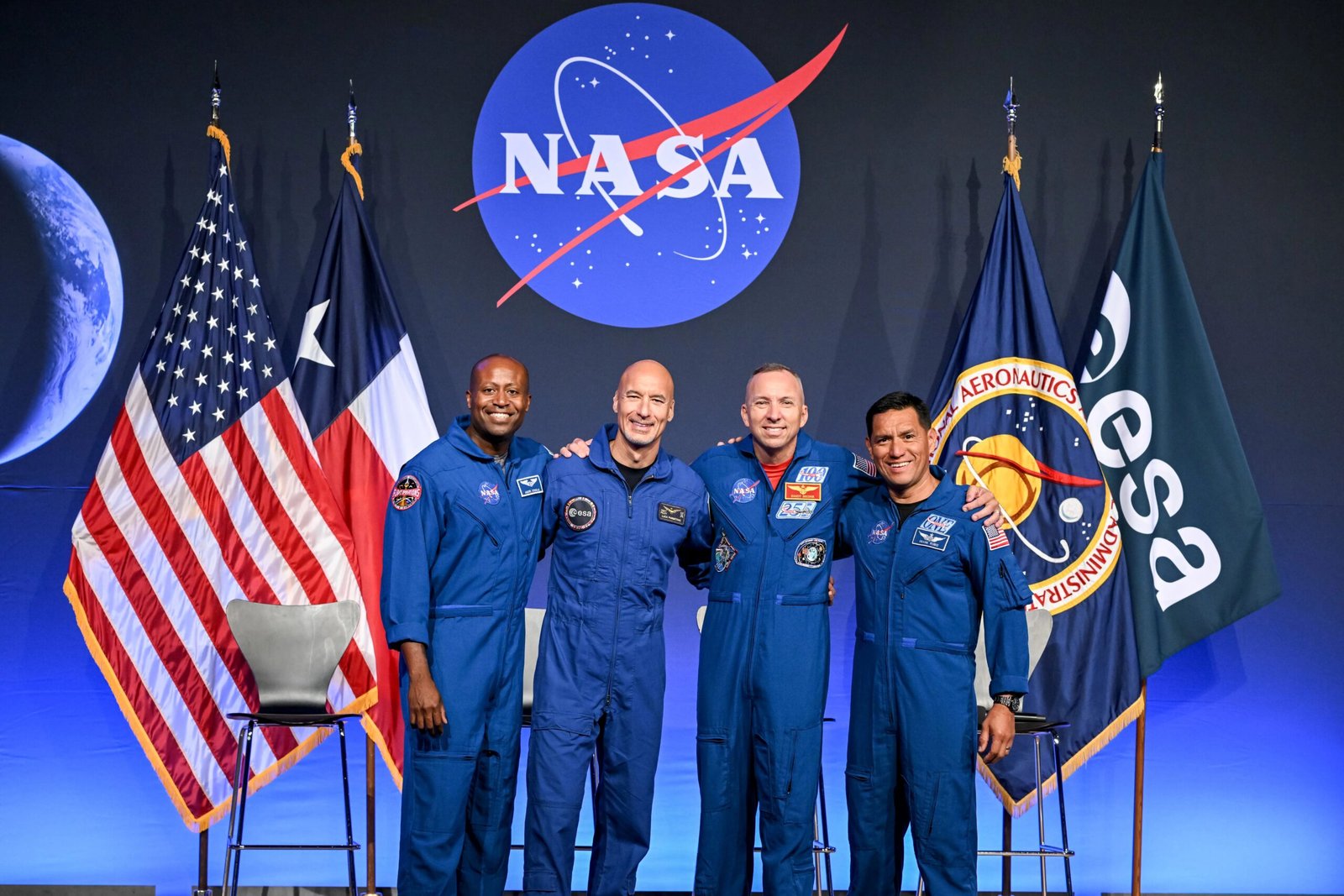
NASA astronaut Andre Douglas, mission specialist; ESA (European Space Agency) astronaut Luca Parmitano, pilot; NASA astronaut Randy Bresnik, commander; and NASA astronaut Frank Rubio, mission specialist will all play vital roles in this historic endeavor. Together, they will demonstrate the Orion spacecraft’s capabilities in rendezvous and docking with test versions of American commercial human landing systems under development by Blue Origin and SpaceX.
Crew Roles and Responsibilities
Each member of the Artemis III crew brings unique expertise. Randy Bresnik, serving as commander, has extensive flight experience and knowledge of orbital operations. His leadership will be crucial for mission success. Andre Douglas and Frank Rubio, as mission specialists, will oversee scientific experiments and operations. Luca Parmitano, the pilot, will focus on navigation and operational functionality.
This mission also highlights international collaboration. Parmitano’s participation underscores the importance of partnerships in space exploration. Such alliances can enhance problem-solving capabilities and resource sharing. As multiple entities work together, they can forge a more robust framework for future missions.
Technology and Practical Applications
Artemis III serves as more than just a return to the lunar surface. It is a test bed for technologies that will play a pivotal role in future deep space missions, including Mars. The Artemis III crew will conduct operations that require precise coordination between the Orion spacecraft and the human landing systems developed by Blue Origin and SpaceX. These tests will evaluate the systems’ functionality and adaptability.
The mission underscores the practical implications of adopting innovative technology. By leveraging commercial partnerships, NASA aims to accelerate advancements in space travel. These collaborations are essential not only for efficiency but also for cost-effectiveness in future missions.
The Artemis III mission promises to advance human spaceflight and inspire future generations. It stands as a testament to collaboration, innovation, and the unyielding spirit of exploration. The world watches as NASA prepares to make history once again.
Continue Your Tech Journey
Stay informed on the revolutionary breakthroughs in Quantum Computing research.
Access comprehensive resources on technology by visiting Wikipedia.
Space
