

Summary Points
- Poland’s government plans to ban students under 16 from using phones and smartwatches during the entire school day, including breaks, with designated storage provided for devices.
- The ban excludes teachers, students with medical needs, and emergencies, and will take effect if approved by parliament and the president by September 1.
- The initiative aims to combat phone addiction and improve focus, following examples from Italy and South Korea, where similar bans have shown positive effects.
- Additionally, Poland approved a bill requiring adult websites to implement age verification systems to restrict access by minors, aligning with measures taken in the UK and the US.
Poland’s Plan to Ban Phones and Smartwatches in Schools
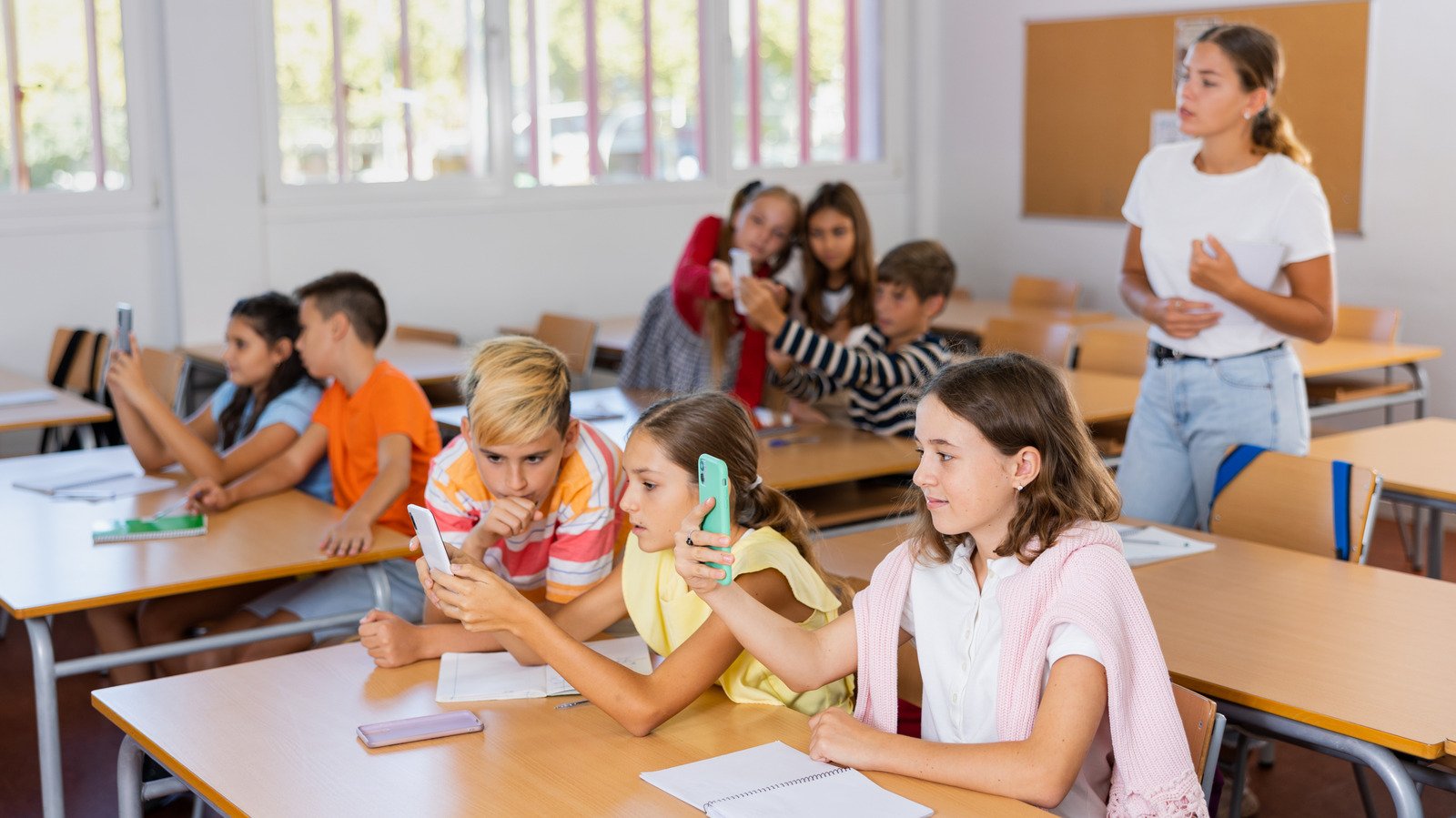
Poland is taking a bold step to improve students’ focus and safety. The government recently approved a new bill that would ban students under 16 from using phones and smartwatches during school hours. This rule aims to reduce distractions and help students concentrate better. The law still needs approval from the country’s parliament and President Karol Nawrocki before it can become official. If approved, the ban will start with the new school year on September 1. During school hours, students will not be allowed to use their devices at all, not even during breaks. Instead, schools must create a designated area where students can leave their devices until it’s time to go home. Teachers and staff are not included in the ban, nor are students with health conditions requiring device use. For example, students who need to monitor blood sugar will still be able to use their devices as needed. Also, students can ask for permission to use their phones in emergencies. This law attempts to strike a balance between keeping students safe and allowing some flexibility in special situations.
Why Is Poland Considering This Ban?
The main reason behind Poland’s decision is to tackle the problem of phone addiction among young people. Prime Minister Donald Tusk explained that the goal is to address the serious issue of dependence on phones and the internet. Excessive phone use can lead to lower concentration, less social interaction, and other problems within school environments. Other countries, like Italy and South Korea, have already taken similar steps. Italy introduced a phone ban in 2024 and extended it to high school students last year. South Korea also started enforcing a ban in March this year. Research in the Netherlands shows that banning phones improved students’ focus and made schools more social and friendly places. Policymakers see Poland’s move as part of a broader effort to create healthier learning environments. They hope that reducing screen time will lead to happier, more engaged students.
Additional Measures for Digital Safety
Besides banning phones, Poland is also working to make online spaces safer for children. The government approved a new law requiring websites with adult content to add age verification systems. This measure aims to keep children from accessing inappropriate material online. Poland’s initiative follows trends seen in other regions, such as the UK, which was the first to require age checks for online pornography in 2019. Over time, many countries and U.S. states have adopted similar rules. These steps show a growing effort to protect young people both inside schools and in the digital world. While some critics worry about privacy and freedom, supporters believe these laws will help young people stay safer and more focused on their studies. In the end, Poland’s approach combines restrictions on devices with stronger online safety measures, aiming to foster a more positive and secure environment for children.
Stay Ahead with the Latest Tech Trends
Learn how the Internet of Things (IoT) is transforming everyday life.
Stay inspired by the vast knowledge available on Wikipedia.
CellphonesV1
