

Summary Points
Britain launched Prospero on October 28, 1971, using its Black Arrow rocket.
It was Britain’s first and only satellite launched on a British-built rocket.
Prospero studied space effects on communications technology and operated until 1973.
Despite antenna damage, it remains in orbit; Skyrora proposed retrieving it.
On this day in space! Oct. 28, 1971: Britain launches its first satellite on a Black Arrow rocket
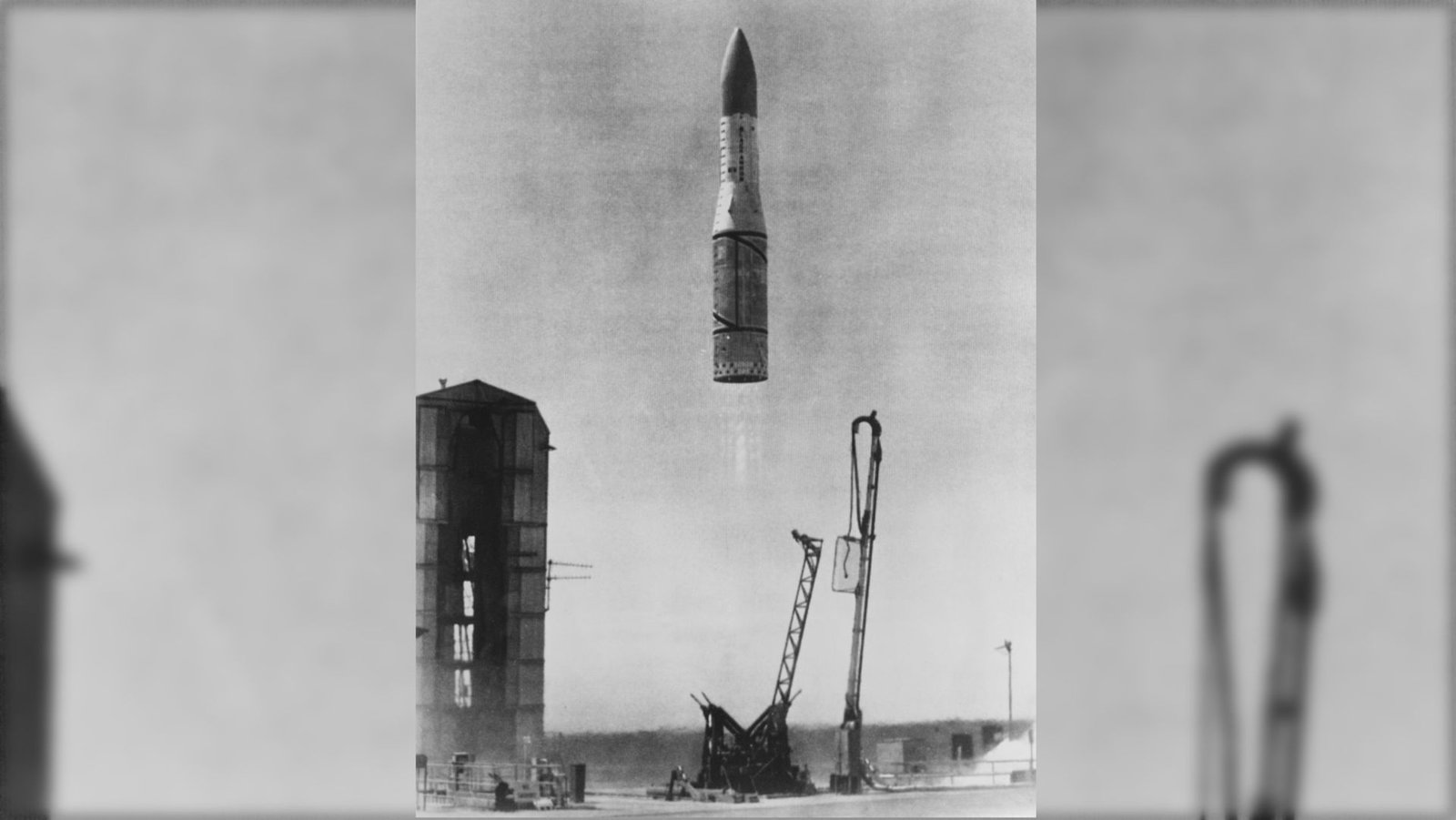
Prospero X-3 launches from the Woomera test range in South Australia on Oct. 28, 1971. (Image credit: Central Press/Hulton Archive/Getty Images)
On Oct. 28, 1971, a British-built rocket carried the satellite Prospero into orbit from the Woomera Range Complex in Australia. The launch marked a milestone for the United Kingdom: Prospero was the first and only British satellite sent into space on a rocket built in Britain.
It was not the country’s first satellite. Earlier British satellites had flown on U.S. rockets. Prospero, also known as X-3, was different because it launched aboard Black Arrow, Britain’s own satellite launcher.
A satellite built to test space technology
The 66-kilogram Prospero was designed to study how the space environment affects communications satellites. Its experiments tested solar cells and telemetry systems, which send data between a spacecraft and ground controllers. A micrometeoroid detector also measured tiny particles in orbit to help assess the risks they posed to spacecraft.
Black Arrow was a three-stage rocket based on the smaller Black Knight research rocket. It stood about 12.87 meters tall. Prospero’s flight was the rocket’s fourth and final mission.
The launch succeeded, but the trip to orbit was not entirely smooth. After separation, the rocket’s final stage struck the satellite and damaged one of its four radio antennas. Prospero continued to function despite the damage. It entered an elliptical orbit ranging from about 522 to 1,300 kilometers above Earth.
A milestone, and the end of a program
Prospero operated until 1973, when regular communications ended. The satellite was contacted at least once a year through 1996, according to the BBC. It remains in orbit today.
The successful flight did not lead to more Black Arrow launches. The program was canceled after four flights, two of which had failed. Prospero therefore stands as a technical achievement and a reminder that a working launch system does not guarantee long-term government support. Britain demonstrated it could build and fly a satellite launcher, but did not continue using the vehicle.
In 2021, Scotland-based space company Skyrora announced plans to retrieve Prospero with a spacecraft tug and guide it back into Earth’s atmosphere. The proposal reflects growing interest in removing old hardware from orbit. It would also require a spacecraft to reach, capture and safely deorbit a satellite that has been there for decades. The announcement was a plan, not a completed recovery.
More than half a century after its launch, Prospero remains a singular entry in British space history: a small research satellite that proved a homegrown rocket could reach orbit, even as the program that built it came to a close.
Stay Ahead with the Latest Tech Trends
Dive deeper into the world of Cryptocurrency and its impact on global finance.
Explore past and present digital transformations on the Internet Archive.
Space
