

Essential Insights
- MIT researchers have developed a solid-state quantum sensor capable of simultaneously measuring multiple physical quantities, overcoming the limitations of traditional single-parameter sensors.
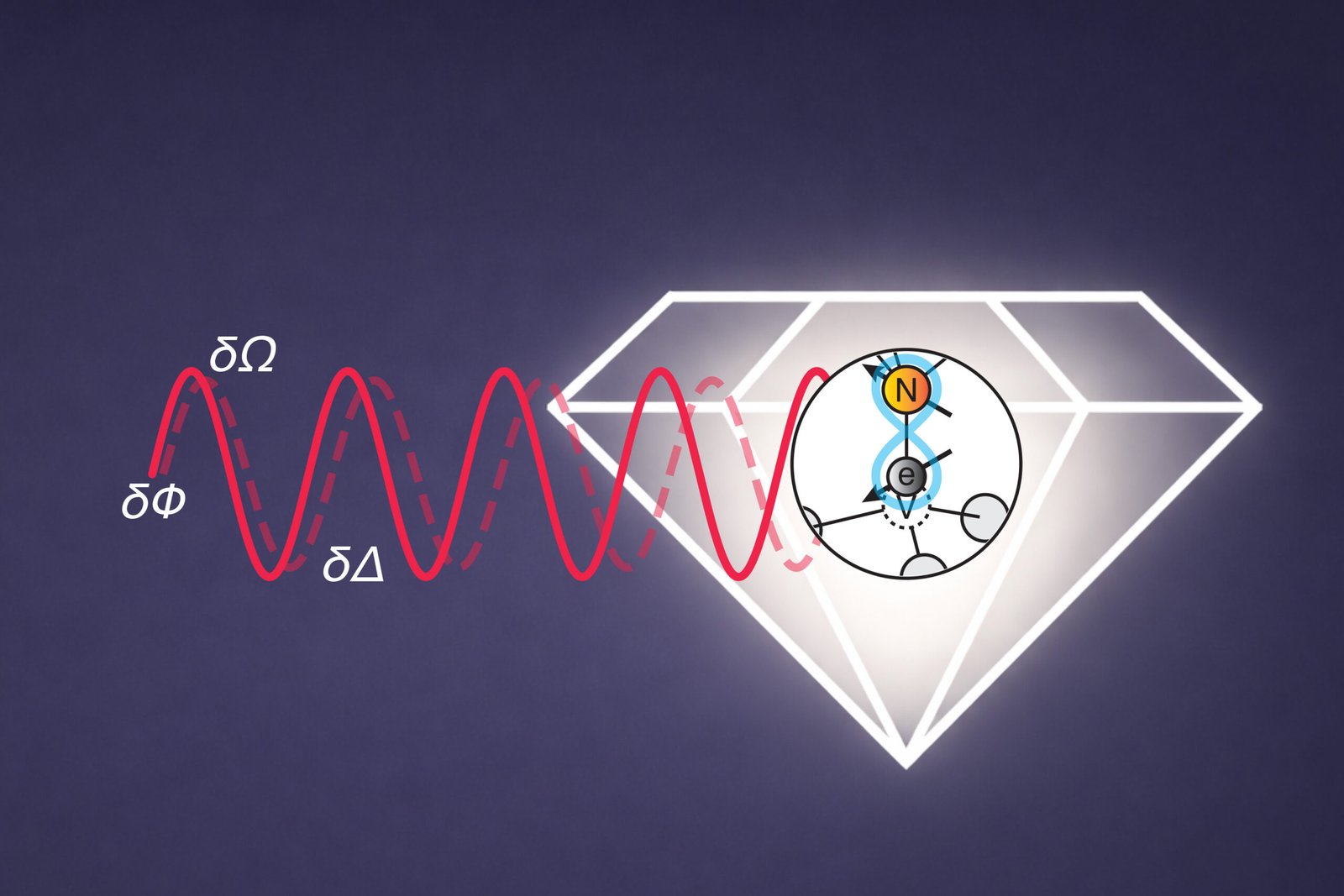
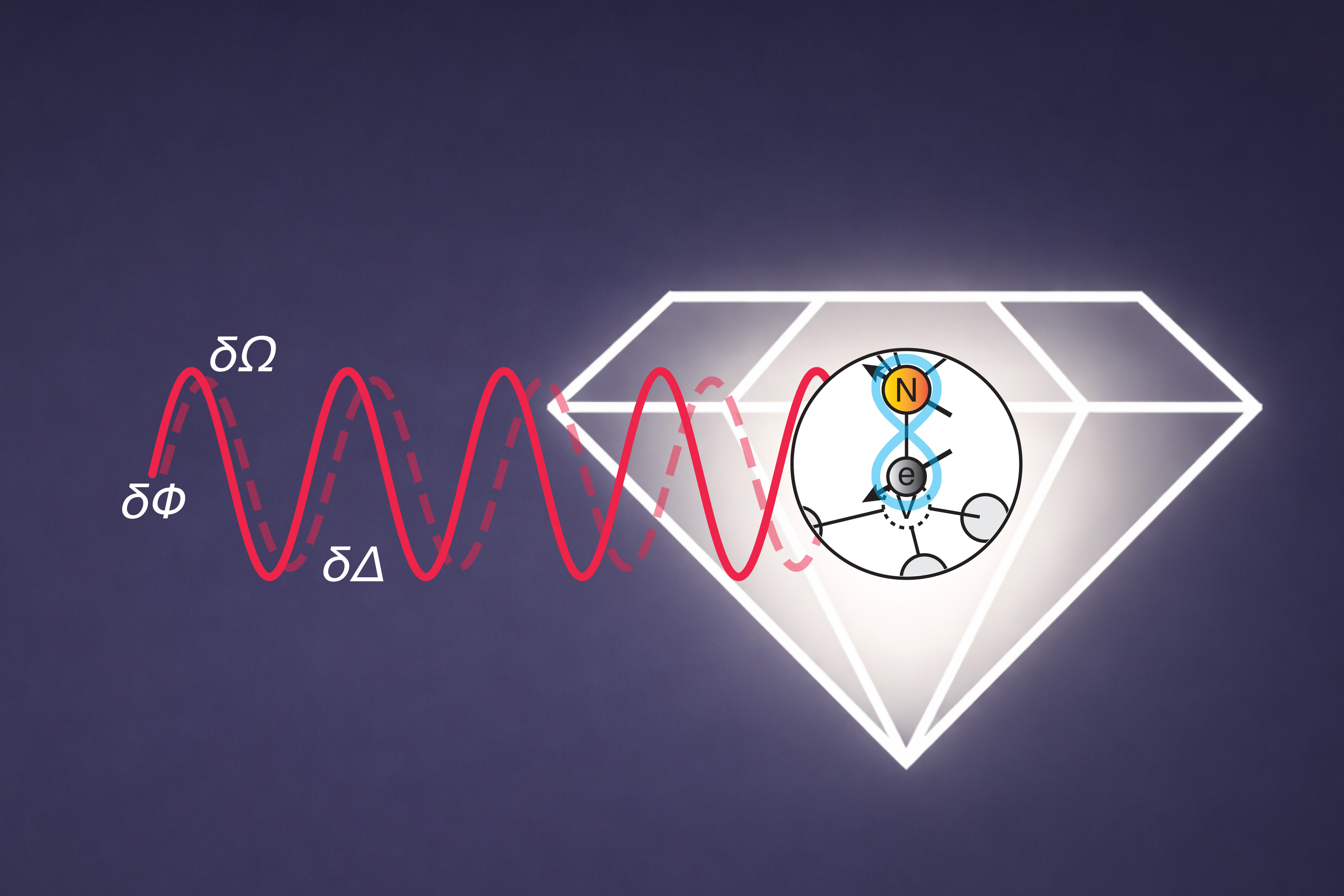
- The breakthrough exploits quantum entanglement between two spins within nitrogen-vacancy centers in diamonds, enabling the joint measurement of parameters like amplitude, phase, and frequency at room temperature.
- This advancement enhances the potential for quantum sensors in biomedical and materials science research, offering higher efficiency and the ability to study heterogeneous systems in real-world conditions.
- Future work aims to improve measurement precision and extend applications to multiple physical effects, paving the way for more comprehensive and practical quantum sensing technologies.
MIT researchers have developed a new way for quantum sensors to measure multiple properties at once. These sensors use advanced quantum effects, like entanglement, to improve their performance. Traditionally, solid-state quantum sensors could only measure one property at a time, such as temperature or magnetic fields. This limitation made it hard to get quick, accurate results when studying complex materials or biological systems.
Now, the team has created a method that allows these sensors to measure three things simultaneously. They used a special type of defect in diamonds called nitrogen-vacancy centers. These defects are sensitive to external effects like magnetic fields and temperature. By leveraging entanglement between two quantum spins, the researchers could track multiple signals at once, speeding up measurements and reducing errors.
This breakthrough is especially useful because it works at room temperature, making it practical for real-world applications. For example, it can help scientists understand how atoms behave inside materials or explore cellular activity in biology. The team believes their approach could lead to more versatile and powerful sensors in the future.
While their current version measures the properties with good accuracy, the researchers aim to improve the precision in upcoming studies. They also see potential for this technology in examining complex, uneven materials where multiple measurements are needed in different spots.
Support for this research came from various organizations, including the National Science Foundation and the Research Grants Council of Hong Kong. The development marks a big step toward more advanced quantum sensors that can enhance scientific discovery across many fields.
Continue Your Tech Journey
Learn how the Internet of Things (IoT) is transforming everyday life.
Discover archived knowledge and digital history on the Internet Archive.
QuantumV1
