

Essential Insights
- Quantum cryptography relies on principles like entanglement and monogamy to secure communication, but these could be undermined by a phenomenon called quantum jamming.
- Quantum jamming involves subtly altering entanglement without detection, potentially disrupting secure quantum communications if the foundational principles (like causality) do not hold in a more fundamental theory.
- Researchers are exploring whether deeper principles beyond quantum mechanics, such as causality or no-signaling, can prevent jamming and ensure security against future physics regimes.
- The study of quantum jamming offers a unique perspective on causation and could reveal whether current quantum rules are fundamental or emergent, possibly requiring new physics to understand and mitigate such phenomena.
Quantum ‘Jamming’ Explores the Truly Fundamental Principles of Nature
Scientists have long recognized that quantum computers could someday crack the encryption protecting much of the digital world. To stay ahead, researchers have developed new, more secure codes that use quantum mechanics principles. However, quantum mechanics itself might not be the final word. If a deeper or different theory replaces it, current cryptography techniques might no longer be safe.
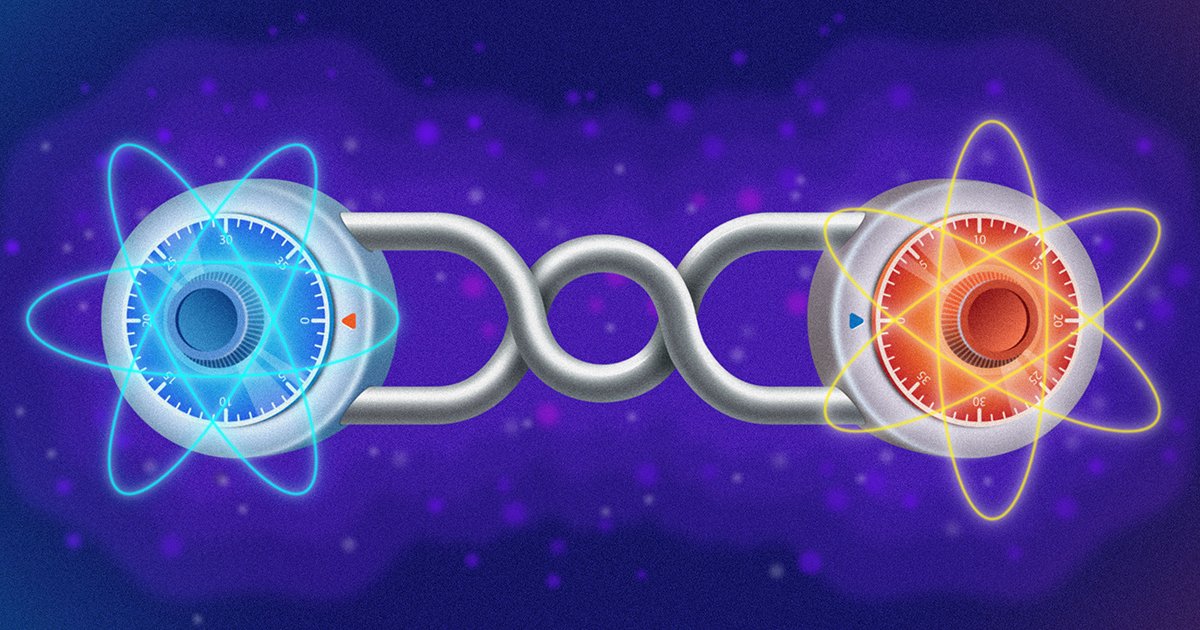
One exciting area of research involves quantum “jamming.” This concept questions what happens if key principles of quantum mechanics, like the “monogamy of entanglement,” are broken. This principle states that entangled particles can’t be shared with others without disrupting their connection. If this ability is compromised, it could allow an outsider to manipulate quantum signals without detection.
The idea of jamming sounds like stage magic. Imagine two people, Alice and Bob, sharing a pair of linked balls—like entangled particles. A magician, Jim, switches the balls without their knowledge. When Alice and Bob check their balls later, they find they are the same color, even though they expected opposite colors. This shows Jim has changed the entanglement secretly. In reality, scientists see similar potential for interference in quantum systems.
Understanding jamming helps scientists explore the limits of quantum mechanics and the nature of cause and effect. Some researchers wonder if there are fundamental principles, beyond current theories, that prevent jamming. Others question whether jamming could occur naturally or artificially in our universe.
Researchers like Ravishankar Ramanathan and Michał Eckstein are actively investigating these questions. They emphasize that, even if jamming does not allow faster-than-light communication, it challenges our understanding of how quantum systems work. The goal is to find new rules that explain what limits or enables such phenomena.
This work is more than a theoretical exercise. By understanding jamming, scientists can improve the security of quantum communication systems. They hope to identify principles that guarantee safety—even if future physics theories evolve or surprise us.
As researchers continue exploring, they are uncovering new insights into the deep principles shaping reality. These discoveries could lead to innovative technologies, ensuring safer digital communication and deepening our grasp of the universe’s fundamental laws.
Expand Your Tech Knowledge
Explore the future of technology with our detailed insights on Artificial Intelligence.
Stay inspired by the vast knowledge available on Wikipedia.
QuantumV1
