

Quick Takeaways
- The Telepathic Instruments Orchid revives vintage chord organs’ charm for $649.
- It simplifies songwriting by offering rich chords without complex theory.
- Built-in sounds and modes enhance creativity, though customization requires extra software.
- Limited polyphony and functionality make it less versatile than other synths.
A Modern Take on a Vintage Classic
In 2017, I bought an old Magnus chord organ off Craigslist for $10. That purchase remains one of my all-time favorite music gear finds. Chord organs let you play full chords with just a button press. This simplicity appeals to aspiring singer-songwriters who want to experiment at home without delving deep into music theory. However, chord organs lost their charm in the ’80s as digital keyboards, like those from Casio, took the spotlight. Enter the Telepathic Instruments Orchid. This device tries to reignite the magic of those retro parlor instruments while infusing modern features.
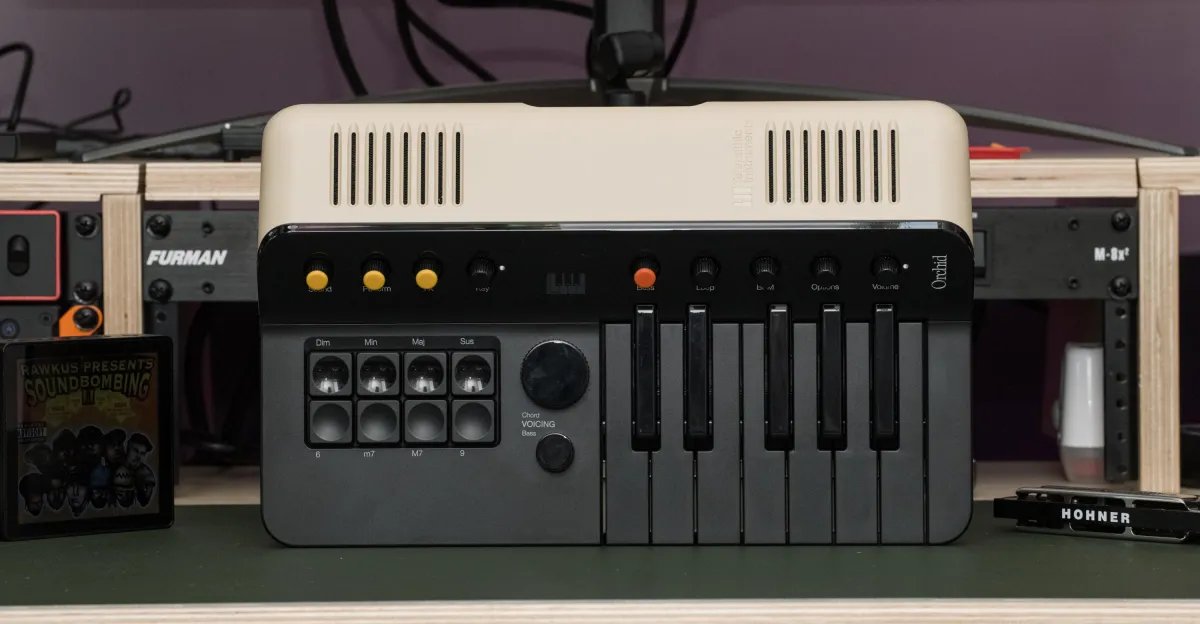
The Orchid’s design draws inspiration from ’60s chord organs, particularly the brown-and-tan aesthetics of brands like Magnus and Bontempi. It even replicates the vintage look with a speaker grill reminiscent of those classic instruments. At a price tag of $649, it represents a premium take on a nostalgic instrument. While traditional chord organs limit you to a set number of button chords, the Orchid’s digital framework offers much broader capabilities. It can theoretically produce any chord in any voicing or scale. This flexibility shifts the focus from technical mastery to creativity, allowing songwriters to concentrate on lyrics and melodies.
Fun and Functional, but Not Without Flaws
The simplicity of the Orchid stands out. It features a one-octave keyboard and buttons for various chord types, from major to diminished. This accessibility makes it user-friendly, even for those with limited music theory knowledge. Plus, its ability to lock into a particular key ensures that whatever you play will sound cohesive. The built-in sounds and performance modes like strum and arpeggiator add excitement, while unique settings like “slop” introduce slight timing imperfections. These features help the Orchid mimic a human touch, contrasting the mechanical precision typical of digital instruments.
Nonetheless, the Orchid has its limitations. Its price may deter some, especially when compared to more extensive synthesizers in the $649 range. Moreover, users cannot manipulate sounds directly on the instrument. To create custom patches, you’ll need to purchase the Pistil software for an additional $99. This cost adds complexity to a device meant to simplify music creation. Lastly, the keyboard’s small size restricts chord playability. Enthusiasts seeking an extensive synthesizing experience should steer clear.
Ultimately, the Orchid excels as a creative tool for singer-songwriters wanting an electronic alternative to traditional instruments. Its retro charm and broad sound options cater to those looking to break free from the acoustic guitar cliché. Yet, the experience may frustrate those expecting deep customization or advanced features. The Orchid serves as a delightful marriage of simplicity and modernity, appealing to those longing for a taste of musical nostalgia.
Discover More Technology Insights
Dive deeper into the world of Cryptocurrency and its impact on global finance.
Discover archived knowledge and digital history on the Internet Archive.
TechV1
