

Essential Insights
TL;DR:
1. Samsung Display unveiled a highly luminous and color-accurate Flex Chroma Pixel OLED capable of reaching 3,000 nits and covering 96% of the BT.2020 color space.
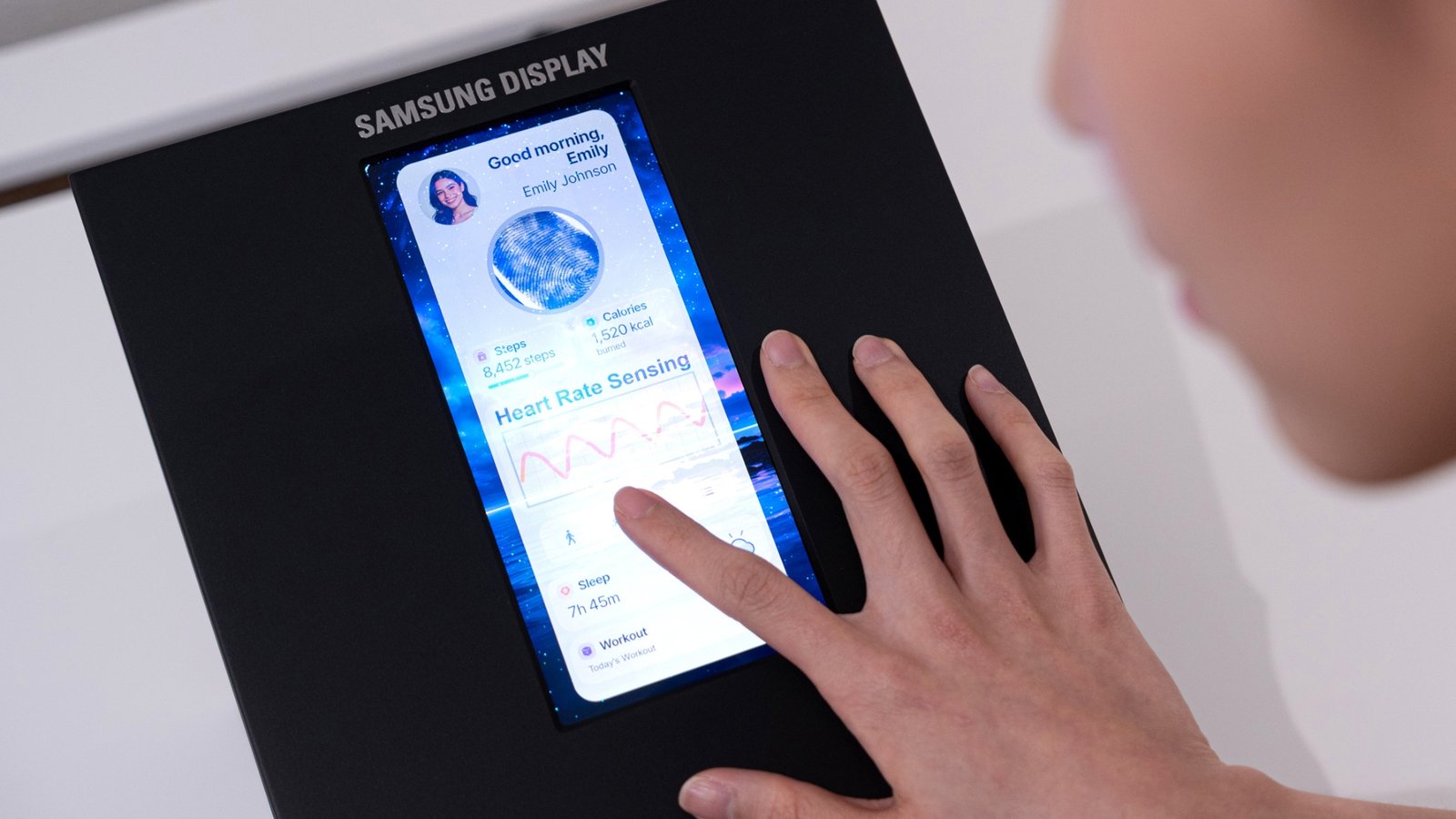
2. They introduced Sensor OLED, a 6.8-inch display that integrates health sensors for measuring vital signs like heart rate and blood pressure without additional hardware.
3. Privacy Display technology is combined with Sensor OLED to conceal sensitive data from side angles while maintaining visibility elsewhere.
Colors and Brightness Reach New Heights
Samsung has introduced a new display technology called the Flex Chroma Pixel OLED. This display aims to make smartphone screens brighter and more colorful than ever. During a recent showcase, Samsung revealed that this panel can reach up to 3,000 nits of brightness. That is incredibly bright and perfect for outdoor use, even on a sunny day. The display also covers 96% of the BT.2020 color space. This means it can show more colors and more accurate colors than most current smartphones.
Samsung achieved this by using new display materials and its own LEAD technology. These advancements allow the screen to be both vibrant and energy-efficient, which is important for battery life. Overall, this new display promises richer colors and better visibility, making smartphones more visually stunning and easier to see outside. This development could impress users who love colorful, lively screens and expect high brightness for outdoor environments.
Smartphones That Double as Health Devices
Another exciting innovation is Samsung’s Sensor OLED. Unlike typical screens, this 6.8-inch display can also measure health data like heart rate and blood pressure. Samsung has been working on this feature for some time, but now the technology is more advanced. It embeds tiny sensors called organic photodiodes directly into the display. These sensors analyze light from the screen itself to monitor blood flow and health metrics.
Despite this added function, Samsung managed to keep the display resolution at 500 PPI. That’s the same level of detail found in flagship smartphones. Combining display pixels with sensors into one layer is technically challenging but now feasible thanks to Samsung’s engineering. Users might soon enjoy phones that serve as health monitors without needing additional gadgets. While the Sensor OLED isn’t ready for shipping yet, it shows how future smartphones could become more integrated with health tracking.
Enhanced Privacy with Future Display Tech
Samsung also introduced privacy features along with these new displays. The Sensor OLED includes a tech called Privacy Display, which is already used in some Galaxy phones. This technology, known as Flex Magic Pixel, helps hide sensitive information when viewed from angles that are not directly in front of the screen. For example, if someone looks at your phone from the side, health data or personal info remains protected.
This privacy feature adds a valuable layer of security in an age where personal data is more vulnerable. It allows users to view sensitive information freely when looking straight at their device, but blocks outsiders from seeing it from the side. As smartphones become more capable, combining health sensors and privacy protections makes these devices more useful and secure. These innovations give a glimpse of what future smartphones might offer—screens that are brighter, more colorful, health-aware, and private.
Continue Your Tech Journey
Learn how the Internet of Things (IoT) is transforming everyday life.
Stay inspired by the vast knowledge available on Wikipedia.
CellphonesV1
