

Fast Facts
- NASA’s WB-57F aircraft flew at 50,000 feet during a solar eclipse.
- The plane followed the eclipse’s path to maximize totality observation time.
- High-res cameras captured the corona above clouds and atmospheric interference.
- Planets Venus, Jupiter, and Mercury were visible during the eclipse.
APOD: 2026 September 5 – Chasing the Moon’s Shadow
A total solar eclipse offers a rare and striking view of the Sun’s corona, the outer atmosphere of the Sun. To capture this breathtaking event, NASA scientists used specialized aircraft to follow the Moon’s shadow as it moved across the Earth. On August 12, a high-altitude research plane took off from off the coast of Iceland with the goal of observing the eclipse from above clouds and atmospheric interference.
Flying in the Shadow of the Moon
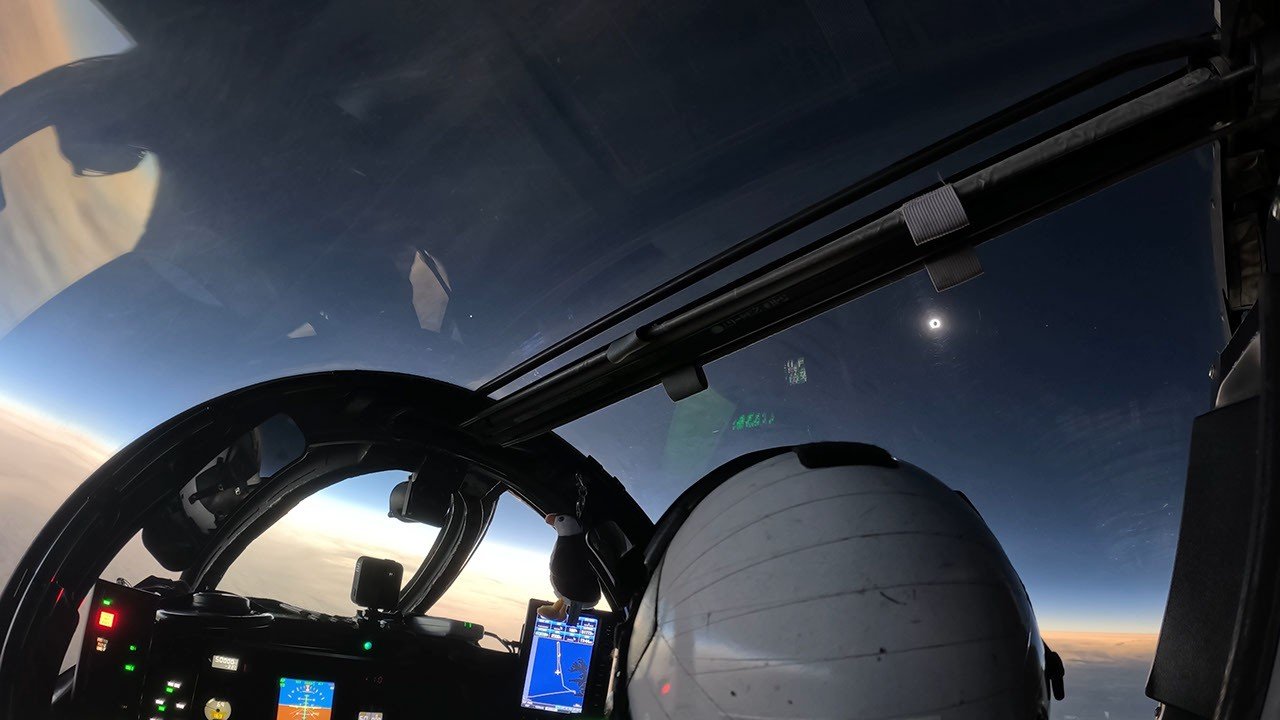
NASA’s WB-57F aircraft soared at 50,000 feet, carefully following the eclipse’s path of totality. This precise navigation allowed the crew to stay in the Moon’s shadow longer than ground-based observers. The plane was equipped with high-resolution cameras, which recorded detailed images and data of the eclipse. Being above the clouds meant clearer views, free from dust, water vapor, and weather that can obstruct observations from the surface. The view from inside the cockpit, captured on video, shows the moment totality begins. Bright solar features called the corona shine out at the edge of the darkened Sun.
In the footage, you can see Venus glowing to the left of the eclipsed Sun. To the right, the planets Jupiter and Mercury are just barely visible. Meanwhile, the horizon below—the part of the Earth outside the shadow—remains bright, showing that the area outside the total eclipse is much less affected by the Moon’s shadow. This unique perspective provides valuable data for scientists studying the Sun’s atmosphere and helps improve eclipse observation technology.
The space agency’s main website has recently moved from apod.nasa.gov to science.nasa.gov/apod, making it easier to access future astronomy updates. The next featured image will focus on the distant, icy world of Pluto, offering viewers another look at the diverse objects in our solar system.
Stay Ahead with the Latest Tech Trends
Stay informed on the revolutionary breakthroughs in Quantum Computing research.
Access comprehensive resources on technology by visiting Wikipedia.
Space
