

Top Highlights
NASA engineers created standardized simulations to predict launch vibrations and shocks.
The workflow identifies spacecraft weaknesses early, improving launch safety and reliability.
Finite element modeling streamlined certification and revealed transport-related shock risks independently.
The reusable tool saves months, shares expertise, and strengthens future mission readiness.
NASA Improves Shock and Vibration Analysis
A rocket does not travel to space in silence or stillness. During launch and ascent, it shakes, flexes and encounters intense vibration and shock. Spacecraft aboard those rockets carry delicate instruments that must keep working through the ride.
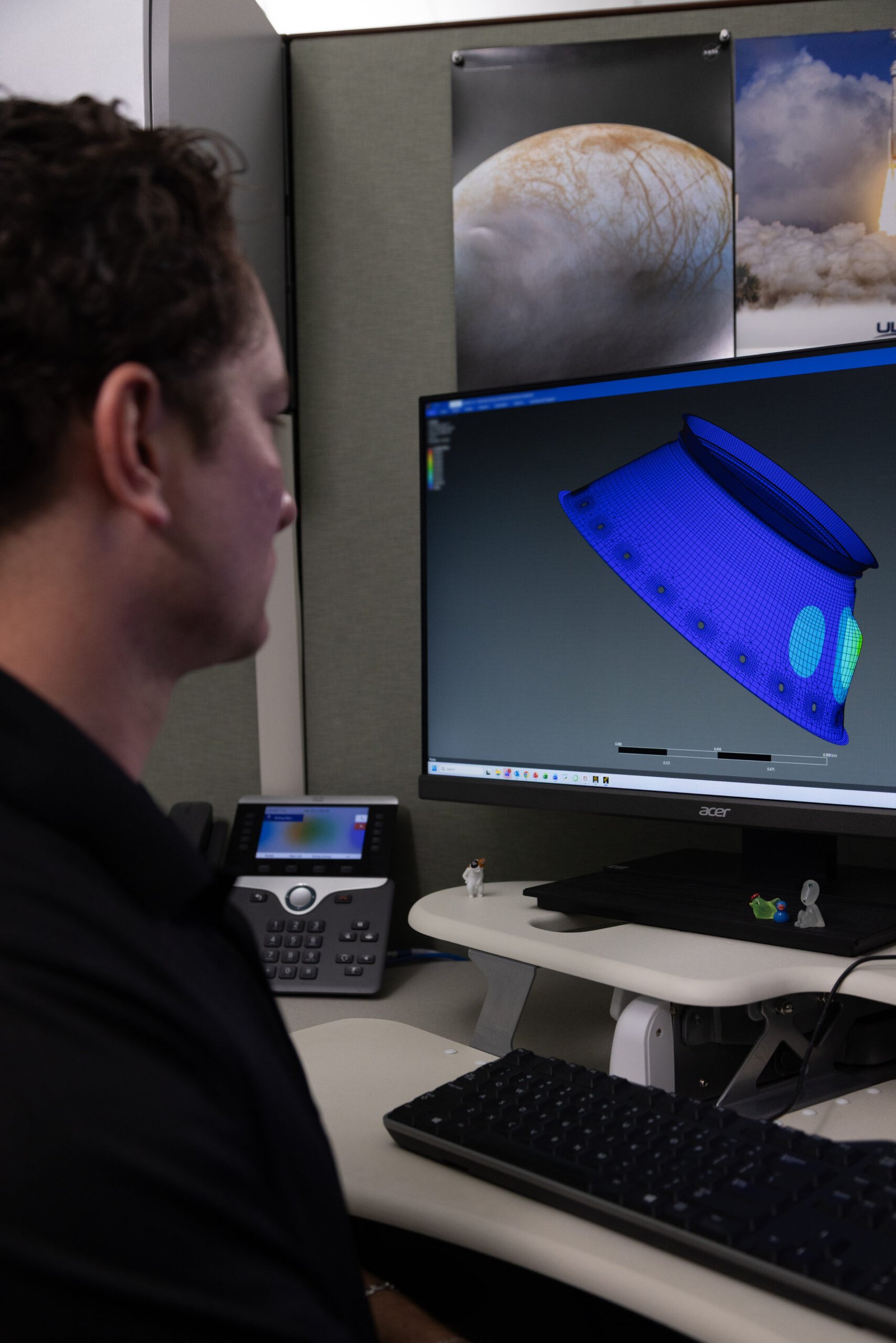
NASA engineers assess those forces before a rocket flies. At Kennedy Space Center in Florida, the Launch Services Program’s Dynamic Environments Group has developed a standardized way to use finite element modeling to study how rockets and spacecraft may respond. The approach can help engineers spot risks earlier and strengthen mission safety.
A clearer view of launch forces
Finite element analysis divides a complex structure into smaller parts. A computer uses those parts to estimate how the full structure may react to specific forces. Engineers can then examine possible weak points before hardware is built or flown.
For decades, dynamic environments engineers often estimated shock and vibration by applying rules of thumb or scaling data from earlier missions. Those methods drew on valuable experience, but they also relied on judgment and simplified comparisons. A standardized modeling workflow gives engineers another way to assess how launch forces may affect each component.
The new workflow uses commercial software that has been available for decades. Its application to this type of dynamic environments analysis is relatively new. The team created a template to guide engineers through modeling vibration profiles and shock conditions. That can make a complicated process easier to repeat and reduce the time spent rebuilding workflows that engineers use only occasionally.
The software does not replace physical testing. Instead, models and test results can inform one another. Engineers use analysis to understand likely behavior, then compare their findings with available test data and flight requirements.
Analysis that supports mission decisions
The team first applied the workflow while certifying a commercial launch provider’s rocket for a NASA mission. The provider supplied vibration test results, but not shock testing. NASA’s Dynamic Environments Group determined that shock analysis was also needed.
Using its template, the group compared possible conditions, visualized how the structure could respond and examined questions that previously would have required extensive manual modeling. The analysis helped the team verify the provider’s testing results against flight environments and revealed additional insight into shock during transport.
That matters because spacecraft and rockets are built to withstand vibration and shock, but repeated or severe forces can still cause wear or contribute to failure. Engineers define the expected random vibration and shock levels, then verify that hardware has been tested against those conditions. The aim is to protect equipment and support its reliability over time.
Modeling also gives engineers a way to examine complex behavior that may not be obvious from a test result alone. The team says the workflow has already saved months by allowing NASA engineers to conduct analysis independently rather than wait for outside reports or data. It has also helped identify risks that might otherwise have gone unconsidered.
There are practical limits. A simulation is an estimate, not a flight. Its usefulness depends on the quality of the model, the assumptions behind it and how well the analysis aligns with physical test data. Standard procedures can make work more consistent, but engineers still need to interpret results and check them against real hardware and mission requirements.
The workflow can also help preserve knowledge. A shared template gives engineers a common starting point, supports training and makes it easier to refine assessments as new flight data becomes available. That could help the team build proficiency with modeling tools while improving coordination.
NASA’s Launch Services Program manages rockets that carry spacecraft into orbit and beyond, including weather satellites, space telescopes and Mars rovers. Improving how engineers assess launch stresses is one way the program works to reduce uncertainty before liftoff. Once a rocket leaves the pad, most problems cannot be fixed. Better analysis on the ground gives mission teams more time to find and address them.
Continue Your Tech Journey
Stay informed on the revolutionary breakthroughs in Quantum Computing research.
Discover archived knowledge and digital history on the Internet Archive.
Space
