

Fast Facts
-
Media Teleconference: NASA will discuss its upcoming Sun and space weather missions, IMAP and the Carruthers Geocorona Observatory, in a teleconference on September 4 at 12 p.m. EDT.
-
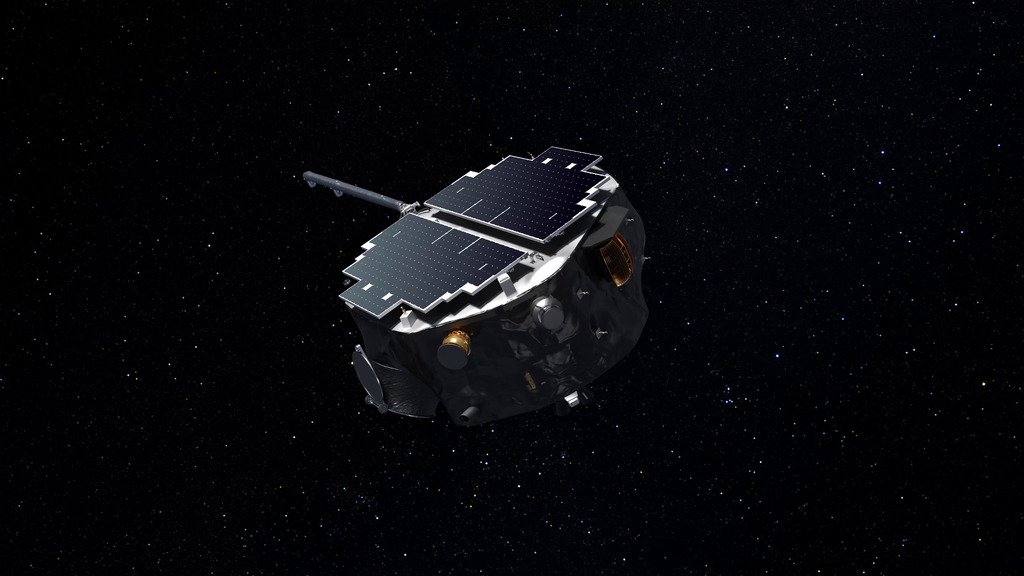
IMAP Mission Goal: The IMAP mission will map the heliosphere’s boundaries, enhancing our understanding of solar wind interactions and providing real-time monitoring of hazardous space weather.
-
Carruthers Observatory: The Carruthers Geocorona Observatory will image Earth’s exosphere’s ultraviolet glow to study the impact of solar weather on our planet’s atmosphere.
-
Launch Details: Both missions are set to launch on a SpaceX Falcon 9 rocket from Kennedy Space Center on September 23, alongside NOAA’s SWFO-L1 for monitoring solar wind disturbances.
NASA Invites Media to Discuss New Missions to Map Sun’s Influence
NASA has scheduled a media teleconference for 12 p.m. EDT on Thursday, Sept. 4. The event will highlight two important missions: the Interstellar Mapping and Acceleration Probe (IMAP) and the Carruthers Geocorona Observatory. Both missions aim to launch no earlier than Tuesday, Sept. 23.
The IMAP mission will chart the boundaries of the heliosphere, the protective bubble formed by the Sun’s wind. This mission holds promise for understanding how our solar system interacts with interstellar space. Furthermore, IMAP will provide near real-time observations of solar wind and energetic particles. These particles can pose risks to spacecraft and technology, especially as missions explore farther into space during the Artemis campaign.
Meanwhile, the Carruthers Geocorona Observatory will capture images of Earth’s outer atmosphere—specifically, its ultraviolet glow. This data will enable scientists to better understand how solar activity affects our exosphere and, ultimately, our planet. Notably, the first observation of this glow occurred during the Apollo 16 mission, using a telescope designed by George Carruthers.
The audio from the teleconference will stream live on NASA’s website. Participants include experts from NASA and leading academic institutions, who will share insights on the missions and their significance.
To join the teleconference, media representatives must RSVP by 11 a.m. on Sept. 4. Additionally, the launch will take place from Launch Complex 39A at NASA’s Kennedy Space Center in Florida, alongside the NOAA’s Space Weather Follow On mission.
The IMAP mission involves an international collaboration, featuring 27 partner institutions. The Johns Hopkins Applied Physics Laboratory built the spacecraft and will operate the mission. Meanwhile, the Carruthers Observatory is led by experts from the University of Illinois Urbana-Champaign, with instruments designed by the University of California, Berkeley.
As these missions unfold, they promise to advance technology and expand our understanding of both solar and planetary atmospheres. The knowledge gained could enhance our resilience against space weather events that impact satellite technology and global communications. For more details on IMAP, visit NASA’s official site.
Expand Your Tech Knowledge
Dive deeper into the world of Cryptocurrency and its impact on global finance.
Access comprehensive resources on technology by visiting Wikipedia.
SciV1
