

Fast Facts
- Scott Wray’s spacewalk passion began as a child with imaginative play.
- He’s shaped EVA training at NASA for over 16 years.
- Wray’s journey included hands-on co-op experiences during aerospace engineering studies.
- As Artemis EVA lead, he prepares astronauts for lunar exploration challenges.
The Journey of a Spacewalk Pioneer
Scott Wray’s journey into the cosmos began at the tender age of 6. With a makeshift tent resembling a lunar lander, he transformed his bedroom into a launchpad for imaginary adventures. “I would lie on my back with my feet propped up on a pillow as I imagined going through a launch countdown sequence,” he recalls. That childhood dream has blossomed into a 16-year career at NASA’s Johnson Space Center, where Wray now leads the training for spacewalks, or Extravehicular Activities (EVAs), for the Artemis program.
His fascination with space evolved into a robust passion for engineering. LEGO models and aircraft design books filled his childhood years. An eye-opening week at Space Center Houston solidified his aspirations. Meeting former NASA Flight Director Gene Kranz inspired him profoundly. “I was so inspired by the facilities and the incredible history of this place, I knew that I had to work here someday,” he said.
During his college years at Embry-Riddle Aeronautical University, Wray entered NASA’s Contractor Co-op Program. This experience allowed him to observe the collaboration between EVA teams and astronauts as they prepared to conduct spacewalks. One pivotal moment came during a mission to address a problem on the shuttle Atlantis. Real-time troubleshooting underscored his affinity for hands-on problem-solving and led him to focus on EVA work.
Wray later drew parallels between his EVA experiences and his past as a dog mushing guide in Alaska. “I learned how to make do with the tools you have and make repairs to a broken sled miles away from home,” he said. This adaptability is essential for the EVA team, especially when hardware fails. “Some of our best moments as a team come when we devise real-time solutions,” he stated.
Preparing for Lunar Exploration
Fast forward to the present, Wray has taken the helm as the Artemis EVA training lead. This role involves preparing astronauts for lunar missions—a task not undertaken in over five decades. “It’s going to be a completely new spacesuit, new vehicles, new environment,” he noted. Training must extend beyond traditional spacewalk techniques to include scientific skills.
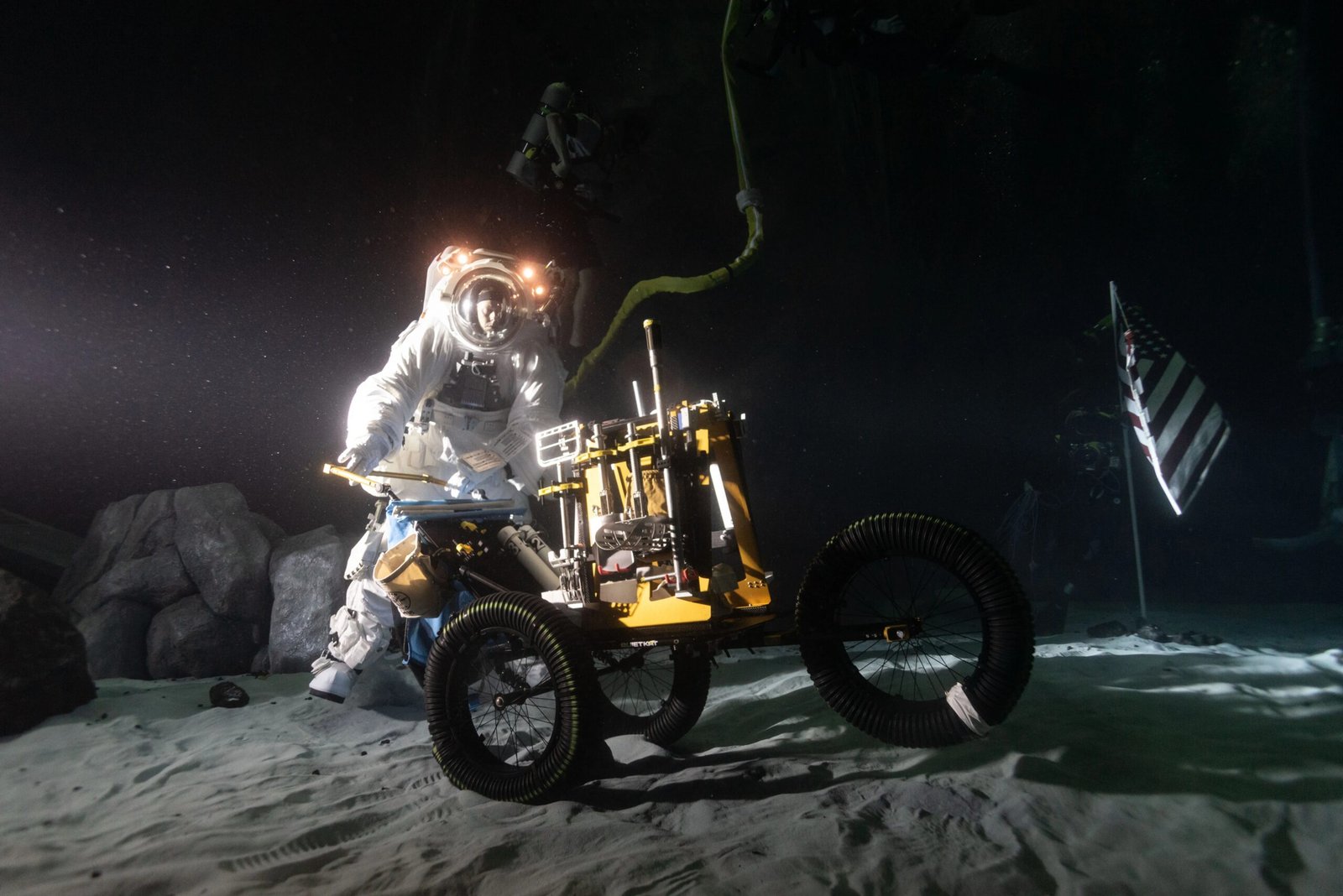
Astronauts will not only perform EVAs but also engage in scientific research on the Moon’s surface. Training encompasses geology topics like impact cratering and sample collection—a critical component of modern space exploration. Environments for training include the Neutral Buoyancy Laboratory and virtual reality setups that mimic lunar conditions.
Wray’s commitment to the program exemplifies the importance of seamless integration between science and operational training. “Spearheading this effort allows me to ensure every element is integrated into a program that will prepare astronauts for success on the Moon and beyond,” he explained. This work is seen not merely as a preparatory measure, but as foundational for the next chapters of human exploration, such as potential missions to Mars.
While juggling these extensive responsibilities, Wray also embraces new ventures outside the confines of his office. Inspired by his daughter, he took up acting classes, culminating in performances like starring in “Something Rotten.” “I never would have thought I’d have so much fun acting, singing, and dancing on stage,” he reflected. This balance of professional endeavors and personal growth enriches his life while further fueling his commitment to space exploration.
Wray is driven by the potential impact of the Artemis missions. “Returning to the Moon is something I’ve dreamed about since I was a kid,” he said. The Artemis program is not only about revisiting our celestial neighbor; it’s about forging pathways for the future of humanity in space.
Continue Your Tech Journey
Stay informed on the revolutionary breakthroughs in Quantum Computing research.
Explore past and present digital transformations on the Internet Archive.
Space
