
Close Menu
    Facebook X (Twitter) Instagram
    Tuesday, September 8
    Top Stories:
    • Tencent’s Strategic Shift: Bilibili Debt Swap Fueled by AI Insights
    • NewBiologix and Synastra Collaborate to Revolutionize Duchenne rAAV Production
    • China’s AI Giants: Maximizing Impact and Compute Efficiency
    Facebook X (Twitter) Instagram Pinterest Vimeo
    IO Tribune
    • Home
    • AI
    • Tech
      • Gadgets
      • Fashion Tech
    • Crypto
    • Smart Cities
      • IOT
    • Science
      • Space
      • Quantum
    • OPED
    IO Tribune
    Home » Double-Zoom: Unveiling Hidden Radiation Around a Distant Black Hole
    Space

    Double-Zoom: Unveiling Hidden Radiation Around a Distant Black Hole

    Staff ReporterBy Staff ReporterAugust 27, 2025No Comments3 Mins Read
    Share Facebook Twitter Pinterest LinkedIn Tumblr Reddit Telegram Email
    Share
    Facebook Twitter LinkedIn Pinterest Email

    Top Highlights

    1. Groundbreaking Discovery: Astronomers led by Matus Rybak discovered radiation from a quasar’s core in galaxy RXJ1131-1231, utilizing Einstein’s theory of gravitational lensing, enhancing visibility of distant astronomical phenomena.

    2. Double Zoom Effect: The combination of macrolensing and microlensing enabled insights into the quasar’s behavior, effectively providing a “double magnifying glass” that revealed intricate details of the quasar otherwise hidden from view.

    3. Unique Radiation Flickering: The quasar displayed unprecedented flickering in millimeter wavelength radiation, indicating the presence of a hot, magnetic corona surrounding the supermassive black hole.

    4. Future Research Goals: The team plans to continue their exploration using the Chandra X-ray telescope to deepen understanding of supermassive black holes and their impact on surrounding galaxies.

    Astronomers Discover New Insights Around Distant Black Hole

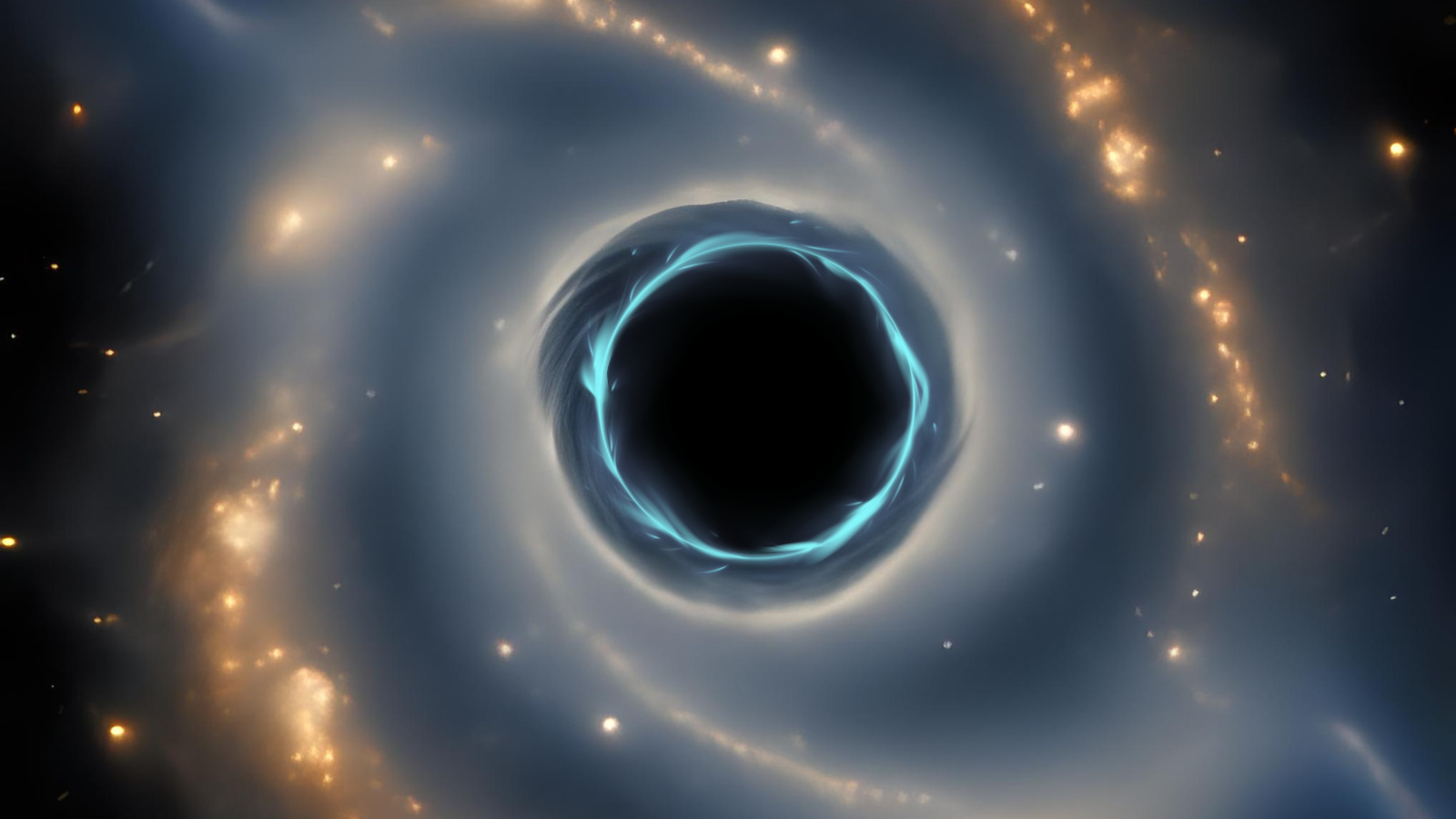
    Astronomers have made a groundbreaking discovery regarding a distant supermassive black hole. This revelation stems from a theory proposed by Albert Einstein over a century ago. Recently, researchers examined the galaxy RXJ1131-1231, located about 6 billion light-years from Earth. They focused on its core, where a quasar and a supermassive black hole reside.

    Initially, scientists sought to identify cold gas within the galaxy. However, they encountered a phenomenon known as gravitational lensing. This effect occurs when a massive object distorts spacetime, causing light from more distant sources to bend. In this case, RXJ1131-1231 appeared three times larger than its actual size due to this warping effect.

    Moreover, the researchers observed a less extreme type of lensing called microlensing. This happened when a star positioned between the galaxy and the observers magnified the galaxy’s light even further. Their findings led to a remarkable “double zoom” effect, revealing previously hidden details.

    While studying RXJ1131-1231, the team monitored brightness variations over several years. They noticed that the quasar fluctuated in millimeter wavelengths, indicating a unique environment. Typically, this kind of radiation signals calm particles, but here it suggested the presence of a hot, magnetically charged region surrounding the black hole.

    The researchers believe this area, referred to as a corona, plays a crucial role in the behavior of matter near supermassive black holes. Importantly, this study marks the first time scientists have analyzed microlensing effects on millimeter radiation.

    Looking ahead, the team plans to use the Chandra X-ray telescope for further investigations. They aim to measure temperature and magnetic field strengths near the black hole, enhancing our understanding of how supermassive black holes interact with their galaxies.

    This research not only deepens our grasp of cosmic phenomena but also holds potential implications for technological advancements. As scientists refine their tools and methods for studying distant objects, they pave the way for innovations that may improve our quality of life on Earth.

    Stay Ahead with the Latest Tech Trends

    Stay informed on the revolutionary breakthroughs in Quantum Computing research.

    Discover archived knowledge and digital history on the Internet Archive.

    SciV1

    Cosmos NASA Research Space VT1
    Share. Facebook Twitter Pinterest LinkedIn Tumblr Email
    Previous ArticleFlawless Moments: Stunning Professional Phone 3 Samples!
    Next Article SOL Price Set to Surge After 36-Day Standoff: Analyst Insights
    Avatar photo
    Staff Reporter
    • Website

    John Marcelli is a staff writer for IO Tribune, with a passion for exploring and writing about the ever-evolving world of technology. From emerging trends to in-depth reviews of the latest gadgets, John stays at the forefront of innovation, delivering engaging content that informs and inspires readers. When he's not writing, he enjoys experimenting with new tech tools and diving into the digital landscape.

    Related Posts

    Space

    Heat Trap: How Manufactured Homes Put Lives at Risk

    September 8, 2026
    AI

    Bridging Research and Policy on Capitol Hill

    September 8, 2026
    Quantum

    Quantum Computers Surpass Classical Limits in Breakthrough Test

    September 8, 2026
    Add A Comment

    Comments are closed.

    Must Read

    Heat Trap: How Manufactured Homes Put Lives at Risk

    September 8, 2026

    Bridging Research and Policy on Capitol Hill

    September 8, 2026

    Quantum Computers Surpass Classical Limits in Breakthrough Test

    September 8, 2026

    Kinéis & Netmore Launch Hybrid Satellite IoT

    September 8, 2026

    Reset Your iPhone Camera Settings in Easy Steps

    September 8, 2026
    Categories
    • AI
    • Crypto
    • Fashion Tech
    • Gadgets
    • IOT
    • OPED
    • Quantum
    • Science
    • Smart Cities
    • Space
    • Tech
    Most Popular

    Early Walking Changes Signal Onset of Senior Dog Dementia

    June 27, 2026

    IoT Contract Wins – May 2026

    June 9, 2026

    The Canvas of Code: How AI is Redefining Creativity

    February 26, 2026
    Our Picks

    This Wild Accessory Made My iPhone Think It Was a BlackBerry!

    August 14, 2026

    Chinese chip pioneer urges focus on practical breakthroughs over 2nm hype

    May 12, 2026

    Galaxy Z Flip 8: Will It Snooze on Major Camera Upgrades?

    January 14, 2026
    Categories
    • AI
    • Crypto
    • Fashion Tech
    • Gadgets
    • IOT
    • OPED
    • Quantum
    • Science
    • Smart Cities
    • Space
    • Tech
    • Privacy Policy
    • Disclaimer
    • Terms and Conditions
    • About Us
    • Contact us
    Copyright © 2025 Iotribune.comAll Rights Reserved.

    Type above and press Enter to search. Press Esc to cancel.