

Quick Takeaways
- SpaceX is testing the next Starship vehicle, Ship 40, for upcoming missions.
- A recent static fire confirmed the Raptor 3 engines’ functionality for flight.
- Starship V3 is the largest version, designed for full reusability and upgrades.
- NASA contracted SpaceX for lunar landings, requiring multiple refueling flights.
### Starship’s Static Fire Test: Igniting the Future
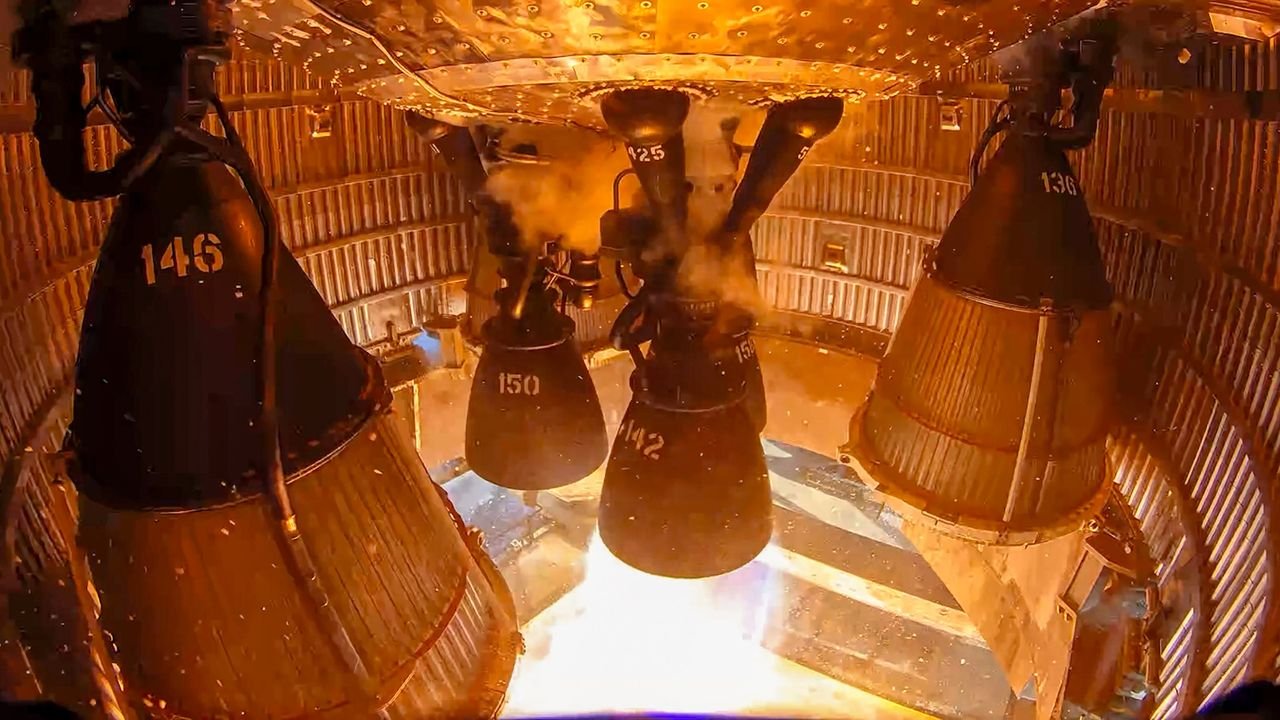
SpaceX’s latest innovation, Ship 40, recently grabbed headlines with its first static fire test at the Massey test site in Starbase, Texas. This test involved a 15-second burn of one central Raptor 3 engine, confirming that critical systems are functioning correctly in preparation for its upcoming Flight 13 demonstration mission. A video of this momentous event was shared on social media, showcasing SpaceX’s continuous advancements in rocket technology.
Starship is a towering 408-foot rocket designed for a range of missions, including lunar exploration and eventual interplanetary travel. The vehicle boasts a complete reusability feature, setting it apart from traditional launch vehicles. Ship 40 is equipped with six Raptor 3 engines: three for sea-level operation and three designed for the vacuum of space. During ascent, all six engines engage, but only one sea-level engine is used for landing, underlining the engineering sophistication SpaceX builds into its designs.
### A Look Ahead: The Artemis Program and Beyond
The static fire test with Ship 40 signifies meaningful progress toward future flight campaigns. SpaceX will conduct further tests involving all six Raptor engines on Ship 40 alongside the 33 engines on the Super Heavy booster. Details regarding Flight 13 remain sparse, but plans to launch before the summer ends are in motion.
As a pivotal player in NASA’s Artemis program, SpaceX has been contracted to utilize Starship as a lunar lander. This mission requires at least 15 refueling flights to ensure successful lunar landings. The first of these missions, Artemis 4, is slated for late 2028. While the current spacecraft has not yet reached orbit in its prior tests, subsequent missions are expected to showcase its full capabilities.
Spaces like low Earth orbit can be achieved with onboard fuel after Super Heavy propels the rocket through the atmosphere. However, traveling beyond this orbit requires additional fuel capabilities—an essential feature yet to be fully tested by SpaceX.
As the countdown to future launches ticks away, public and industry interest builds. SpaceX’s continuous improvements reflect a commitment to advancing rocket technology and expanding human possibilities in space exploration.
Discover More Technology Insights
Learn how the Internet of Things (IoT) is transforming everyday life.
Access comprehensive resources on technology by visiting Wikipedia.
Space
