

Top Highlights
- Mexico City is sinking at alarming rates, up to 14 inches yearly.
- NISAR satellite tracks Earth surface changes with innovative dual-frequency radar.
- Groundwater depletion and urban weight cause severe subsidence-related damage.
- NISAR’s measurements will improve understanding of global subsidence and environmental changes.
Mexico City is facing a serious issue: it is sinking, and satellite images reveal the alarming speed of this process. The NASA–ISRO Synthetic Aperture Radar (NISAR) satellite, launched on July 30, 2025, plays a critical role in monitoring these changes. NISAR uses an advanced dual-frequency band radar to track surface alterations such as ground subsidence. With the ability to monitor deviations as precise as one centimeter, NISAR is a game-changer in the field of geospatial analysis.
### Understanding the Causes of Subsidence
The reason for Mexico City’s subsidence can be traced back to its geographical makeup. Much of the city sits above an aquifer formed by an ancient lakebed. Groundwater is pumped from this aquifer to support the needs of around 20 million residents. The weight of the city’s expanding infrastructure further compresses the sedimentary layers below. It has been known for nearly a century that the city sinks at a rate of up to 14 inches (35 centimeters) per year. This rapid subsidence poses significant risks to buildings and vital infrastructure, such as the Mexico City Metro system.
The NISAR satellite not only monitors subsidence but also tracks changes in other regions vulnerable to environmental challenges. Craig Ferguson, deputy manager of NISAR at NASA, emphasizes the satellite’s capabilities in observing land subsidence in areas where vegetation complicates detection. The technology behind NISAR includes both L-band radar, sensitive to bedrock changes, and S-band radar, which detects variations in vegetation. This dual functionality enhances its capacity to address multiple environmental concerns.
### Impacts and Future Implications
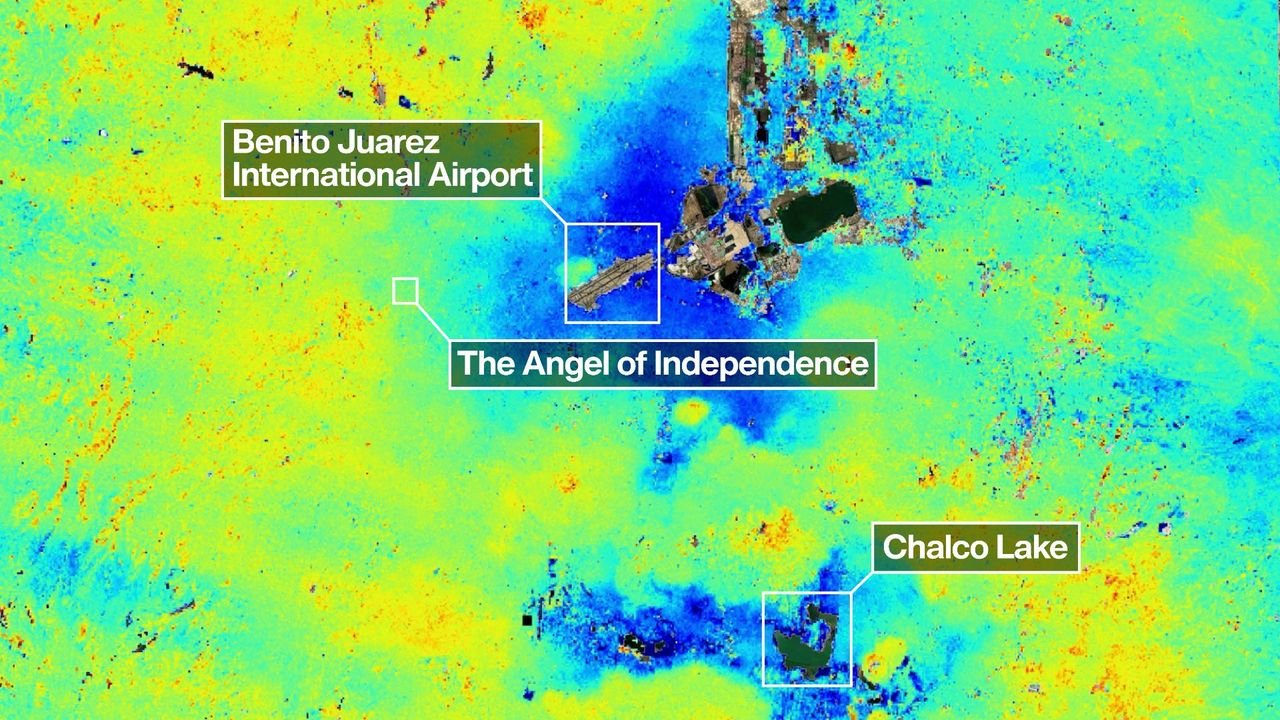
Satellite imagery from NISAR shows colorful visualizations that represent ground shifts. Dark blue indicates areas that have subsided more than 0.5 inches (2 cm) between October 2025 and January 2026. Yellow and green areas signal residual noise, which is expected to diminish as NISAR collects more data. Such observations affirm the satellite’s operational reliability and provide essential insights into the dynamics of subsidence.
As one of the fastest-sinking capitals globally, Mexico City serves as an ideal testing ground for NISAR’s capabilities. The city’s iconic Angel of Independence monument has required the addition of 14 new steps since its construction in 1910, highlighting the long-term impact of subsidence. The data gathered by NISAR will not only aid local authorities in addressing immediate concerns but also contribute to global knowledge regarding urban subsidence and climate resilience.
The introduction of NISAR signifies a new era in the ongoing battle against environmental vulnerabilities. Its high-resolution monitoring can facilitate informed decision-making and promote sustainable urban planning. As more findings emerge, the potential for technological applications in managing land subsidence and other environmental issues will expand, benefiting cities around the world.
Expand Your Tech Knowledge
Stay informed on the revolutionary breakthroughs in Quantum Computing research.
Access comprehensive resources on technology by visiting Wikipedia.
Space
