

Fast Facts
-
Wildfires can create high-altitude weather phenomena, like pyrocumulonimbus thunderstorms, forcing smoke up to 10 miles into the atmosphere, impacting climate patterns.
-
Researchers from Harvard have made groundbreaking measurements of five-day-old wildfire smoke, uncovering large aerosols that are overlooked in current climate models.
-
These larger particles (~500 nanometers) enhance outgoing radiation by 30-36%, contributing to a cooling effect that existing models do not factor in.
-
Further research is essential to understand how high-altitude wildfire smoke influences weather patterns and atmospheric circulation, including potential shifts in jet streams.
Wildfire Smoke: A Hidden Climate Influencer
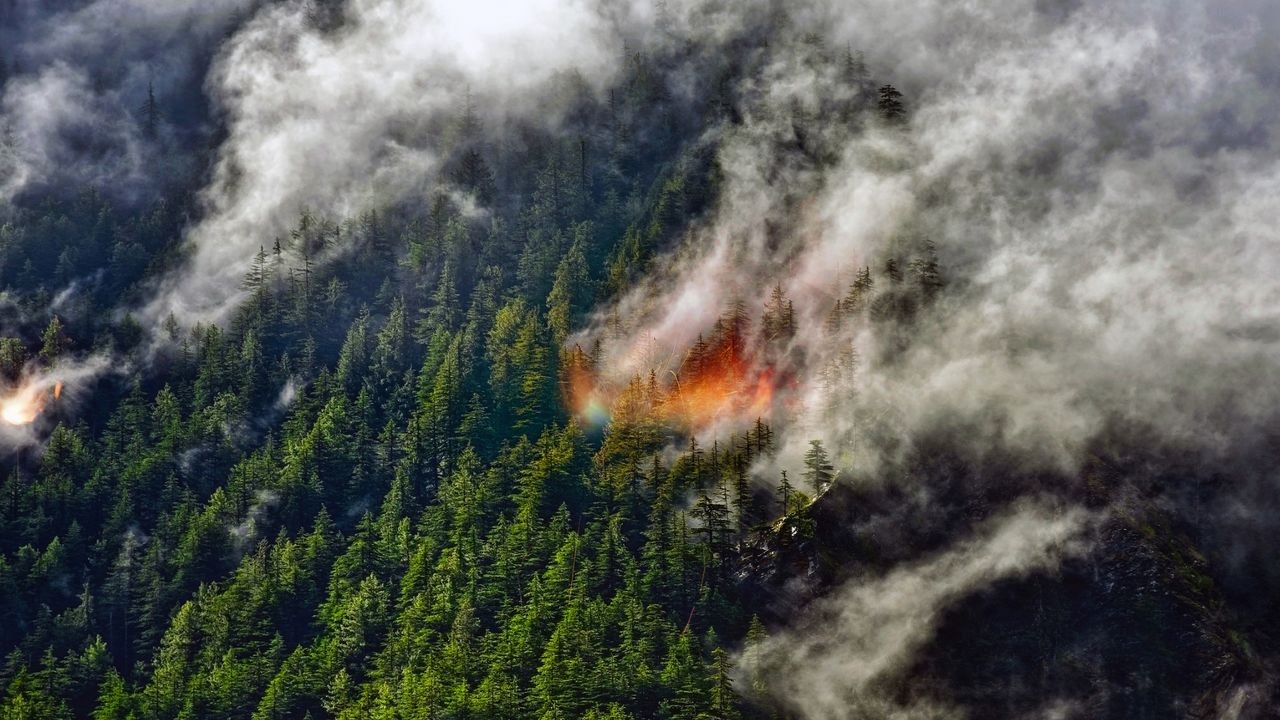
Recent research reveals that wildfire smoke can impact Earth’s climate in surprising ways. When wildfires become intense, they generate pyrocumulonimbus thunderstorms. These storms can lift smoke as high as 10 miles into the atmosphere. Such high-altitude smoke has puzzled scientists for years because measuring its effects on climate is challenging.
However, a team of atmospheric scientists made significant progress. They conducted direct measurements of wildfire smoke just five days after a fire in New Mexico. Using a NASA ER-2 aircraft, they flew directly into a smoke plume, collecting data on particle size and composition. Their findings surprised many in the scientific community.
Inside the smoke, researchers discovered large aerosols, approximately 500 nanometers wide. This size is double that of typical wildfire aerosols found at lower altitudes. The slower air mixing at this high altitude allows these particles to collide and fuse more efficiently, leading to their larger size.
Interestingly, these larger aerosols can change how radiation reaches Earth. They can either absorb sunlight or reflect it back into space. The researchers found that these aerosols increased outgoing radiation by 30% to 36% compared to smaller particles at lower levels. This shift causes a measurable cooling effect that current climate models fail to recognize.
While this discovery sheds light on the complex relationship between wildfire smoke and climate, it also raises questions. Scientists suggest that high-altitude smoke may influence atmospheric circulation. This change could potentially shift jet streams, affecting global weather patterns.
Further research is necessary to understand the full implications of these findings. Researchers continue to investigate how wildfire smoke interacts with our atmosphere and climate systems. As we gain more knowledge, we might see improvements in climate models, helping to predict weather changes more accurately.
This study opens new doors in understanding how natural events like wildfires can shape our planet’s future. By examining the unseen effects of smoke, scientists pave the way for advancements in climate science. As they unlock these mysteries, our understanding of climate change can evolve, leading to better solutions for preserving our environment.
Expand Your Tech Knowledge
Dive deeper into the world of Cryptocurrency and its impact on global finance.
Explore past and present digital transformations on the Internet Archive.
SciV1
