

Summary Points
- New maps reveal shifting patterns of artificial light on Earth.
- NASA’s Black Marble data shows nuanced changes, not just increases.
- Global radiance rose by 34%, but significant dimming areas exist.
- Urban growth in some regions contrasts with energy-efficient dimming elsewhere.
Picturing Earth in a New Light
Maps do more than mark geography—they tell stories about change. Recent mapping efforts have turned the spotlight on artificial light, revealing a planet whose nights are influenced by a tapestry of brightening and dimming. These visualizations can help illuminate the dynamics of human activity and environmental policy.
The Significance of Nighttime Lights
The recent maps stem from NASA’s Black Marble data, a product that harnesses observations from the VIIRS sensors on satellites like Suomi-NPP, NOAA-20, and NOAA-21. These satellites capture nighttime light across various wavelengths, enabling comprehensive tracking of light sources like city lights, moonlight, and auroras.
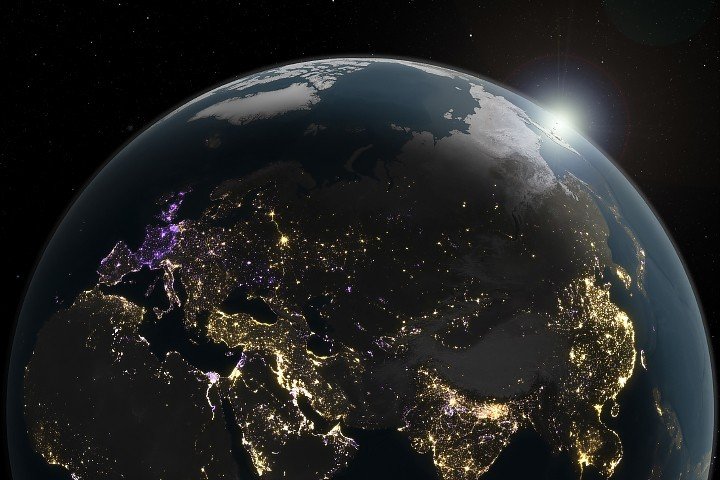
Between 2014 and 2022, researchers discovered that the brightness of the Earth at night increased by 34 percent. However, this increase conceals intricate patterns of dimming. While areas like China and northern India experienced surges in artificial light linked to urban growth, parts of Europe showed significant declines. Paris, for example, saw a 33 percent dimming, directly related to energy conservation initiatives.
The juxtaposition of brightening and dimming paints a complex picture. On the U.S. West Coast, cities grew brighter due to population surges, whereas the East Coast dimmed, partly owing to the adoption of energy-efficient LED technology. This simultaneous occurrence of light disappearance and emergence underscores the need for refined perspectives on global urban development.
The Artistry of Data Visualization
The capabilities of NASA’s Black Marble data stretch beyond mere numbers. The Eastern Hemisphere visualization not only informs but also provides an artistic glimpse of how the Earth appears under the cloak of night. Enhanced with simulated sunlight and shadows, these representations balance scientific accuracy with aesthetic appeal. The images, displayed prominently in Nature, highlight how data can bridge the gap between complex research and public engagement.
Visualizations expose how policies, economic fluctuations, and technology adoption have influenced regional nightscapes. The stark reduction in light in parts of Europe during the energy crisis, particularly following the Russia-Ukraine conflict, signals a shift in priorities. Energy efficiency has legitimate implications for sustainability.
As humanity navigates its relationship with the night, mapping the changes in artificial light opens a window into our collective impact on the planet. Through these evolving representations, we gain not only knowledge but also insight into the intricate interplay of culture, technology, and policy. The nighttime illumination, both abundant and sparse, serves as a profound metaphor for the larger forces shaping human existence.
Discover More Technology Insights
Explore the future of technology with our detailed insights on Artificial Intelligence.
Explore past and present digital transformations on the Internet Archive.
Space
