

Top Highlights
- Katalyst Space’s Link spacecraft will rescue NASA’s Swift Observatory this month.
- The mission aims to raise Swift’s orbit for extended longevity and functionality.
- A press conference discussing the plan is scheduled for June 17.
- This unprecedented mission involves a private spacecraft servicing a government satellite.
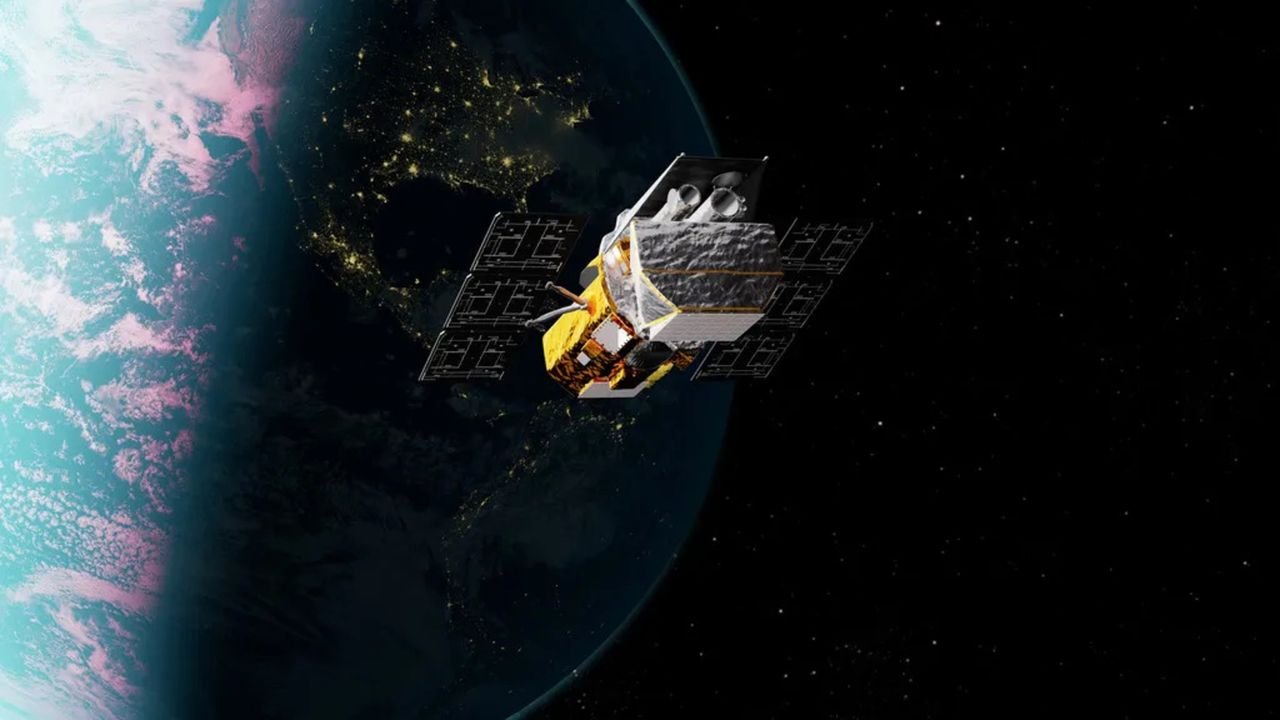
A bold telescope-rescue mission is set to launch later this month, and it is making headlines. Today, June 17, NASA will clarify its strategy to boost the Neil Gehrels Swift Observatory. This mission will be executed by Link, a robotic servicing spacecraft developed by Katalyst Space Technologies in Arizona. The plan involves raising Swift’s orbit, allowing it to continue studying cosmic phenomena for a longer period.
NASA and Katalyst Space representatives will hold a press conference at 11 a.m. EDT (1500 GMT) to discuss the mission in detail. Listeners can tune in via NASA’s channels, with Space.com offering a stream if available. Key participants include:
– Shawn Domagal-Goldman, division director of Astrophysics at NASA Headquarters
– Brad Cenko, principal investigator for Swift at NASA’s Goddard Space Flight Center
– Kieran Wilson, principal investigator for Link at Katalyst Space
– Robert Lamontagne, vice president of strategic partnerships at Katalyst Space
– Wes Collier, vice president of launch systems at Northrop Grumman
### The Mission’s Context
Swift launched into low Earth orbit in 2004 with a primary mission to hunt for gamma-ray bursts, among the most powerful explosions in the universe. Despite its continued operational capability, the observatory faces an imminent threat. Earth’s atmosphere is dragging it down toward an untimely end.
Lacking a propulsion system to counteract this descent, Swift requires external assistance. Katalyst Space has stepped up to the challenge, making a groundbreaking commitment to reposition the telescope. This undertaking marks a significant moment in space exploration, as no private spacecraft has ever linked with a U.S. government satellite before.
### Technological Implications and Timeline
Time is critical. Some forecasts suggest that Swift could re-enter the Earth’s atmosphere as soon as this summer. In response, Katalyst has moved swiftly to prepare Link, slated for launch later this month from the Marshall Islands in the Pacific. The launch will employ a Northrop Grumman Pegasus XL rocket, transported aloft by an aircraft.
This mission stands at the intersection of technological innovation and practicality. While it showcases the potential of commercial partnerships in space exploration, it also raises questions about the long-term sustainability of space assets. As technology advances, the effectiveness of such collaborations will likely shape future missions.
As stakeholders await today’s press conference, the excitement builds. This mission represents not just a rescue for Swift but a new chapter in the collaboration between government and private entities in space.
Discover More Technology Insights
Stay informed on the revolutionary breakthroughs in Quantum Computing research.
Stay inspired by the vast knowledge available on Wikipedia.
Space
