

Top Highlights
- Randomized controlled trials (RCTs) reveal true causal relationships in social interventions.
- Pioneers Duflo, Banerjee, and Kremer won a Nobel for their groundbreaking work.
- RCTs help improve policies on poverty, healthcare, and education effectively.
- Ongoing RCTs tackle diverse issues, from disease prevention to military performance enhancements.
The Power of Randomized Controlled Trials
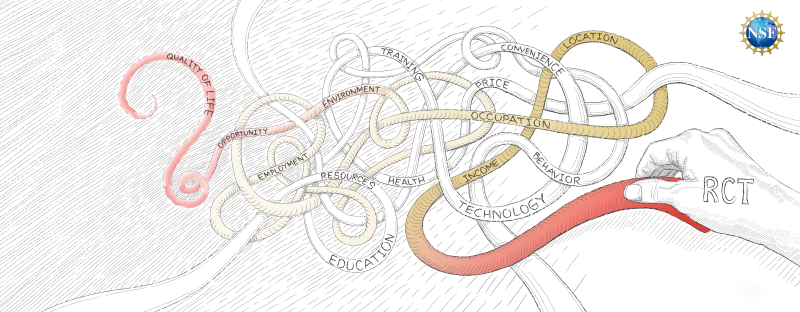
Randomized controlled trials (RCTs) represent a turning point in how researchers address complex social challenges. These rigorous experiments allow scholars to isolate specific variables and reveal clear causative effects. When deciding how to allocate limited resources, governments and philanthropic organizations often struggle. RCTs provide a solid foundation for informed decision-making. They help answer critical questions about effective strategies to reduce poverty, improve health, and enhance community resilience.
The rise of RCTs over the past 20 years has reshaped social science. Researchers like Esther Duflo, Abhijit Banerjee, and Michael Kremer pioneered the use of these trials in economics, earning a Nobel Prize for their work. Their findings consistently challenge existing assumptions. For example, their research uncovered that providing mosquito nets for free dramatically reduced malaria cases, countering the belief that people would only value what they had to pay for. Their work established RCTs as the gold standard for proving which policies genuinely work.
Expanding RCT Applications
The versatility of RCTs extends to various fields and issues. Scholars use these trials to address diverse problems, ranging from crime reduction to agricultural productivity. Recent experiments showed how behavioral nudges could enhance public health messaging during the COVID-19 pandemic. These insights illuminate areas often shrouded in ambiguity.
RCTs demand careful planning and execution, which can prove challenging. Researchers must define participant groups, track results, and make quick decisions. This intensive process brings researchers closer to the real-world implications of their work. It helps them uncover solutions that have a tangible impact on society.
The “randomista” movement, inspired by the success of RCTs, continues to flourish. This approach encourages collaboration across disciplines, creating innovative solutions for pressing global issues. As researchers explore the future of RCTs, they aim to tackle even more significant challenges. The potential for transformative change remains vast as RCTs shed light on the most effective methods for improving lives around the world.
Continue Your Tech Journey
Explore the future of technology with our detailed insights on Artificial Intelligence.
Access comprehensive resources on technology by visiting Wikipedia.
TechV1
