

Quick Takeaways
- University of Utah developed a holographic 3D printing technique for microstructures.
- This method hardens objects in one exposure, unlike traditional layer-by-layer printing.
- Current limitations restrict use to intricate designs without varied geometries.
- Future applications may involve manufacturing tiny, durable parts for real-world forces.
Holographic Printing: A Leap Forward
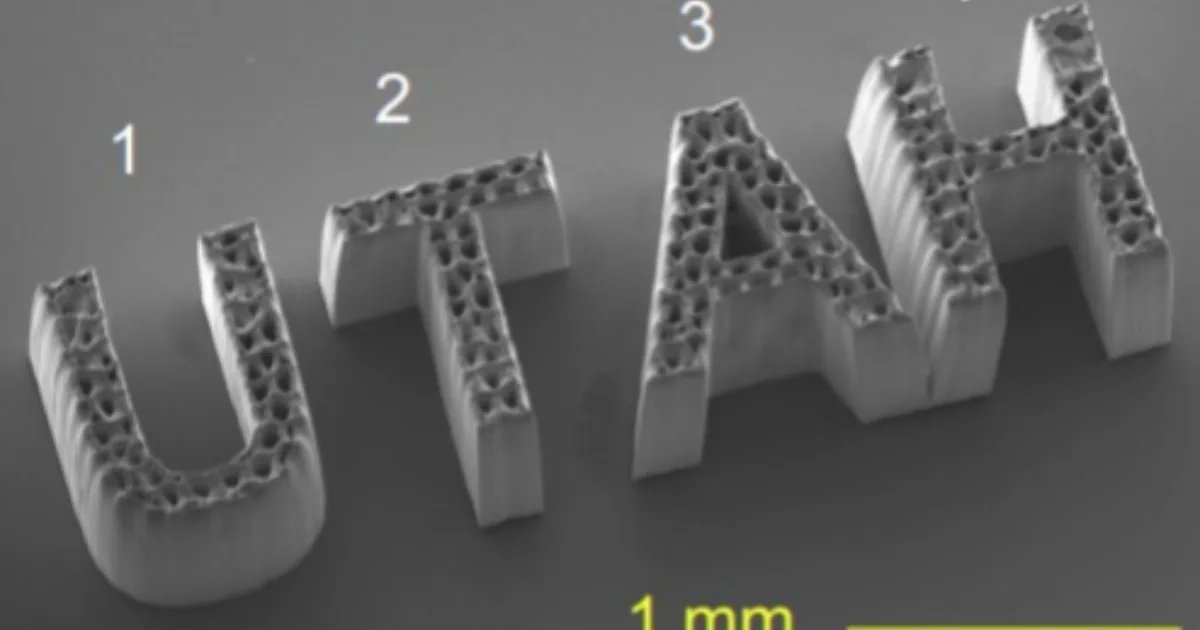
A 3D printer that creates structures in just 20 seconds sounds like science fiction. Yet, researchers at the University of Utah have developed a unique holographic printing technique that makes this possible. Rather than building objects layer by layer, this method forms entire shapes in one exposure. It uses a nanopatterned mask to manipulate light, allowing for rapid hardening of materials. The substrate SU-8 hardens when exposed to laser light. This approach promises stronger, more durable structures by avoiding the weak seams typical of traditional layer-by-layer printing.
However, this breakthrough has limits. The technique excels with microstructures but struggles with more complex geometries. The current demonstrations mainly include microtubule arrays and lattice patterns. This indicates that while the technology is powerful, its applications are currently constrained. As researchers continue to refine this method, they aim to expand its capabilities beyond small-scale designs.
Practical Implications and Future Prospects
This innovation may not fit into the typical home 3D printing scene. Instead, it could serve industries requiring finely crafted parts. The printed microtubules have shown promise in applications like capillary action and compression strength. This implies that there’s potential for practical use in fields such as biomedical engineering or micro-manufacturing.
Moving forward, researchers need to overcome the technology’s limitations. The goal is to achieve true 3D control while maintaining the speed advantage. As this technique advances, it could lead to exciting new applications and industries. The potential for instant production may still be a dream, but continued progress signals tangible benefits on the horizon.
Expand Your Tech Knowledge
Stay informed on the revolutionary breakthroughs in Quantum Computing research.
Explore past and present digital transformations on the Internet Archive.
TechV1
