

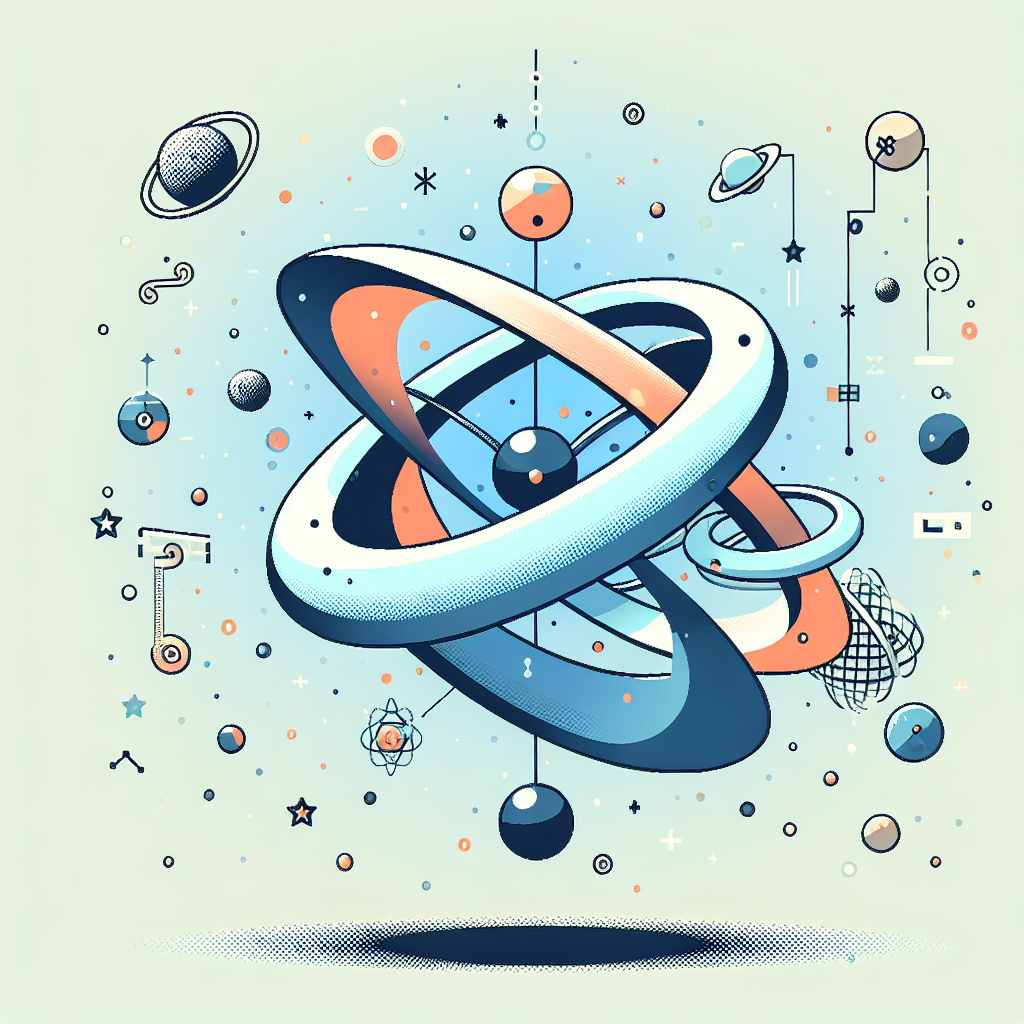
The Mysterious Dance of Spacetime
What if reality itself could be bent like clay? Imagine shaping the world around you, altering time and space with your thoughts. This captivating idea leads us into the fascinating exploration of spacetime curvature, an insight that challenges every notion of existence. “Bending Reality: The Art of Spacetime Curvature” dives deep into this concept, revealing how gravity isn’t just a force; it’s a sculptor shaping our universe.
Gravity, according to Albert Einstein, bends the fabric of spacetime. Picture a trampoline: when a heavy object, like a bowling ball, sits in the center, the fabric stretches and curves. Smaller objects roll toward the bowling ball, illustrating how celestial bodies interact in the cosmos. This seemingly simple visualization helps demystify the complexities of gravitational forces and spacetime.
The Legacy of Einstein and Beyond
Einstein’s theory of relativity, introduced over a century ago, revolutionized our understanding of spacetime. His insights suggested that massive objects like planets and stars warp the very fabric that defines the universe. This warping influences everything—from how light travels to the development of life itself. Yet, many still ponder how these concepts relate to our daily lives.
Modern science continues to explore spacetime’s mysteries. Real-world applications already emerge from these ideas. For example, technologies like GPS rely on relativistic principles, adjusting satellite signals based on gravitational effects. As we look toward the future, advancements could bridge science fiction with reality, potentially unveiling the secrets of time travel, or even radically new modes of space exploration.
Reflecting on Our Place in the Universe
The very notion that we can manipulate spacetime raises profound philosophical questions. Does bending spacetime reshape our understanding of free will and determinism? If we visualize the universe as malleable, does it suggest our actions could rewrite the script of existence itself? These questions invite us to rethink our place in the cosmos.
Consider this: every human life, every act of choice, unfolds within this complex web of spacetime. What happens if we start to understand the extent of our influence? We may not be able to literally bend time, but our grasp of spacetime curvature can empower us to expand our horizons and drive innovation in technology and philosophy.
Engaging with the Bigger Picture
As we ponder these revolutionary ideas, recent studies open doors to more exciting possibilities. Researchers are currently examining gravitational waves, ripples in spacetime that could lead to new insights about the universe. Findings could reshape our understanding of cosmic events, from black holes to the origins of galaxies, fostering a deeper conversation about humanity’s trajectory in the vast universe.
For those interested in diving deeper, explore compelling resources like “A Brief History of Time” by Stephen Hawking or the thought-provoking documentary “The Fabric of the Cosmos” by Brian Greene. These works illuminate complex scientific theories while remaining accessible to curious minds.
The study of spacetime curvature uncovers not just the universe’s mechanics but also invites us to reflect on existence, interconnectedness, and our indelible place in the cosmos. This understanding empowers not only scientific advancement but also profound self-discovery.
Continue Your Tech Journey
Dive deeper into the world of Cryptocurrency and its impact on global finance.
Explore past and present digital transformations on the Internet Archive.
OPED_V1
