

Summary Points
-
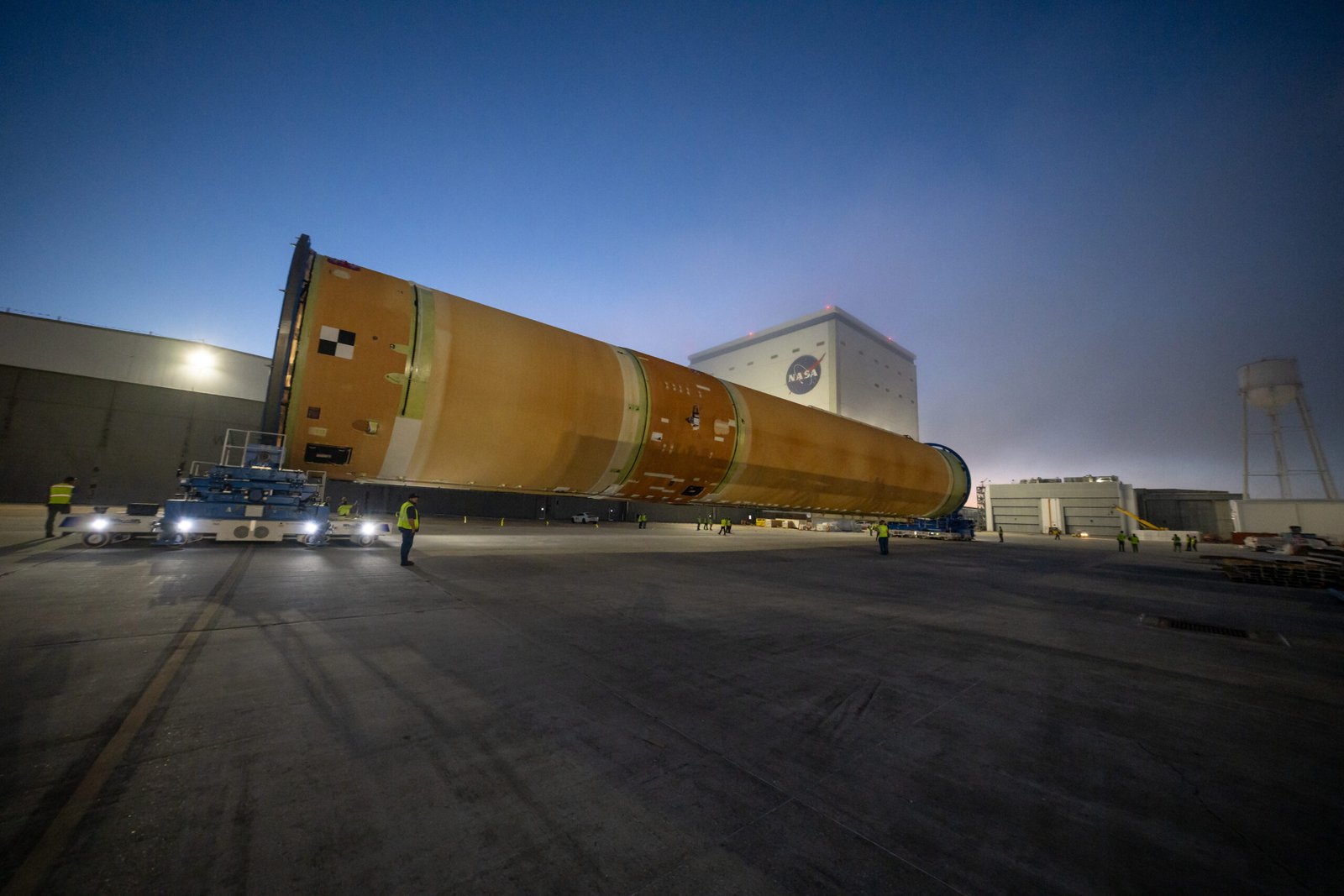
Rocket Deployment: NASA will roll out the largest section of the SLS rocket for the Artemis III mission on April 20, transporting it to Kennedy Space Center via Pegasus barge.
-
Media Opportunities: U.S. media can capture the event and interact with NASA leadership and experts; registration is required by April 15.
-
Mission Details: Artemis III, launching in 2027, will test docking capabilities with the Orion spacecraft, supported by the powerful SLS rocket with over 2 million pounds of thrust.
-
Collaborative Efforts: The assembly of the SLS core stage involves NASA and contractors like Boeing and L3Harris Technologies, enhancing efficiency and production for future Artemis missions.
NASA Invites Media to Artemis III Moon Rocket Stage Rollout
NASA will showcase a significant milestone in its Artemis program on April 20. The agency plans to roll out the largest section of the Space Launch System (SLS) rocket from the Michoud Assembly Facility in New Orleans. This core stage houses critical components, including a liquid hydrogen tank and a liquid oxygen tank. After the rollout, NASA will transport the stage via the Pegasus barge to the Kennedy Space Center in Florida.
Media will have a prime opportunity to capture this momentous event. Journalists can take photos and video while listening to remarks from both agency officials and industry partners. They can also engage with NASA experts to gain insights into the mission. However, interested media must apply by April 15 to participate.
At Kennedy, teams will finalize outfitting and integrate the core stage vertically. This essential process sets the stage for the Artemis III mission, which aims to send astronauts to the Moon in 2027. The SLS’s four RS-25 engines will provide over 2 million pounds of thrust, propelling the Orion spacecraft on its journey.
NASA emphasizes collaboration in this ambitious project. The agency works closely with Boeing and L3Harris Technologies, ensuring every stage of production runs smoothly. By optimizing production at both Kennedy and Michoud, NASA improves efficiency. This streamlined approach supports the ongoing development of the Artemis program, which seeks to enhance lunar exploration technology.
The Artemis III mission will test new capabilities essential for future lunar landings. Importantly, this mission aims to establish a sustainable human presence on the Moon and lays the groundwork for human exploration of Mars.
This initiative underscores NASA’s commitment to advancing space exploration for scientific discovery and economic growth. By bringing astronauts back to the Moon, NASA invests in technology that could significantly improve life on Earth, making this event not just a technological showcase but a step toward a brighter future for all.
For more information about the Artemis program, visit NASA’s official website.
Expand Your Tech Knowledge
Explore the future of technology with our detailed insights on Artificial Intelligence.
Stay inspired by the vast knowledge available on Wikipedia.
SciV1
