

A patient, a nurse, and a quiet decision
A nurse taps a tablet. An app lists patients by urgency. It flags Mr. Alvarez for a chest X-ray. The nurse checks his vitals, trusts the app, and moves faster. Down the hall, a young cashier watches a checkout robot scan items. She learns to stack online orders. A student opens an adaptive math app that slows when she struggles and speeds up when she masters a skill. Machines play roles in each scene. Who benefits? Who loses?
Nut graf: Machines can raise productivity, safety, and learning. People decide who gets the gains. Policy, workplace rules, and design matter as much as code.
How AI changes work: more than robots on assembly lines
New technologies always reshape jobs. Steam engines moved power to factories. Electricity let plants reorganize. Computers automated bookkeeping and analysis. Each change mixed job loss, new roles, and higher output.
AI differs in two ways. First, AI handles thinking tasks, not only physical labor. It reads images, summarizes reports, and suggests decisions. Second, AI scales quickly. A program can serve millions once it works.
At the task level, AI acts in three ways. Automation removes tasks that machines can do alone. Augmentation helps people do tasks better. Creation opens new tasks that never existed.
Example: radiology assistants. AI reads scans quickly and flags suspicious areas. That automation can reduce time per scan. But when doctors use AI to triage cases, they handle more patients and spend more time on complex diagnoses. Studies show AI helps radiologists spot some issues earlier (e.g., improved detection in specific trials; see OECD and medical reviews, 2021–2023). Researchers estimate AI will change tasks for many jobs: some analyses suggest tens of percent of tasks could change within a decade (McKinsey Global Institute, 2017; updated analyses 2021–2023).
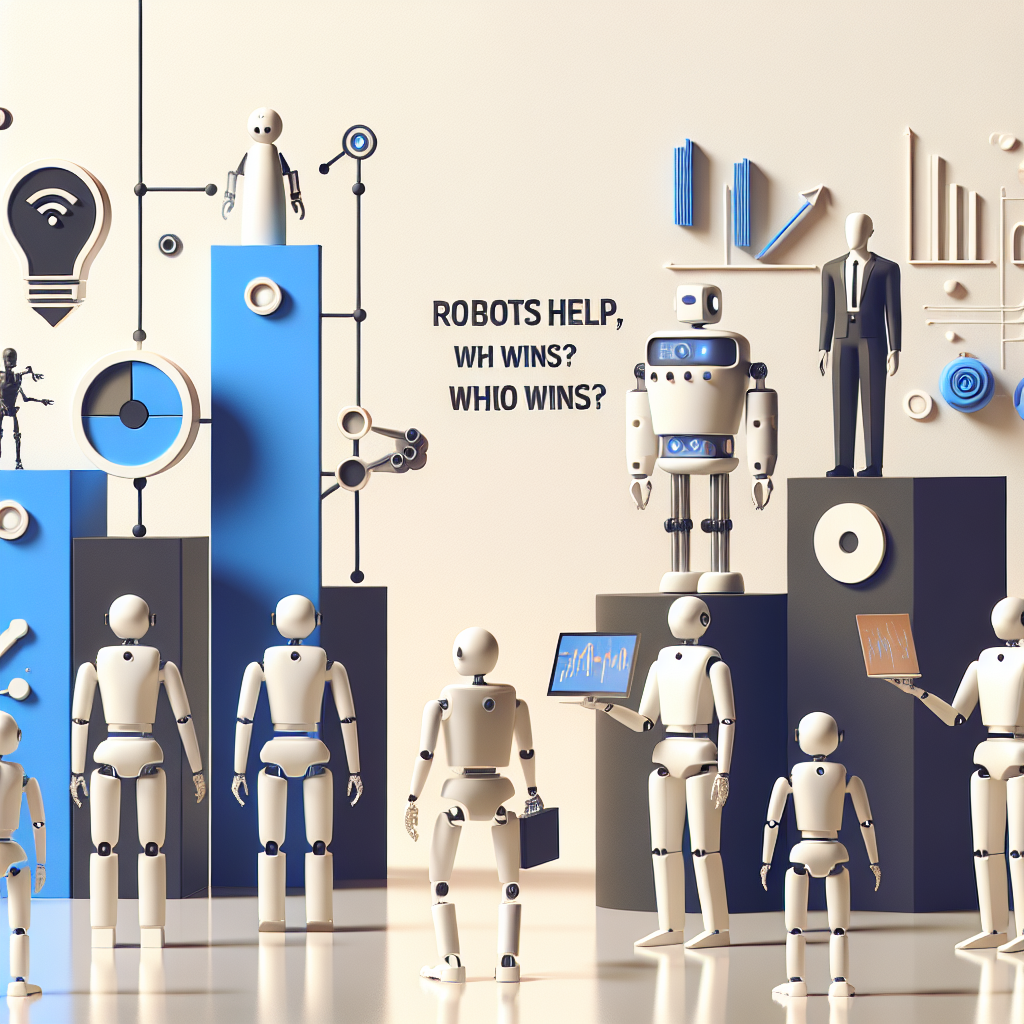
Imagine a chart: routine, repeatable tasks fall. Care, creativity, and oversight rise. Imagine a simple diagram labeled Automation vs. Augmentation showing where human work shifts.
Concrete examples: winners and losers
Hospital ward. What changed: an AI triage app speeds patient prioritization. Who gains: patients get faster attention; hospitals raise throughput; skilled nurses use data to make better calls. Who risks losing: less experienced staff who relied on routine triage patterns may find their roles shrink unless employers offer training. Why: organizations that train staff to use AI help workers adapt. Without training, firms choose efficiency over learning (ILO and WHO analyses, 2022).
Retail stores. What changed: self-checkout and inventory robots reduce time spent on scanning. Who gains: shoppers get faster lines; store owners cut labor costs. Who loses: checkout clerks and part-time workers face fewer hours and less stable schedules. Why: firms prioritize cost-cutting unless labor rules or new job pathways compensate displaced workers (Brookings, 2020–2022).
Classroom. What changed: adaptive tutoring apps customize practice problems in math. Who gains: students who need tailored pacing improve faster; teachers use data to spot struggles. Who loses: districts that adopt tech without supporting teacher training widen achievement gaps. Why: tech only helps when adults guide, contextualize, and ensure access (OECD, 2021).
Pullable fact: “Studies suggest AI could automate or change tasks amounting to tens of percent of current work tasks in coming years” (McKinsey, 2017; updates 2021–2023).
Pullable quote: “AI can be a fast apprentice—but people must teach it purpose.”
Big implications: power, dignity, and who decides
Three deep questions matter most.
1) Who decides how AI’s gains get shared? Companies can capture productivity gains as profits. Governments can tax, regulate, or invest those gains in public services. Unions and worker ownership can shift the balance. Policy shapes whether shareholders or communities benefit (OECD; ILO).
2) What will work mean for dignity? Work builds identity and social ties. If AI takes cognitive tasks, societies must preserve roles that offer meaning: caregiving, creative work, stewardship. Schools and employers can design jobs that value human judgment, empathy, and craft.
3) How do we govern concentrated technical power? A few firms supply major AI systems. Those firms shape standards, control data, and influence markets. Democracies can require transparency, safety testing, and open audits. They can also enforce competition rules to prevent undue concentration.
These issues link back to examples. Hospital AI helps when regulators require safety and when unions help nurses shape rollout. Retail automation stresses low-wage workers unless cities raise minimum standards or support new job training. Classroom tech raises equity questions unless districts fund broadband and teacher development.
Experts disagree on numbers. Some studies warn of high displacement risks for routine jobs (Brookings; ILO). Others predict new job creation and higher productivity that supports rising wages if policies distribute gains broadly (OECD; World Bank). The future depends on choices.
What can change who wins?
Governments can act. They can fund lifelong learning and apprenticeships. They can set wage floors and worker protections for algorithmic scheduling. They can expand public services—childcare, healthcare, broadband—to stabilize transitions. They can enforce antitrust rules that keep markets competitive.
Employers can act. They can involve workers in AI design. They can offer training tied to career paths. They can share gains through profit-sharing or reduced hours with steady pay.
Schools can act. They can teach adaptable skills—critical thinking, collaboration, digital literacy—and offer hands-on pathways into tech-aware careers.
Citizens can act. Vote. Join civic forums. Ask local employers and schools how they plan to use AI. Demand transparency and fair shares.
Short policy list: invest in reskilling; require audits of workplace algorithms; expand safety nets and universal basic services; encourage worker representation in tech decisions.
Final scene: the nurse reads the AI alert, but she also trained on the system. She knows when to trust it and when to question it. The cashier now manages online orders and helps customers with complex returns. The student finds a tutor who uses the app as one tool among many. Society made those outcomes. Machines helped. People chose how to share the gains. Democracy can steer the rest.
Sources (selected): ILO reports 2021–2023; OECD analyses on digitalization 2021; McKinsey Global Institute (2017, updates to 2021–2023); Brookings Institution reports on labor and automation (2020–2022); WHO/WHA discussions on health tech (2022).
Expand Your Tech Knowledge
Dive deeper into the world of Cryptocurrency and its impact on global finance.
Access comprehensive resources on technology by visiting Wikipedia.
OPED_V1
