

Essential Insights
- Ancient Breathing System Discovery: A fossilized reptile, Captorhinus aguti, from 289 million years ago reveals the earliest known rib-based breathing system in amniotes, crucial for understanding land adaptation in early reptiles, birds, and mammals.
- Remarkable Fossil Preservation: Unearthed in Oklahoma’s Richards Spur, the specimen showcases exceptional 3D preservation of skin, cartilage, and even ancient proteins, offering unprecedented insights into the anatomy of early reptiles.
- Evolutionary Innovation: The transition to rib-assisted respiration marked a significant evolutionary advancement, allowing early amniotes to adopt more active lifestyles and fostering their diversification and success in terrestrial environments.
- Oldest Protein Traces Found: The identification of original proteins dating back nearly 100 million years earlier than previously known examples enhances our understanding of soft tissue preservation in the fossil record and early vertebrate evolution.
An Ancient Breathing Breakthrough
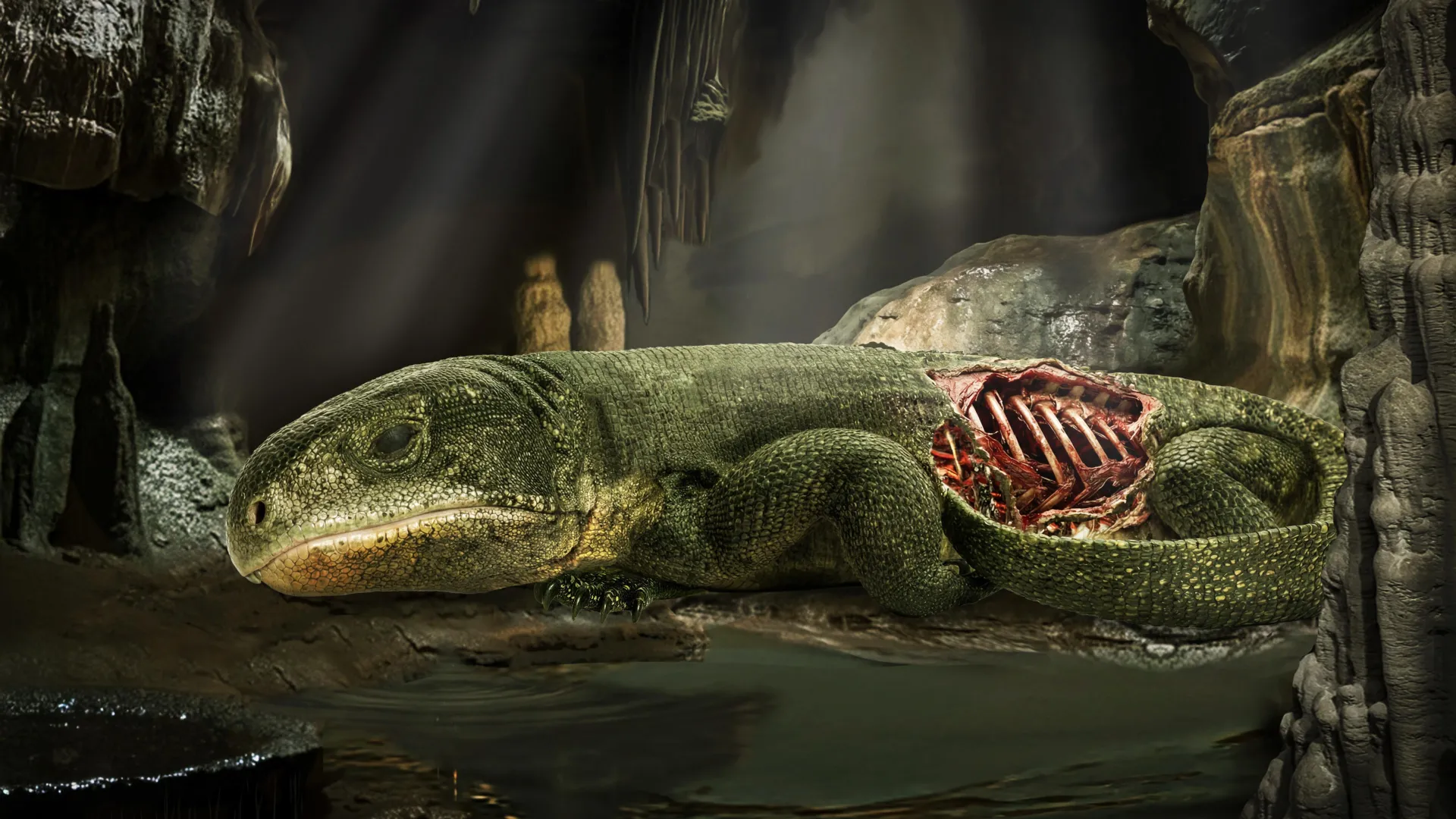
Every breath we take connects us to an ancient narrative. Recent discoveries regarding a 289-million-year-old reptile, Captorhinus aguti, shed light on how breathing mechanisms began to evolve for life on land. This small, lizard-like creature lived during the early Permian period and provides the earliest known breathing system in amniotes, which include modern reptiles, birds, and mammals. Scientists unearthed its remarkably preserved remains in an Oklahoma cave, where unique conditions maintained not just bones but also soft tissues like skin and cartilage.
Advanced scanning techniques revealed intricate details about Captorhinus. Researchers observed a well-defined skin texture resembling modern worm lizards. By studying its anatomy, they reconstructed a rib-based breathing system, displaying a new method that allowed these early animals to take in air efficiently. This development was significant; while amphibians relied on their skin for respiration, Captorhinus could expand and compress its chest, enhancing oxygen intake and activity levels.
The Evolutionary Impact
The evolution of this rib-based breathing mechanism represented a turning point for terrestrial life. This system allowed early amniotes to engage in more active lifestyles, ultimately facilitating their diversification across various land environments. It was a “game changer” in biological history, as it opened the door for more dynamic interactions with ecosystems.
Additionally, researchers discovered ancient proteins in the fossil that extend our understanding of tissue preservation in the fossil record. These findings not only enhance our knowledge of early vertebrate evolution but also push scientific boundaries regarding what preservational techniques can reveal. As we continue to unveil these ancient secrets, we gain insights into the adaptations that set the stage for life as we know it today. The story of breathing is not merely a tale of survival; it reflects a monumental shift that has shaped the trajectory of evolution itself.
Discover More Technology Insights
Explore the future of technology with our detailed insights on Artificial Intelligence.
Explore past and present digital transformations on the Internet Archive.
TechV1
