

Top Highlights
- Researchers developed a new imaging method for capturing ultrafast microscopic events.
- The technique, CST-CMFI, records both brightness and phase in real-time.
- It improves understanding of rapid processes in physics, chemistry, and biology.
- Future applications may enhance clean energy technologies, electronics, and ultrafast photography.
A Groundbreaking Leap in Ultrafast Imaging
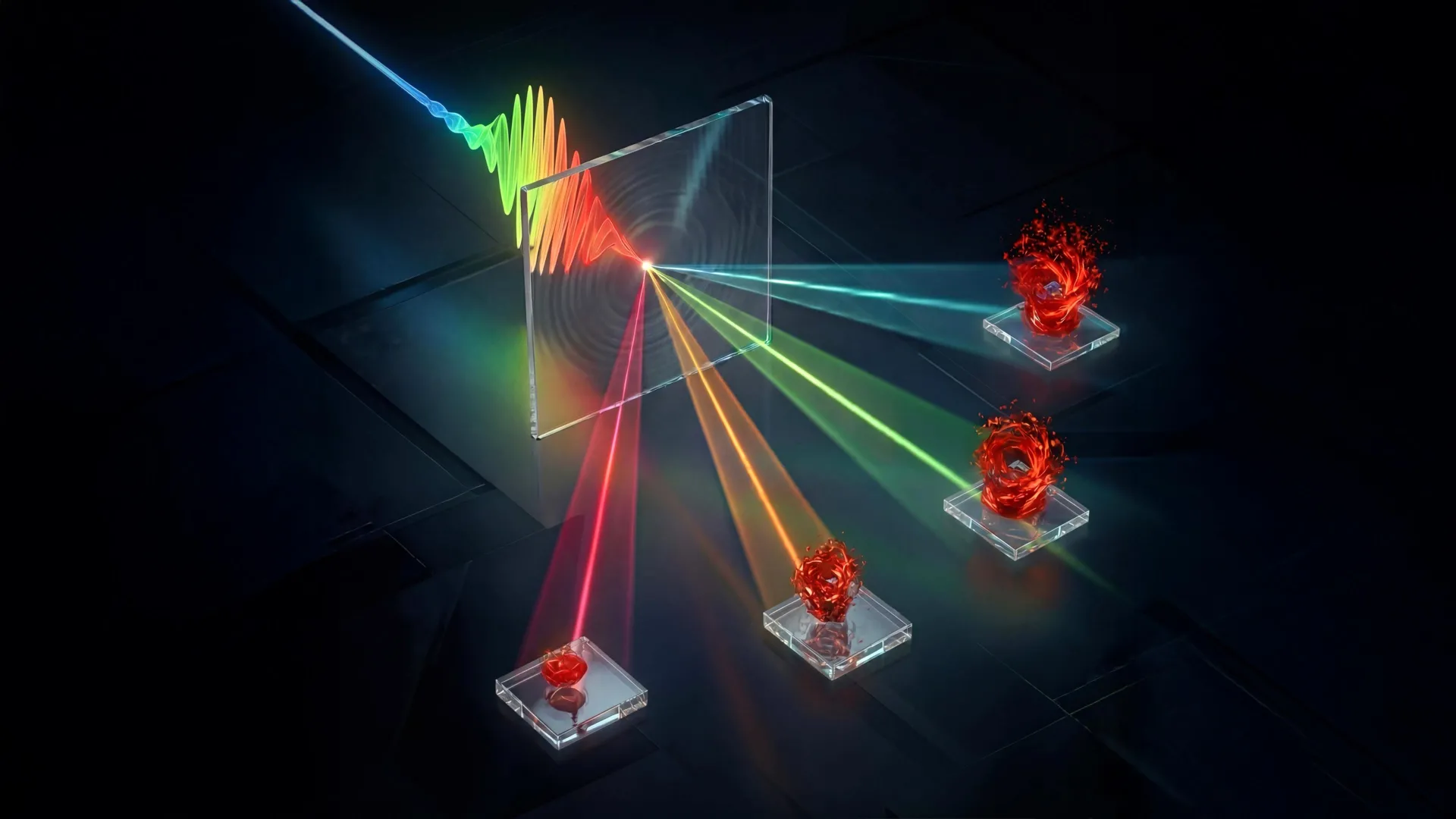
Researchers at East China Normal University have unveiled a revolutionary imaging method. This new approach, known as compressed spectral-temporal coherent modulation femtosecond imaging (CST-CMFI), captures events happening in a trillionth of a second. It enables scientists to observe ultrafast processes like never before. These events unfold within hundreds of femtoseconds and often elude conventional imaging techniques.
Yunhua Yao, the research team leader, emphasizes the importance of this advancement. “Our technique can capture the complete evolution of both the brightness and internal structure of an object in a single measurement,” Yao states. This capability enhances our understanding of fundamental matter, materials design, and biological processes.
In fields encompassing physics, chemistry, biology, and materials science, these quick-changing phenomena hold significant implications. The CST-CMFI technique allows researchers to study reactions that happen spontaneously under laser light. They can now reveal the dynamics of biomolecules or track changes in materials to improve technologies such as clean energy production and advanced manufacturing.
Shifting the Paradigm in Fast-Paced Research
The CST-CMFI technique accomplishes what previous imaging methods could not. Historically, ultrafast techniques focused on light intensity, essentially measuring brightness alone. However, light offers more than just intensity; it contains phase information that indicates how light interacts with materials. By capturing both intensity and phase simultaneously, researchers gain a more nuanced understanding of ultrafast processes.
The methodology combines time-spectrum mapping, compressive spectral imaging, and coherent modulation imaging. Each tackles a different aspect of ultrafast phenomena. This multifaceted approach enhances the ability to measure rapid changes while retaining image clarity. Researchers utilized a chirped laser pulse to correlate time with wavelength, effectively creating a single shot that contains an entire sequence of ultrafast events.
Initial tests explored ultrafast phenomena such as plasma formation in water and charge carrier behavior in materials like ZnSe. Researchers discovered that phase measurements could reveal subtleties that intensity changes might overlook. This capability opens pathways to improve electronics, solar cells, and faster devices.
Moving forward, the team aims to expand applications into new domains, like interface dynamics and ultrafast phase transitions. CST-CMFI currently converts spectral into temporal information, which restricts its capacity for spectral-sensitive processes. The next logical step involves combining CST-CMFI with compressive ultrafast photography. This advancement would enhance the technology’s versatility and broaden its potential applications.
The implications of this research are profound. As scientists capture the fastest and most intricate changes in the microscopic world, they unlock secrets that could translate into groundbreaking technologies. The race to understand ultrafast phenomena is now more vital than ever.
Continue Your Tech Journey
Learn how the Internet of Things (IoT) is transforming everyday life.
Stay inspired by the vast knowledge available on Wikipedia.
TechV1
