

Top Highlights
- Michigan Technological University participates in NASA’s 2026 Lunabotics Challenge.
- Forty-seven teams designed robots for navigating lunar terrain and tasks.
- Robots construct regolith-based berms, simulating lunar surface conditions.
- Event held at Kennedy Space Center Visitor Complex in Florida.
Students Build Moon Robots for NASA’s 2026 Lunabotics Challenge
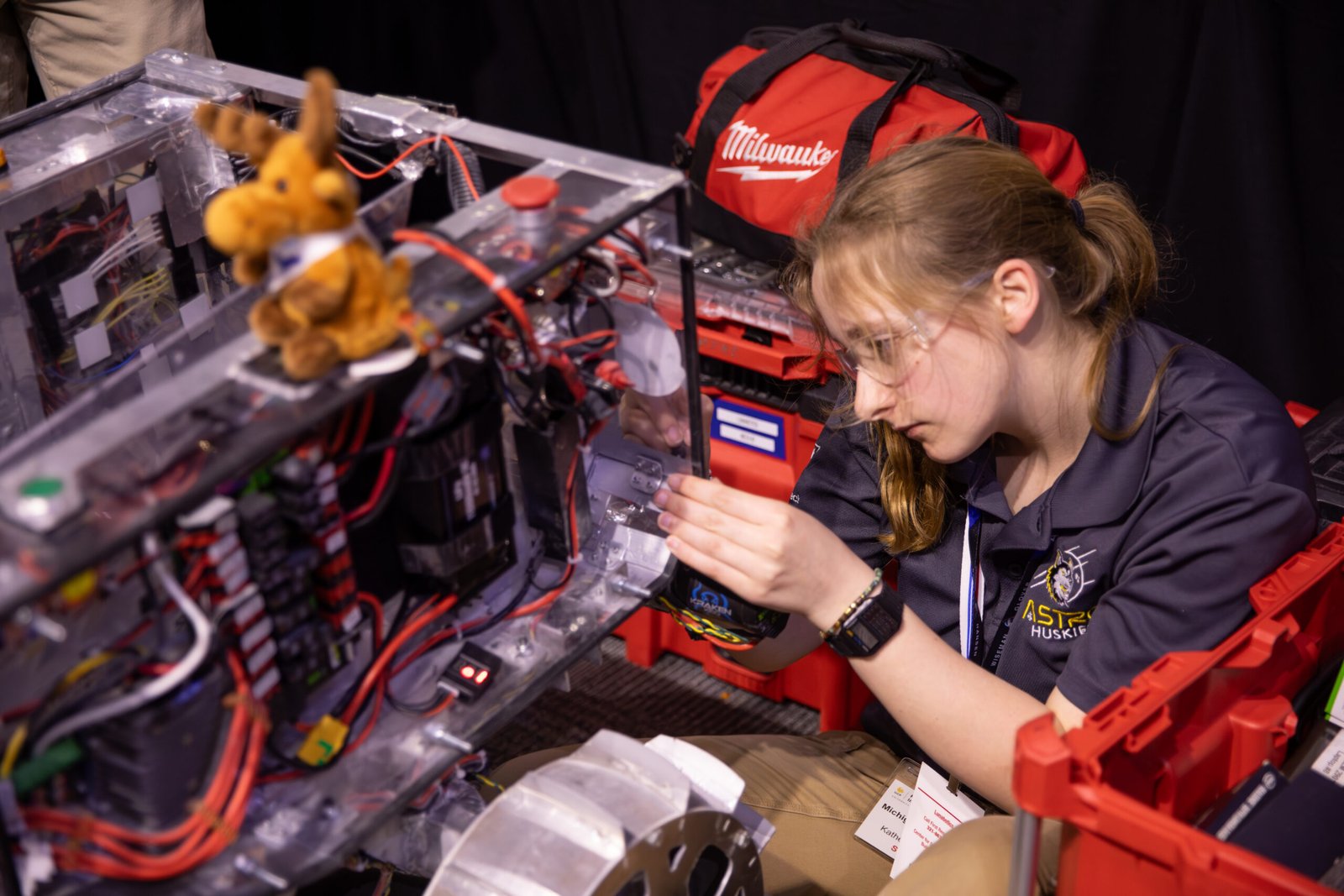
Katherine Rauscher, of Michigan Technological University, prepares her team’s prototype lunar robot for its turn during the finals for NASA’s 2026 Lunabotics Challenge competition on Tuesday, May 19, 2026, inside the Astronauts Memorial Foundation’s Center for Space Education at the Kennedy Space Center Visitor Complex in Florida. Forty-seven teams from around the U.S. designed and built remote-controlled robots capable of traversing challenging lunar terrain while constructing regolith-based berm under conditions similar to those the agency will face as it returns to the lunar surface through Artemis. Image Credit: NASA/Ben Smegelsky
Innovative Engineering Solutions
The 2026 Lunabotics Challenge highlighted the innovative spirit of student engineers. Participants faced the daunting task of designing robots to navigate the Moon’s rugged landscape. Several teams showcased cutting-edge technology, including advanced sensors and autonomous navigation systems. These innovations aim to enhance the efficiency of lunar missions.
Students tackled practical challenges. They considered factors like weight, power supply, and maneuverability. Each team had to ensure that their robot could operate under conditions similar to those expected during real lunar missions. This emphasis on practicality is crucial for future deployments, where resources are limited.
Practical Applications for Future Missions
NASA’s interest in this competition goes beyond academic achievement. The successful designs can inform actual Moon missions, especially under the Artemis program. This initiative aims to establish a sustained human presence on the lunar surface, making the development of functional robots essential.
While many designs featured impressive technology, the true test lay in functionality. Teams had to demonstrate that their robots could perform specific tasks, such as collecting lunar soil, or regolith. These tasks mimic critical operations needed for future lunar exploration. The lessons learned here are invaluable, offering insights into feasibility and performance.
The Lunabotics Challenge not only fosters creativity in engineering but also emphasizes the importance of teamwork and collaboration. Working under pressure can simulate conditions that teams might face in real missions. This practical experience prepares the next generation of engineers and scientists for future challenges in space exploration. The event serves as a crucial stepping stone for students aspiring to contribute to humanity’s ventures beyond Earth.
Stay Ahead with the Latest Tech Trends
Learn how the Internet of Things (IoT) is transforming everyday life.
Explore past and present digital transformations on the Internet Archive.
Space
