

Fast Facts
- NASA’s Artemis missions face challenges from lunar regolith and rocket plumes.
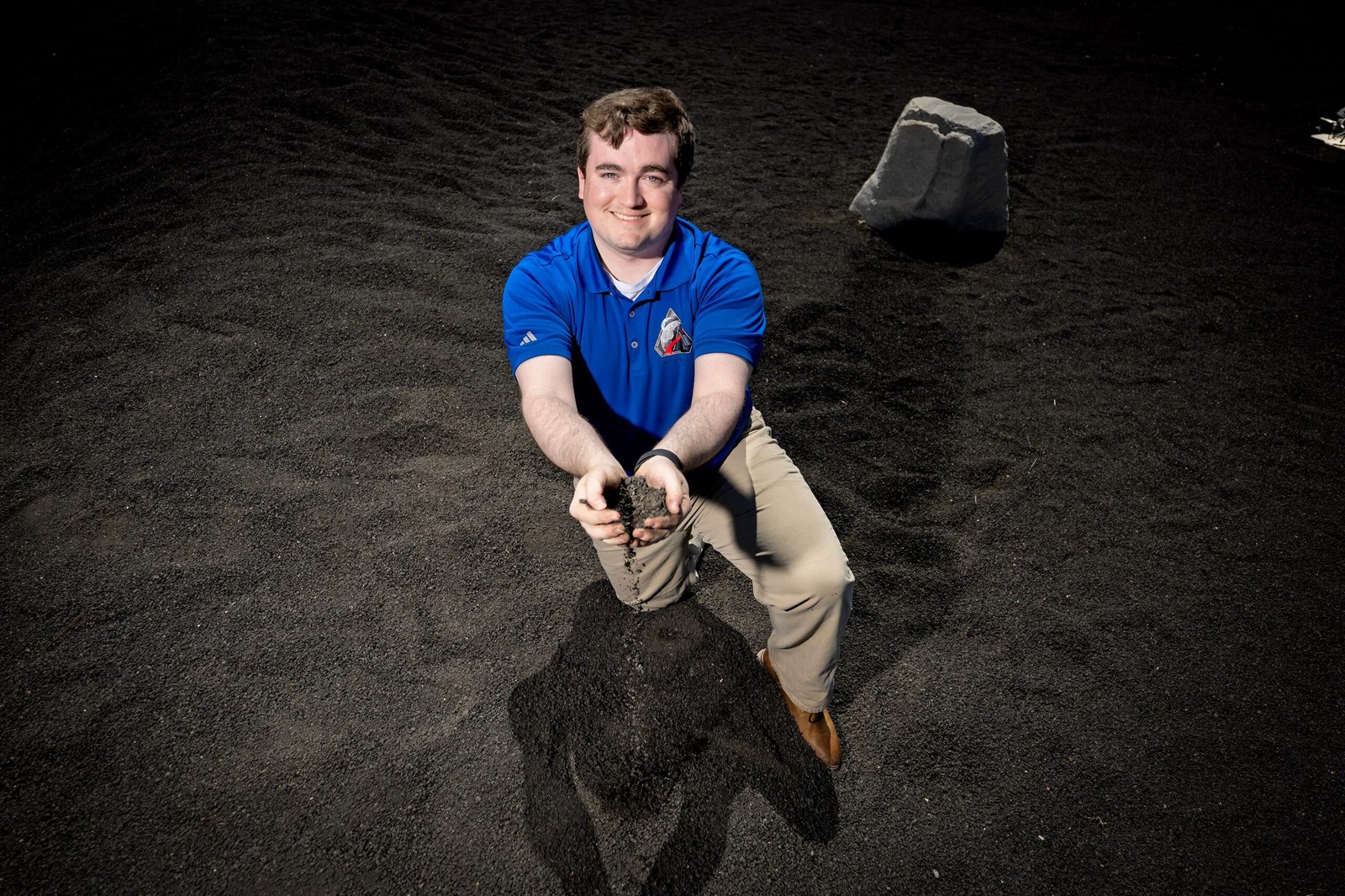
- Daniel Stubbs studies plume-surface interactions to ensure crew safety.
- Future lunar landers are larger and will use the same engines.
- Research helps predict aerodynamic forces impacting landing and launching processes.
The Challenge of Lunar Regolith
NASA’s Artemis program aims to return humans to the Moon. This ambitious endeavor faces many hurdles, one of which is the unpredictable nature of lunar regolith. Daniel Stubbs, an aerospace engineer from NASA’s Marshall Space Flight Center, focuses on how rocket exhaust interacts with the Moon’s surface material. He describes the landing scenario akin to driving through a cloud of dust: visibility is compromised, and dangers lurk within.
Lunar regolith is composed of sharp, abrasive particles created over millions of years by meteoroid impacts. As NASA prepares for larger landers in Artemis, these vehicles will face challenges unlike those encountered during the Apollo missions. Modern landers will take off using the same systems that facilitated their landing, amplifying the risks associated with regolith disturbances. Stubbs emphasizes that it’s crucial to predict how exhaust plumes will interact with this abrasive material to ensure crew safety and mission success.
Groundbreaking Research at NASA
NASA’s Human Landing System program is spearheading significant studies to understand these plume-surface interactions. Testing takes place in a sophisticated 60-foot space simulator at NASA’s Langley Research Center. This research will mimic the conditions landers will face during descent and ascent on the Moon.
Stubbs notes the effects of dust and regolith on landing instruments. If these instruments fail to provide accurate readings, landing becomes perilous. Furthermore, during takeoff, disturbed regolith could potentially damage scientific equipment deployed on the lunar surface. Through thorough research, NASA engineers aim to mitigate these challenges, ensuring the safety of astronauts and the integrity of their equipment.
As 2028 approaches, the efforts of engineers like Stubbs will play a pivotal role in the success of the Artemis missions. By modeling the complex interactions between rocket plumes and lunar surfaces, these scientists are laying the groundwork for not only lunar exploration but also the long-term aim of sending humans to Mars. The future of space exploration hinges on understanding these intricate dynamics. For more information on NASA’s human landing systems, visit NASA’s official site.
Stay Ahead with the Latest Tech Trends
Stay informed on the revolutionary breakthroughs in Quantum Computing research.
Stay inspired by the vast knowledge available on Wikipedia.
Space
