

Fast Facts
- NASA’s AstroPix sensor will demonstrate gamma-ray detection in a 2027 mission.
- AstroPix targets gamma rays between 20,000 and 700,000 electron volts.
- Advanced sensitivity aims to improve observations of distant cosmic events.
- The technology will integrate with a robotic arm for in-orbit operations.
Navigating the Gamma-ray Frontier with AstroPix
NASA is set to advance its scientific capabilities with the introduction of a new gamma-ray sensor, AstroPix. This innovative technology will participate in the agency’s upcoming Fly Foundational Robots mission, scheduled for launch in late 2027. Gamma rays are the most energetic form of electromagnetic radiation, originating from cosmic phenomena like lightning, solar flares, and distant galaxy collisions. The AstroPix sensors aim to detect gamma rays in the energy range of 20,000 to 700,000 electron volts. For perspective, visible light operates between 2 and 3 electron volts.
Current NASA missions, such as the Fermi Gamma-ray Space Telescope, already observe high-energy gamma rays. However, gaps exist in detecting energies between 500,000 and 1 million electron volts. This is particularly crucial for studying gamma-ray bursts and active galaxies powered by supermassive black holes. By stacking AstroPix detectors in future missions, NASA seeks to bridge this sensitivity gap, enhancing our understanding of these phenomena.
Dan Violette, a post-doctoral fellow at NASA’s Goddard Space Flight Center, highlighted the synergy between the Fly Foundational Robots mission and AstroPix technology. The mission serves as a platform to comprehensively test AstroPix before its implementation in future science missions. Previous experiments with comparable technology used scientific balloons, but this mission will allow AstroPix to be tested in orbit—an opportunity that does not present itself often.
Robotic Technologies Pave the Way for Innovation
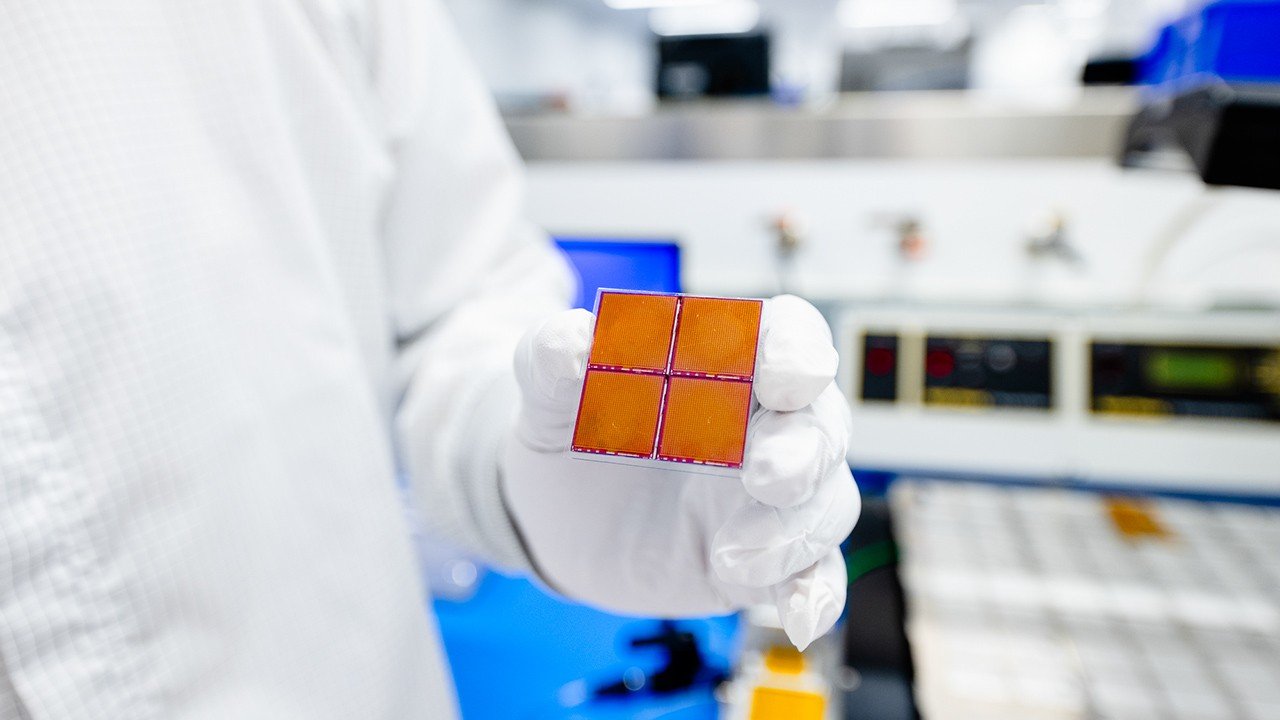
The AstroPix sensor technology comprises chips that have four silicon pixel detectors, each containing 1,225 pixels. These chips operate similarly to the sensors found in common cell phone cameras. The AstroPix Satellite Technology dEmonstration Payload, also known as A-STEP, will be integrated into the Orbital Replacement Unit built by Rocket Lab Robotics. This unit will take advantage of a robotic arm designed to reposition it during the mission, enabling in-orbit operations as part of a broader robotic servicing demonstration.
Originally, the Orbital Replacement Unit was not intended to support an additional demonstration. However, as mission development progressed, the Fly Foundational Robots team realized they could maximize mission capabilities by including the AstroPix demo. Bo Naasz, the senior technical lead in NASA’s Space Technology Mission Directorate, emphasized that demonstrating the capability to replace payloads in orbit could allow for cost-effective upgrades to existing satellites and space instruments. This integration enhances the mission’s overall value while providing AstroPix a chance to showcase its capabilities.
As the AstroPix team prepares to deliver their hardware for integration this September, the implications of this mission extend beyond a single demonstration. It represents a significant step forward in gamma-ray detection technology. This advancement could redefine our understanding of some of the universe’s most powerful events. NASA’s Fly Foundational Robots mission, funded through the Space Technology Mission Directorate, aims to usher in a new era of scientific exploration powered by both innovative detectors and advanced robotics.
Stay Ahead with the Latest Tech Trends
Stay informed on the revolutionary breakthroughs in Quantum Computing research.
Discover archived knowledge and digital history on the Internet Archive.
Space
