
Close Menu
    Facebook X (Twitter) Instagram
    Wednesday, July 8
    Top Stories:
    • Revolutionary Material: Heat Programmable Innovation
    • Get Ready: Samsung Galaxy Unpacked is Coming July 22!
    • China’s Memory Module Giant Sees 600+ Fold Profit Surge Mid-Year
    Facebook X (Twitter) Instagram Pinterest Vimeo
    IO Tribune
    • Home
    • AI
    • Tech
      • Gadgets
      • Fashion Tech
    • Crypto
    • Smart Cities
      • IOT
    • Science
      • Space
      • Quantum
    • OPED
    IO Tribune
    Home » MIT Physicists Arrange Atoms in Ultra-Close Contact
    Quantum

    MIT Physicists Arrange Atoms in Ultra-Close Contact

    Staff ReporterBy Staff ReporterJuly 8, 2026No Comments2 Mins Read
    Share Facebook Twitter Pinterest LinkedIn Tumblr Reddit Telegram Email
    Share
    Facebook Twitter LinkedIn Pinterest Email

    Essential Insights

    1. MIT developed a technique to position atoms just 50 nanometers apart.
    2. This proximity enhances magnetic interactions, making them 1,000 times stronger.
    3. New effects like heat transfer and synchronized oscillations were observed.
    4. Technique involves stable laser beams via optical fibers, breaking previous light limits.

    Advanced Technique for Closer Atom Arrangement

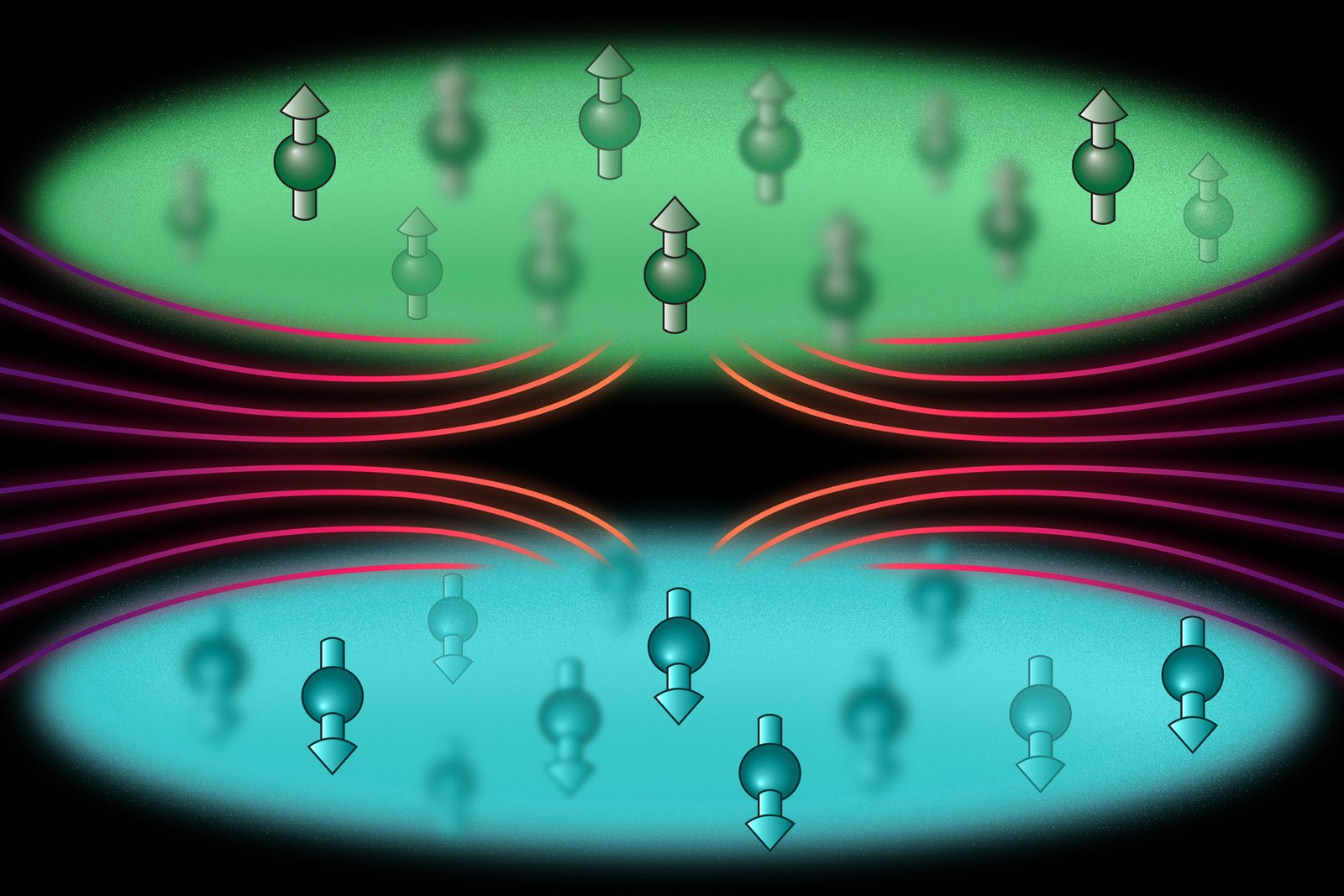
    Researchers at MIT have developed a new way to position atoms much closer together than before. Traditionally, scientists used laser light to arrange atoms about 500 nanometers apart, limited by the wavelength of light. Now, MIT physicists can place atoms as close as 50 nanometers, roughly one-fifth the previous limit. They achieved this by stabilizing two laser beams with different frequencies and polarizations through optical fibers. This stability allows precise control, making the atoms align at smaller distances. The new method breaks the longtime optical resolution barrier and offers opportunities to explore new quantum behaviors.

    Implications for Quantum Research and Future Technology

    Using dysprosium atoms, the most magnetic in nature, the team demonstrated stronger magnetic interactions at this extreme closeness. These forces were 1,000 times more intense than at 500 nanometers separation. They observed two new effects: synchronized oscillations between atom layers and the transfer of heat through magnetic fluctuations. Such phenomena could lead to innovations in quantum materials and computing. The team plans to explore configurations that might create magnetic quantum gates, a critical component in developing advanced quantum computers. This breakthrough opens new avenues for detailed quantum experiments and technological improvements.

    Discover More Technology Insights

    Stay informed on the revolutionary breakthroughs in Quantum Computing research.

    Discover archived knowledge and digital history on the Internet Archive.

    QuantumV1

    atomic physics atomic positioning HPC Innovation Li Du magnetic atoms MIT Physics MIT-Harvard Center for Ultracold Atoms optical trap Quantum quantum gate Research Laboratory of Electronics VT1 Wolfgang Ketterle
    Share. Facebook Twitter Pinterest LinkedIn Tumblr Email
    Previous ArticleMeta Allows Use of Your Instagram Photos in AI—Opt Out Now
    Next Article Celestial Wonders: A Galaxy’s Collision Unveiled!
    Avatar photo
    Staff Reporter
    • Website

    John Marcelli is a staff writer for IO Tribune, with a passion for exploring and writing about the ever-evolving world of technology. From emerging trends to in-depth reviews of the latest gadgets, John stays at the forefront of innovation, delivering engaging content that informs and inspires readers. When he's not writing, he enjoys experimenting with new tech tools and diving into the digital landscape.

    Related Posts

    Space

    Celestial Wonders: A Galaxy’s Collision Unveiled!

    July 8, 2026
    AI

    Meta Allows Use of Your Instagram Photos in AI—Opt Out Now

    July 8, 2026
    IOT

    Nordic’s Fuel Gauge v2.0 Enhances IoT Battery Intelligence

    July 8, 2026
    Add A Comment

    Comments are closed.

    Must Read

    Celestial Wonders: A Galaxy’s Collision Unveiled!

    July 8, 2026

    MIT Physicists Arrange Atoms in Ultra-Close Contact

    July 8, 2026

    Meta Allows Use of Your Instagram Photos in AI—Opt Out Now

    July 8, 2026

    Nordic’s Fuel Gauge v2.0 Enhances IoT Battery Intelligence

    July 8, 2026

    Bitcoin’s Worst June in 4 Years: Bottom Soon?

    July 8, 2026
    Categories
    • AI
    • Crypto
    • Fashion Tech
    • Gadgets
    • IOT
    • OPED
    • Quantum
    • Science
    • Smart Cities
    • Space
    • Tech
    Most Popular

    APTA CEO Paul Skoutelas: Public Transit at Unprecedented Momentum

    October 11, 2025

    Most people don’t share wearable data with doctors

    June 14, 2026

    Apple’s New CEO Faces Complex China Challenges as Tim Cook Steps Down

    April 22, 2026
    Our Picks

    Nvidia Empowers Future: Young Chinese AI Innovators Join the Team

    June 30, 2025

    Alibaba’s Team Spirit: Hard Work and Endurance Power AI Success

    June 22, 2026

    Artemis II: Lunar Dreams Delay?

    February 22, 2026
    Categories
    • AI
    • Crypto
    • Fashion Tech
    • Gadgets
    • IOT
    • OPED
    • Quantum
    • Science
    • Smart Cities
    • Space
    • Tech
    • Privacy Policy
    • Disclaimer
    • Terms and Conditions
    • About Us
    • Contact us
    Copyright © 2025 Iotribune.comAll Rights Reserved.

    Type above and press Enter to search. Press Esc to cancel.