

Top Highlights
- NASA’s new Flight Dynamics Research Facility enhances aircraft and spacecraft testing.
- Located in Virginia, it supports advanced research in aeronautics and exploration.
- The facility features modern, energy-efficient equipment for diverse flight models.
- It aims to boost innovations for lunar and Mars missions, ensuring safety.
New Facility Enhances Flight Research
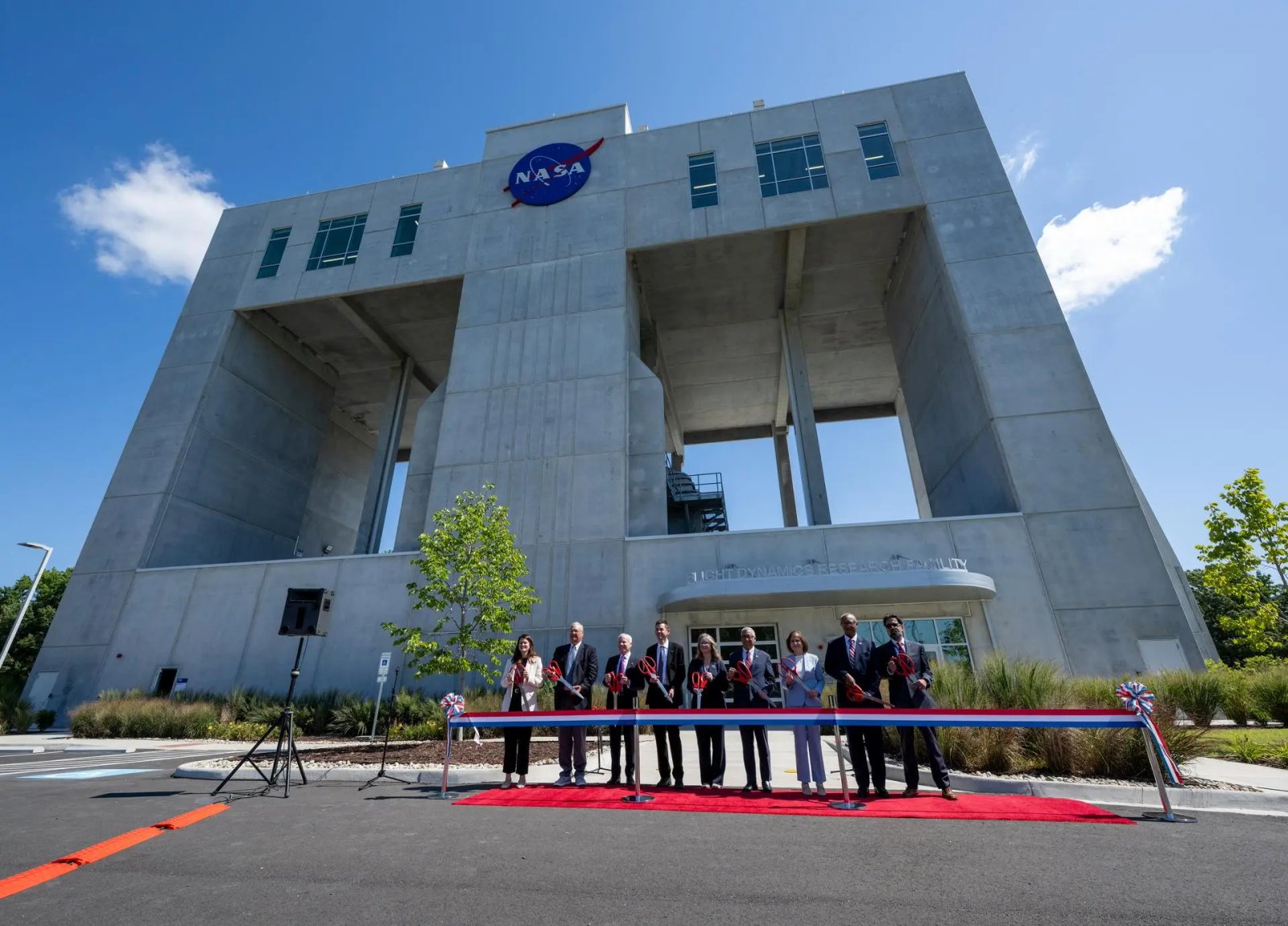
NASA has inaugurated its Flight Dynamics Research Facility at Langley Research Center in Hampton, Virginia. This wind tunnel represents a significant investment in the future of aerospace technology. It serves as an essential resource for testing aircraft, rockets, and space exploration vehicles. With advancements in safety and performance at the forefront, the facility will support diverse applications, including aircraft safety, X-plane development, drone research, and spacecraft technology.
This opening is historic, as it’s NASA’s first major new wind tunnel in over 40 years. “America has led in air and space because we were willing to take on hard problems,” said NASA Administrator Jared Isaacman. The facility aims to empower researchers and industry partners to pioneer new technologies and push the boundaries of aviation and space exploration.
The 25,000-square-foot structure boasts modern design features tailored for flexible testing. By combining the capabilities of two older wind tunnels—the 20-Foot Vertical Spin Tunnel and the 12-Foot Low-Speed Tunnel—it supports both free-flight and mounted tests. Its 20-foot diameter test chamber offers improved airflow, which enhances data accuracy. This means researchers can study larger, more intricate models, significantly advancing knowledge in flight dynamics.
Energy Efficiency Meets Advanced Testing
The facility showcases state-of-the-art features that modernize wind tunnel testing. It includes improved digital systems and a top airspeed of 117 miles per hour, doubling the capabilities of its predecessors. This speed will enable free-flight tests of heavier scale models, simulating full-scale vehicles operating at higher altitudes. Such capabilities are crucial for missions involving the stability of both aircraft and reentry capsules returning from space.
Energy efficiency is another focus. Built in partnership with the U.S. General Services Administration (GSA), the facility reduces maintenance costs while improving operational flexibility. It is powered by four 750-horsepower motors and features lightweight carbon fiber fan blades, allowing rapid airspeed adjustments. These advancements position NASA for transformative research that keeps it at the forefront of aeronautics and space exploration.
As NASA gears up for future missions, including the Artemis program and potential lunar bases, the Flight Dynamics Research Facility will be vital. It will assist in developing vehicle designs for safe entry, descent, and landing on the Moon and beyond. The facility signals a new chapter in aerospace research, marrying NASA’s aeronautics and space exploration efforts to assure continued leadership in these fields.
Expand Your Tech Knowledge
Learn how the Internet of Things (IoT) is transforming everyday life.
Access comprehensive resources on technology by visiting Wikipedia.
Space
