

Essential Insights
- Anak Krakatau’s September 2026 eruption disrupted flights and air quality.
- Satellites captured ash plumes reaching up to 15,000 meters altitude.
- Eight airports closed temporarily, affecting nearly 3,000 flights.
- The volcano’s activity subsided to Strombolian eruptions, alert level remains high.
Anak Krakatau Rumbles Again – NASA Science
Anak Krakatau, a small but active volcano located between Java and Sumatra in Indonesia, has been erupting regularly for years. While most of these eruptions are mild, the volcano sometimes releases powerful explosions that cause serious disruptions. In early September 2026, Anak Krakatau erupted suddenly and intensely. The eruption lasted more than 24 hours, sending ash and gas high into the atmosphere. This activity affected thousands of flights and worsened air quality in nearby areas, including Jakarta, Indonesia’s capital city.
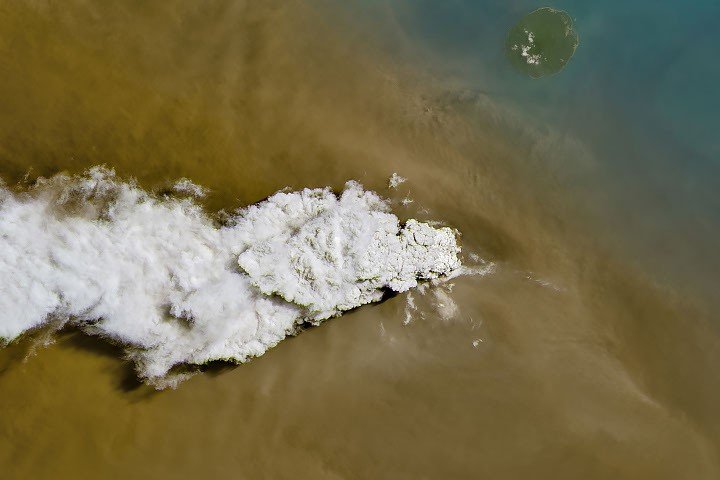
NASA’s satellites played an important role in capturing the eruption’s scale and spread. On September 5, the Landsat 8 satellite, equipped with the Operational Land Imager (OLI), took images showing a thick plume of volcanic gas rising above a large ash cloud. At the same time, the Suomi NPP satellite, with its Visible Infrared Imaging Radiometer Suite (VIIRS), showed the ash dispersing over a wide area. These images help scientists understand how volcanic material travels and impacts the environment.
Impact on Air Travel and Local Communities
The eruption caused significant disruptions across the region. According to Indonesia’s meteorological agency, ash reached altitudes as high as 6,000 meters (20,000 feet) to the east of the volcano and up to 15,000 meters (50,000 feet) to the west. This high-altitude ash affected airline operations; eight airports on Java and Sumatra closed temporarily. Nearly 3,000 flights were canceled or delayed, stranding thousands of travelers. The ashfall also affected populated areas, especially to the east of Anak Krakatau, including Jakarta and parts of West Java.
Volcanic ash is hazardous to health. It can irritate the respiratory system, eyes, and skin. Local authorities warned residents to stay indoors and wear protective gear if they needed to go outside. The Indonesian Humanitarian Coordination Platform noted that, although ash differs from smoke produced by fires, it still poses a significant health risk. Officials continued to monitor the situation closely, emphasizing the importance of preparedness and safety measures.
The eruption activity started to calm down by September 6. The violent explosion subsided, and Anak Krakatau returned to a pattern of smaller, intermittent eruptions called Strombolian activity. By September 8, airports had reopened, though the volcano remained at the second-highest alert level, indicating ongoing potential for activity. Scientists will continue to observe Anak Krakatau as it settles into a less explosive phase, understanding that its behavior can change rapidly.
NASA’s detailed satellite imagery provides valuable insights into the eruption’s dynamics and impacts. These tools allow scientists to track ash dispersal, assess risks, and improve weather alerts. As Anak Krakatau remains an active volcano, technology will continue to be essential in helping local communities stay safe and respond effectively to future eruptions.
Sources: ABC News, BBC, BMKG, Global Volcanism Program, Indonesia Humanitarian Coordination Platform, NASA Earth Observatory
Expand Your Tech Knowledge
Explore the future of technology with our detailed insights on Artificial Intelligence.
Explore past and present digital transformations on the Internet Archive.
Space
