

Quick Takeaways
NASA fully restored Guam Remote Station after super typhoon damage.
The station supports crucial satellite communications for space missions.
Rebuilding was funded by Congress and completed by summer 2026.
Recovery showcased team resilience, dedication, and significance for space safety.
NASA Celebrates Restoration of Guam Station Damaged by Typhoon Mawar
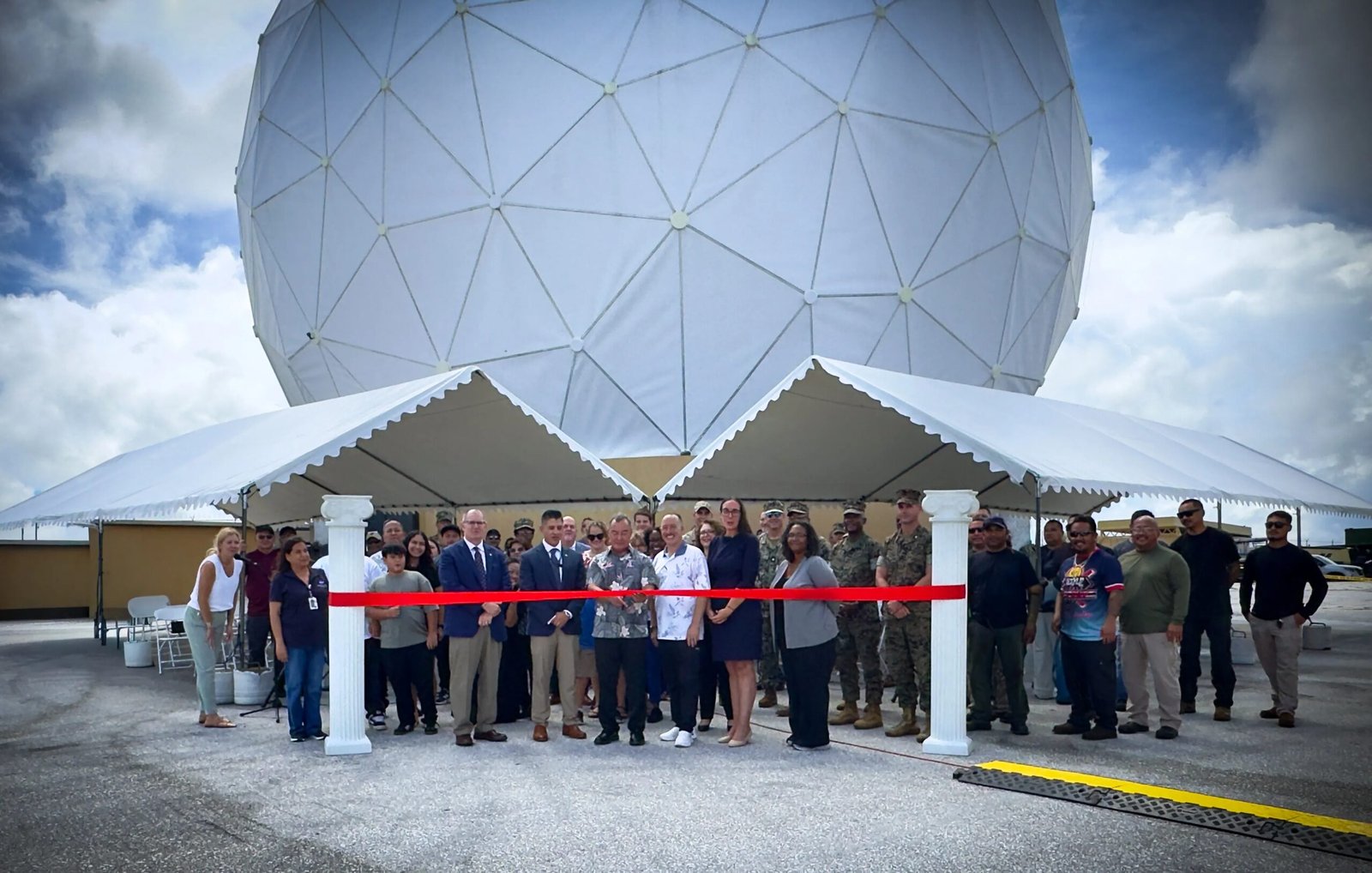
NASA has officially celebrated the full recovery of its Guam Remote Station with a ribbon-cutting ceremony held on September 10. This event marked the completion of a recovery process that took more than three years after Super Typhoon Mawar damaged the site in 2023. The final and most complex step of the rebuilding was completed on July 1, when engineers returned the station’s central antenna to service.
The Guam Remote Station has played a vital role in NASA’s communication network for nearly 30 years. It is one of three ground stations supporting NASA’s Tracking and Data Relay Satellites (TDRS), which are essential for satellite and spacecraft communication. From 22,000 miles above Earth, these relay satellites connect spacecraft in low Earth orbit to ground controllers. This connection allows NASA to communicate with astronauts, command spacecraft, and collect mission data. Without the Guam station, there would be gaps in coverage, risking lost contact with critical missions like the International Space Station. During each orbit, the station helps prevent communication blackouts that otherwise could last up to 20 minutes.
Devastation and Recovery Following Typhoon Mawar
On May 24, 2023, Super Typhoon Mawar struck Guam with wind speeds reaching 185 mph and heavy rain exceeding 28 inches. The storm caused severe damage at the NASA station, destroying two large antennas and damaging another. The storm also damaged the Inter Facility Link building. The strongest antennas, measuring 16.5 meters each, were completely destroyed. The damage temporarily reopened the “Zone of Exclusion,” a stretch of orbit beyond the relay coverage. This change reduced NASA’s satellite coverage to about 85% of the time, impacting space operations.
Immediately after the storm, NASA performed emergency repairs on the least-damaged antenna and borrowed mobile terminals from the U.S. Army. These efforts allowed partial service to continue and supported a spacewalk planned for November 2023. The recovery was only a first step, as full repairs and strengthening measures were needed to ensure future resilience.
In early 2025, Congress allocated disaster-relief funds to rebuild the Guam station and upgrade its systems. Construction began during summer 2025 and finished by summer 2026. The new, stronger central antenna was integrated into the TDRS network. This meant the Zone of Exclusion once again closed, restoring full communication coverage for NASA’s space missions. The funds also supported improvements at three other ground stations in the Near Space Network.
Celebrating Resilience and Technical Achievement
During the ribbon-cutting event, representatives from NASA’s Space Communications and Navigation (SCaN) Division joined local leaders and the station’s staff. The team from Guam led efforts to remove debris, secure the site, and recover systems. Their work was recognized for keeping NASA’s missions connected during the outage and throughout the rebuild. A separate ceremony was held at NASA’s White Sands Complex in New Mexico, honoring engineers and specialists who supported the recovery effort from afar.
Jena Garrahy, Deputy Program Manager for Network Operations, spoke about what the station’s restoration means. “The return to service of the Guam Remote Station’s central antenna is more than just fixing infrastructure. It shows the dedication, resilience, and ingenuity of the people involved,” she said. “They worked through long days and difficult conditions to keep NASA’s missions on track.”
The Near Space Network is managed by NASA’s Space Communications and Navigation Division, based at the agency’s headquarters in Washington. The network is operated from NASA’s Goddard Space Flight Center in Greenbelt, Maryland, while the repairs for the Guam station were overseen by NASA’s Glenn Research Center in Cleveland. This project demonstrates how technology, teamwork, and planning come together to ensure NASA’s continued access to space even after natural disasters.
Expand Your Tech Knowledge
Dive deeper into the world of Cryptocurrency and its impact on global finance.
Access comprehensive resources on technology by visiting Wikipedia.
Space
