

Fast Facts
- Anker’s PowerIQ detects connected devices and adjusts power output to charge them efficiently and safely.
- PowerIQ does not guarantee faster charging; each device limits how much power it can accept.
- PowerIQ 4.0 works with USB Power Delivery 3.0 and Quick Charge, supporting fast charging across many devices.
- Some newer Anker chargers display real-time charging wattage and temperature.
The Beneficial Purpose of “IQ” on Your Anker Chargers
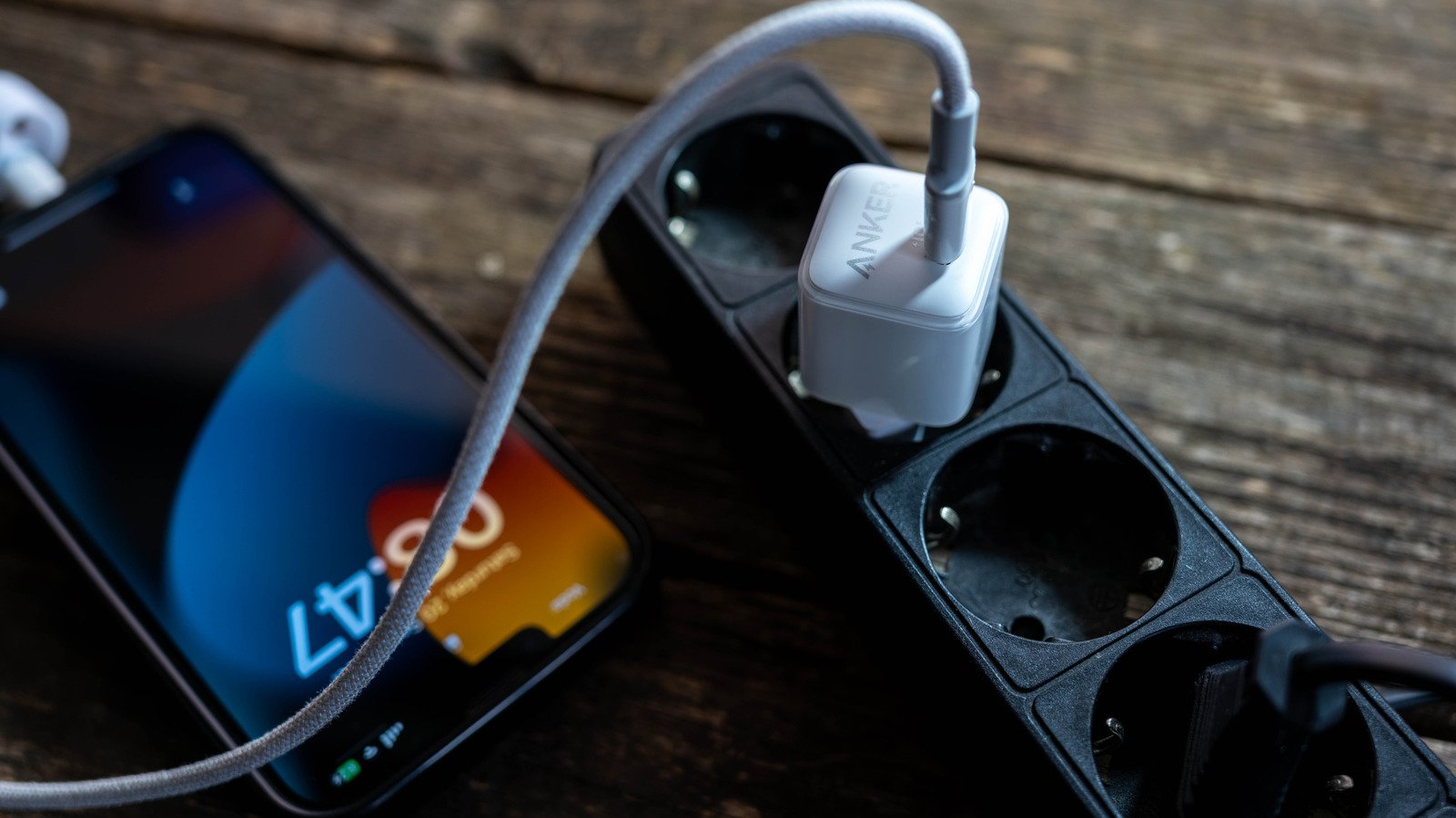
A charger’s label can look like a string of marketing terms. Yet one of those labels can tell you something useful. Anker’s PowerIQ, often shortened to PIQ, helps a charger identify a connected device and adjust its power output to suit that device.
That does not mean every PowerIQ charger will charge every phone at top speed. The device, charger and charging standard all play a part. Still, PowerIQ can make charging more adaptable, whether you use an iPhone, an Android phone or another compatible device.
PowerIQ Helps Match Power to Your Device
Chargers and electronics use different standards to communicate about power. You may see names such as USB Power Delivery, or PD, and Quick Charge, or QC. PowerIQ is Anker’s own technology. It helps the charger recognize the connected device and choose an appropriate power output.
That matching matters. A charger with a high wattage rating does not automatically charge a device faster. If a phone accepts up to 12 watts, a 100-watt charger cannot make it draw more than its limits allow. The phone and charger must both support a suitable charging rate.
Think of it like filling a glass from a faucet. A bigger faucet does not make a small glass hold more water. In the same way, a powerful charger cannot push a device beyond what it can accept.
PowerIQ aims to deliver power efficiently without sending more than the connected device needs. That makes it a useful feature, but not a promise of perfect protection. Fast charging can contribute to long-term battery wear. PowerIQ may help manage power delivery, but it cannot erase that risk.
Compatibility Matters as Much as Speed
Charging speed depends on more than the charger’s maximum output. The device also needs to support the charger’s standard. PD appears widely across modern devices, while many Android products also use QC. The distinctions have narrowed, however. Newer versions of these standards share some compatibility.
Anker’s PowerIQ 4.0 supports QC and PD 3.0. That broad support can make newer PIQ chargers more flexible across devices. It may also reduce the guesswork when a household includes different phones and accessories.
Still, check your device’s specifications before you buy. A charger’s label cannot guarantee the fastest possible charging rate for every product. The charging cable and the device’s own limits also matter. And if you own an older device, do not assume it supports every newer standard.
For iPhone and Android users alike, the practical benefit is straightforward: one compatible charger may work well across several devices. That can mean fewer chargers to carry and less clutter at home. But compatibility does not make every charger identical. Compare the output, ports and standards with the devices you plan to power.
Displays Add Visibility, Not Necessarily More Speed
Some newer Anker chargers include displays that show charging information. Because PowerIQ monitors connected devices, these chargers can show details such as wattage and temperature in real time. The display gives curious users a quick look at what happens after they plug in.
That visibility can help you understand whether a device draws power at a high or modest rate. It may also satisfy anyone who likes to track the details. Yet most people do not need a screen to charge a phone. The feature adds information, not necessarily faster charging or longer battery life.
PowerIQ’s main value comes from adapting power delivery to the connected device. Its newer compatibility can make that process more convenient across supported products. At the same time, buyers should treat “IQ” as one useful feature, not a substitute for checking device limits, charger specifications and charging standards. A smart charger can simplify the routine. Your device still sets the pace.
Stay Ahead with the Latest Tech Trends
Learn how the Internet of Things (IoT) is transforming everyday life.
Discover archived knowledge and digital history on the Internet Archive.
CellphonesV1
