
Close Menu
    Facebook X (Twitter) Instagram
    Saturday, November 14
    Top Stories:
    • How Hair Knows Where to Grow: The Mystery Solved
    • Quest Protein Chips: 2026 Shonky Award Winner
    • Alibaba’s T-Head IPO Tests China’s AI Ambitions Amid Nvidia Saga
    Facebook X (Twitter) Instagram Pinterest Vimeo
    IO Tribune
    • Home
    • AI
    • Tech
      • Gadgets
      • Fashion Tech
    • Crypto
    • Smart Cities
      • IOT
    • Science
      • Space
      • Quantum
    • OPED
    IO Tribune
    Home » Did Life Begin in a Bubble?Did Life Begin in a Bubble?
    Quantum

    Did Life Begin in a Bubble?Did Life Begin in a Bubble?

    Staff ReporterBy Staff ReporterNovember 13, 2026No Comments3 Mins Read
    Share Facebook Twitter Pinterest LinkedIn Tumblr Reddit Telegram Email
    Share
    Facebook Twitter LinkedIn Pinterest Email

    Summary Points

    Early life needed compartments to concentrate chemistry and enable complex reactions.
    Lipid bubbles may have inherited molecular compositions, varied, and competed through growth.
    Models suggest protocell selection, but inheritance accuracy and lipid origins remain disputed.
    Despite competing origin theories, researchers broadly agree compartments enabled Darwinian evolution.

    The Case for a Bubble at Life’s Start

    Life needs a container

    Every living cell separates its chemistry from the world around it. That boundary keeps molecules close enough to interact. Without one, the ingredients of early life may have scattered before they could form reliable chemical systems.

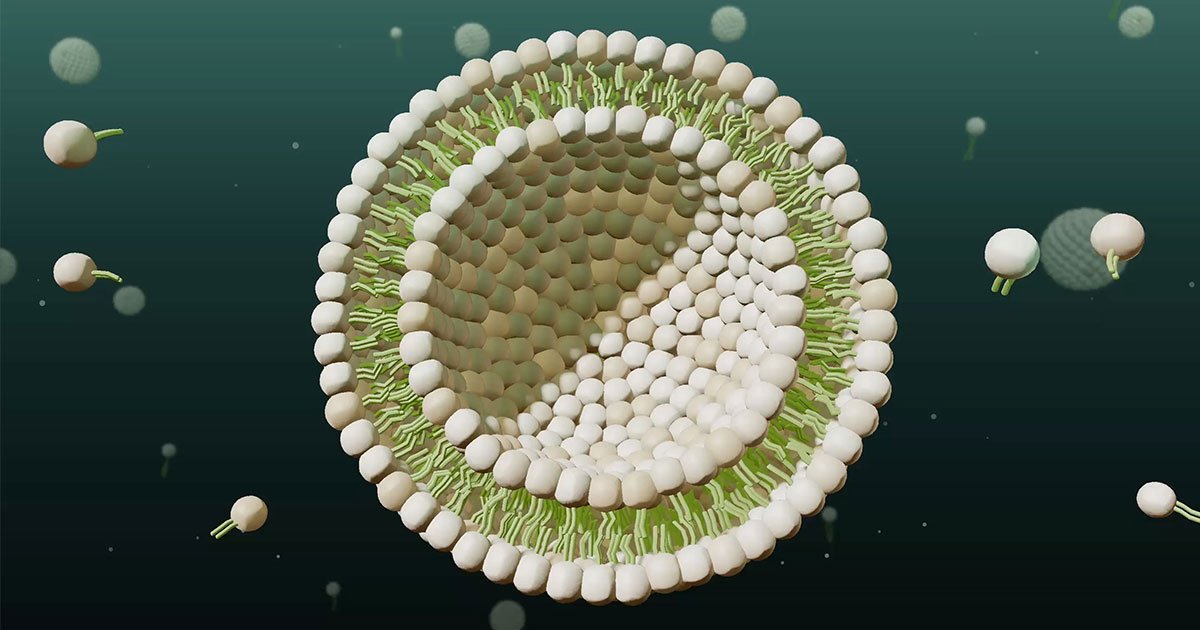
    This simple need has inspired the “lipid-first” idea: perhaps membrane-like bubbles helped life begin. Some small molecules naturally gather in water, with water-attracting ends facing outward and water-repelling ends tucked inside. Under suitable conditions, they can form enclosed compartments.

    A bubble could do more than hold ingredients. Imagine two molecules that help produce each other, forming a self-sustaining loop. As the bubble grows and divides, its contents pass into smaller bubbles. The offspring may inherit a similar mix, though not an exact copy. A stray molecule can alter the mix. If that change helps a bubble grow and divide faster, its descendants may become more common.

    That is a basic route to natural selection: inheritance, variation and competition. A computer model published in 2000 showed that such chemical communities could, in theory, pass on their compositions and compete. The result offered a possible path to evolution before DNA or RNA took center stage.

    A promising idea, not a settled origin story

    The proposal has practical appeal because it addresses a central problem: how could related molecules stay together long enough to cooperate? Lipids also have a useful property. In water, they can assemble into sheets that close into spheres, trapping water and dissolved chemicals inside.

    But the bubble’s material remains unsettled. Researchers have considered mineral walls and coacervates, which are concentrated, droplet-like mixtures. Some also study whether hot-spring pools, with cycles of drying and refilling, could help lipids trap and organize simple molecules.

    There are serious limits to the lipid-first case. Critics question whether early Earth could readily make the needed lipids. They also point to a lack of experimental evidence that a lipid-based system can evolve. One analysis argued that bubbles may not pass their molecular compositions to offspring accurately enough for natural selection to work.

    So the bubble is not a complete explanation for life’s beginning. It is a candidate for one essential function: keeping chemistry together. Even researchers who favor other origin theories agree that some kind of compartment would have helped early chemical systems persist and evolve. The first boundary may not have been a modern cell membrane. But without a boundary of some kind, life’s chemistry may never have had room to begin.

    Expand Your Tech Knowledge

    Explore the future of technology with our detailed insights on Artificial Intelligence.

    Explore past and present digital transformations on the Internet Archive.

    QuantumV1

    HPC Quantum VT1
    Share. Facebook Twitter Pinterest LinkedIn Tumblr Email
    Previous ArticleLoRaWAN Expands Across Sweden’s New Homes
    Next Article BYD Admits Wheel Assembly Error in Flagship EV SUV
    Avatar photo
    Staff Reporter
    • Website

    John Marcelli is a staff writer for IO Tribune, with a passion for exploring and writing about the ever-evolving world of technology. From emerging trends to in-depth reviews of the latest gadgets, John stays at the forefront of innovation, delivering engaging content that informs and inspires readers. When he's not writing, he enjoys experimenting with new tech tools and diving into the digital landscape.

    Related Posts

    IOT

    Can Retail Handle IoT’s Rising Complexity?

    November 14, 2026
    AI

    AI Boosts Laser Physics Speed by 250x

    November 14, 2026
    Science

    Uranus vs. Neptune: Chemistry Reveals Different Origins

    November 14, 2026
    Add A Comment

    Comments are closed.

    Must Read

    Can Retail Handle IoT’s Rising Complexity?

    November 14, 2026

    AI Boosts Laser Physics Speed by 250x

    November 14, 2026

    Uranus vs. Neptune: Chemistry Reveals Different Origins

    November 14, 2026

    AI Microdramas Bring More Black Stories to Hollywood

    November 14, 2026

    Gemini Photos Inspired Earth Observation

    November 14, 2026
    Categories
    • AI
    • Crypto
    • Fashion Tech
    • Gadgets
    • IOT
    • OPED
    • Quantum
    • Science
    • Smart Cities
    • Space
    • Tech
    Most Popular

    BioSentinel: Pioneering Space Biology

    November 22, 2025

    Top AirPods to Elevate Your Audio Experience in 2025

    July 22, 2025

    Hidden Risks: Unseen Factors in Dementia Prevention

    September 18, 2026
    Our Picks

    Why Mosquitoes Zero In on You: The Science Behind Their Targeting

    March 22, 2026

    Permafrost and Wetlands Could Accelerate Climate Warming

    September 12, 2026

    $1.3B Blunder Triggers Financial Oversight Probe

    February 22, 2026
    Categories
    • AI
    • Crypto
    • Fashion Tech
    • Gadgets
    • IOT
    • OPED
    • Quantum
    • Science
    • Smart Cities
    • Space
    • Tech
    • Privacy Policy
    • Disclaimer
    • Terms and Conditions
    • About Us
    • Contact us
    Copyright © 2025 Iotribune.comAll Rights Reserved.

    Type above and press Enter to search. Press Esc to cancel.