
Close Menu
    Facebook X (Twitter) Instagram
    Saturday, November 28
    Top Stories:
    • How Jensen Huang’s Saga Resets the US-China Tech Rivalry
    • Alpha-Gal Allergy: How Tick Bites Make Red Meat Dangerous
    • Congo Ebola Outbreak Tops 12,000 Cases as Responders Flee
    Facebook X (Twitter) Instagram Pinterest Vimeo
    IO Tribune
    • Home
    • AI
    • Tech
      • Gadgets
      • Fashion Tech
    • Crypto
    • Smart Cities
      • IOT
    • Science
      • Space
      • Quantum
    • OPED
    IO Tribune
    Home » Apollo 17’s VIP Site Revealed in 3D
    Space

    Apollo 17’s VIP Site Revealed in 3D

    Staff ReporterBy Staff ReporterNovember 28, 2026No Comments3 Mins Read
    Share Facebook Twitter Pinterest LinkedIn Tumblr Reddit Telegram Email
    Share
    Facebook Twitter LinkedIn Pinterest Email

    Summary Points

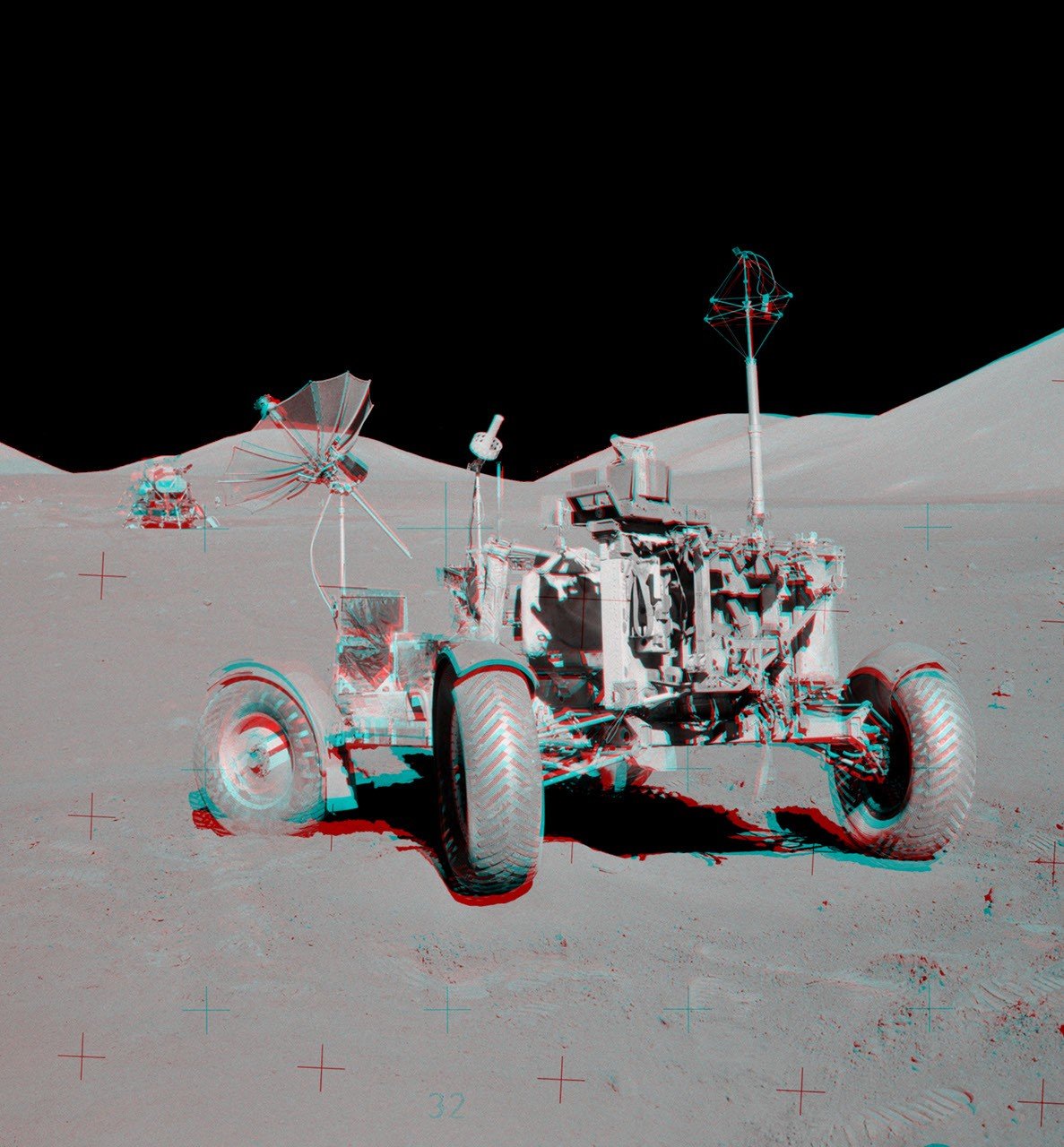
    Apollo 17’s 3D stereo view shows the rover, Lunar Module, and hills.

    The site, nicknamed VIP Site, broadcast Lunar Module ascent via rover camera.

    In December 1972, Cernan and Schmitt spent 75 hours exploring the Moon.

    They returned 110 kilograms of samples and remain humanity’s last lunar walkers.

    APOD: 2026 November 28 – Apollo 17 VIP Site Anaglyph

    A lunar landscape with depth

    Put on red-and-blue glasses, and the Moon’s Taurus-Littrow valley takes on a striking third dimension. This anaglyph combines two slightly different views. Each eye sees a separate color image, and the brain blends them into a sense of depth.

    The Lunar Roving Vehicle fills the foreground. Beyond it sits the Apollo 17 Lunar Module, with lunar hills rising in the distance. The effect makes the scene feel less like a flat record of a mission and more like a place a visitor might navigate. But the glasses are essential: without them, the two color layers may look blurred or misaligned. Anaglyphs also trade natural color for depth, a practical compromise that makes a stereo image easy to share without specialized screens.

    The view from the VIP Site

    The rover’s position was chosen for more than the scenery. Apollo 17’s crew parked it at a spot known as the VIP Site, where its television camera could show the Lunar Module’s ascent stage lifting off. The camera gave viewers on Earth a rare view of a spacecraft departing the Moon. It also demonstrated a practical use for the rover beyond carrying astronauts and equipment: it could serve as a mobile observation platform.

    That setup depended on careful placement and remote operation. The camera had to be positioned to keep the ascent in view, while the rover itself remained behind. The technology expanded what people on Earth could witness, but it could not replace the astronauts’ direct observations or the samples they collected.

    In December 1972, Eugene Cernan and Harrison Schmitt spent about 75 hours on the lunar surface. Their crewmate Ronald Evans orbited overhead. The astronauts returned with about 110 kilograms of lunar rock and soil, more than any other Apollo landing crew brought back. Cernan and Schmitt remain the last people to walk or drive on the Moon.

    More than five decades later, the anaglyph offers both a view of the landscape and a record of how the mission used technology to connect a distant event with an audience on Earth.

    Discover More Technology Insights

    Dive deeper into the world of Cryptocurrency and its impact on global finance.

    Stay inspired by the vast knowledge available on Wikipedia.

    Space

    APOD Cosmos NASA Space VT1
    Share. Facebook Twitter Pinterest LinkedIn Tumblr Email
    Previous ArticleUSGS Earthquake Data Analysis: 2015–2025
    Next Article Test LLM State Tracking with Deployment Logs
    Avatar photo
    Staff Reporter
    • Website

    John Marcelli is a staff writer for IO Tribune, with a passion for exploring and writing about the ever-evolving world of technology. From emerging trends to in-depth reviews of the latest gadgets, John stays at the forefront of innovation, delivering engaging content that informs and inspires readers. When he's not writing, he enjoys experimenting with new tech tools and diving into the digital landscape.

    Related Posts

    Science

    E-Cigarettes May Help You Quit Smoking—If You Consider This Factor

    November 28, 2026
    Gadgets

    How to Access Apple TV’s Hidden Developer Menu

    November 28, 2026
    AI

    Test LLM State Tracking with Deployment Logs

    November 28, 2026
    Add A Comment

    Comments are closed.

    Must Read

    E-Cigarettes May Help You Quit Smoking—If You Consider This Factor

    November 28, 2026

    How to Access Apple TV’s Hidden Developer Menu

    November 28, 2026

    Test LLM State Tracking with Deployment Logs

    November 28, 2026

    Apollo 17’s VIP Site Revealed in 3D

    November 28, 2026

    USGS Earthquake Data Analysis: 2015–2025

    November 28, 2026
    Categories
    • AI
    • Crypto
    • Fashion Tech
    • Gadgets
    • IOT
    • OPED
    • Quantum
    • Science
    • Smart Cities
    • Space
    • Tech
    Most Popular

    Apple’s $250 Million Settlement: Misleading A.I. Claims Exposed

    May 5, 2026

    Tele2 IoT & Lenovo Connect Drive Global IoT Expansion

    July 2, 2026

    Discovering a Risky yet Valuable AI Agent

    September 24, 2026
    Our Picks

    Decoding Aging Mysteries with Google DeepMind

    May 23, 2026

    Fix iMessage “Not Delivered” Error on iPhones Easily

    September 14, 2026

    Mexico City: A Race Against Gravity

    May 6, 2026
    Categories
    • AI
    • Crypto
    • Fashion Tech
    • Gadgets
    • IOT
    • OPED
    • Quantum
    • Science
    • Smart Cities
    • Space
    • Tech
    • Privacy Policy
    • Disclaimer
    • Terms and Conditions
    • About Us
    • Contact us
    Copyright © 2025 Iotribune.comAll Rights Reserved.

    Type above and press Enter to search. Press Esc to cancel.