

Fast Facts
- NASA uses small drones for cost-effective aerospace concept testing and validation.
- The Dale Reed Lab pilots various remotely operated aircraft for diverse missions.
- Projects like FireSense enhance wildfire management through localized weather data collection.
- Innovations in collision avoidance and aerodynamic designs support safer, efficient future aircraft.
Accelerating Flight Innovation through Subscale Testing
Testing new aerospace concepts in flight is crucial for advancing knowledge and reducing risk. NASA achieves this through its Dale Reed Subscale Flight Research Laboratory at Armstrong Flight Research Center in Edwards, California. This laboratory employs small, remotely piloted, and autonomous aircraft to serve as cost-effective platforms for maturing innovative ideas. By using these subscale aircraft, NASA can accelerate learning and enable smoother transitions to full-scale flight.
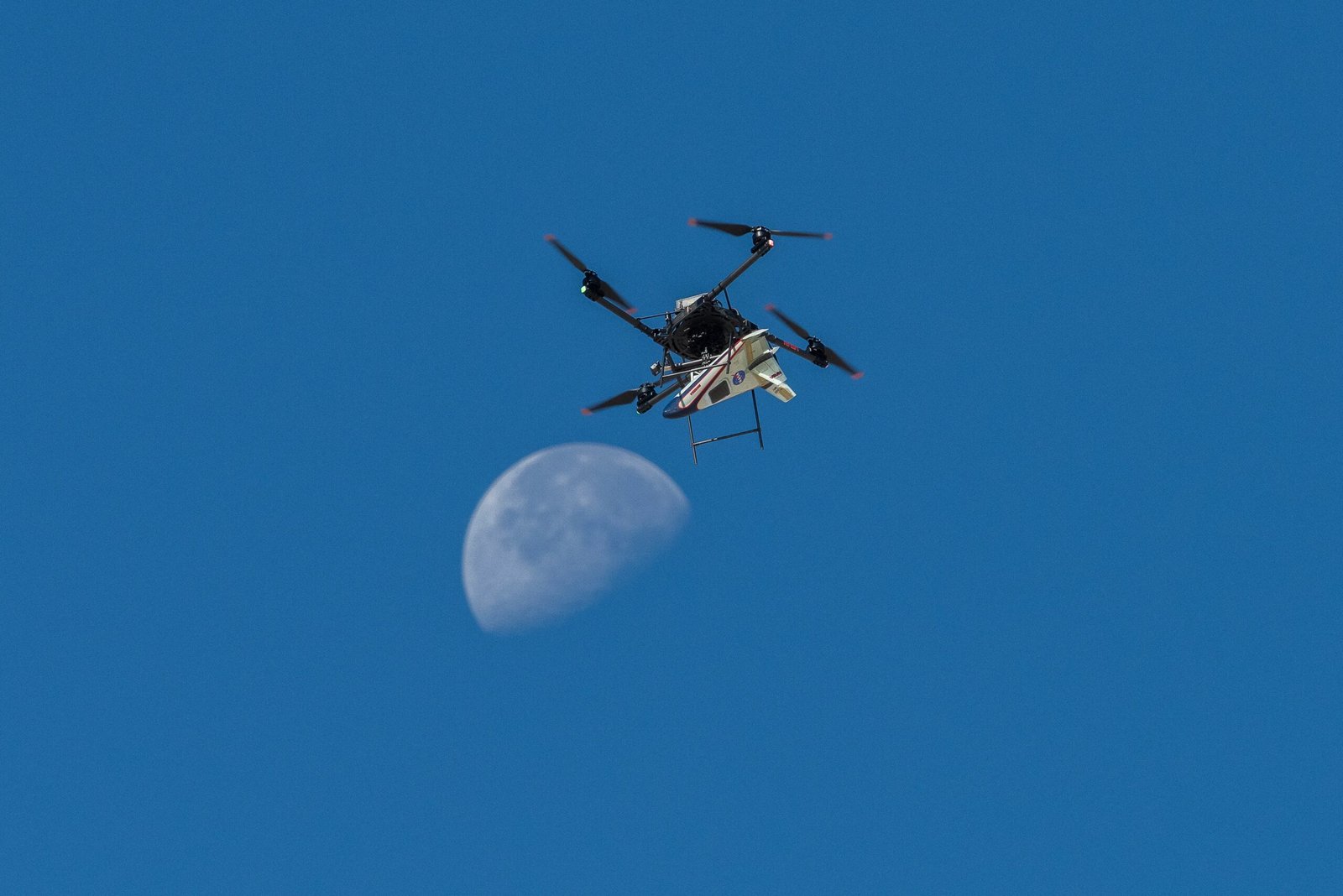
NASA has a diverse fleet of remotely piloted aircraft. This includes the Alta-X quadrotor, the Dryden Remotely Operated Integrated Drone (DROID), and the Multi-Use Cub, which has a fixed-wing design. The DROID boasts a 10-foot wingspan, while the Multi-Use Cub features a 14-foot span and expandable payload capacity. For electric vertical takeoff and landing tests, the HQ-90 quadrotor is also utilized.
Before any flight, rigorous preparations take place. Laboratory pilots are certified and experienced, ensuring that they can handle fluid operations, including both ground and flight activities. One prime example of this approach is NASA’s FireSense project. Flights conducted in the Geneva State Forest showcased how an Alta-X drone could gather localized weather data that affects smoke movement and fire behavior. This data is invaluable for operational agencies, enhancing wildfire decision-making and resource allocation.
Transforming Concepts into Flight-Ready Technologies
Closer to the Armstrong center, other innovative missions are underway, such as the Enhancing Parachutes by Instrumenting the Canopy (EPIC) project. In this project, staff air-launched a capsule that contained a parachute. Using the Alta-X, they effectively piloted the flights and integrated the parachute drop mechanism for safety. These tests revealed that flexible sensors could help in studying supersonic parachutes, filling critical gaps in computer models. Such advancements may lead to safer and more reliable delivery systems for materials headed to Mars.
NASA’s work extends beyond just testing platforms. The organization has pioneered Automatic Collision Avoidance Technology, which demonstrates an autopilot’s ability to prevent ground collisions. The DROID has played an instrumental role in this research, contributing to a simplified version called the Automatic Ground Collision Avoidance System. This system benefits general aviation pilots and autonomous aircraft. NASA’s Technology Transfer Office aims to license this technology, paving the way for commercial applications.
Additionally, the Prandtl-D flying-wing glider, a project born out of NASA Armstrong, presents promising research insights. Its innovative twisted wing design has the potential to lower drag and enhance thrust efficiency, leading to improved fuel economy for future aircraft. The original Prandtl-D has found its home at the Smithsonian National Air and Space Museum, while ongoing development continues in the laboratory.
The capability of the Dale Reed Subscale Flight Research Laboratory extends into rapid prototyping and advanced manufacturing. Engineers employ both traditional and cutting-edge techniques to design and fabricate essential components. They support hardware and software integration, ensuring all systems are flight-ready. The laboratory’s collaborative environment fosters innovation, propelling NASA’s aeronautics and exploration initiatives forward.
Discover More Technology Insights
Dive deeper into the world of Cryptocurrency and its impact on global finance.
Stay inspired by the vast knowledge available on Wikipedia.
Space
