

Quick Takeaways
- The Orion capsule with Artemis II astronauts safely splashed down off San Diego on April 10, concluding a 10-day lunar orbit mission.
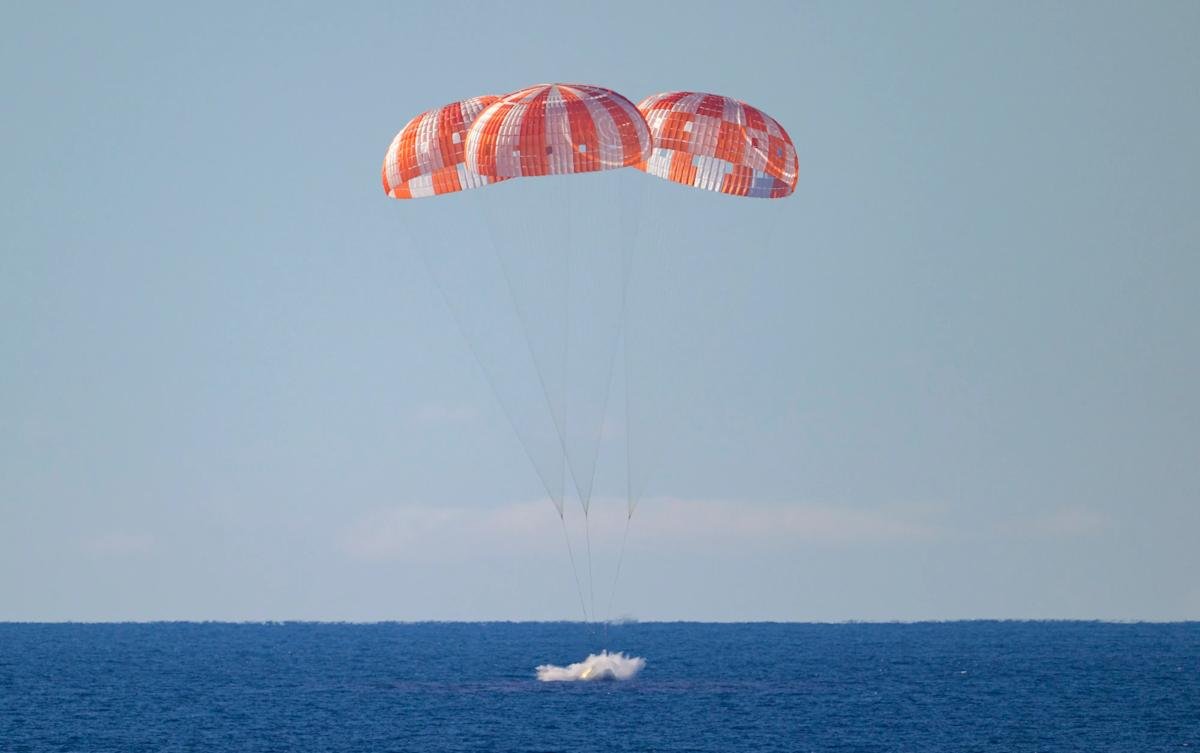
- The crew separated from the service module, re-entered Earth’s atmosphere, and deployed parachutes for a safe water landing.
- The four astronauts became the first to view the Moon’s far side firsthand during their journey around the Moon.
- NASA will soon announce the Artemis III crew, which will involve lunar lander testing and aim to return humans to the lunar surface.
The Artemis II astronauts have safely returned to Earth after a 10-day journey around the moon. The Orion capsule splashed down off the coast of San Diego at 8:07 p.m. Eastern time on April 10. This marks the end of a historic test flight, helping NASA prepare for future lunar missions.
The crew separated from the service module at 7:33 p.m. The service module was designed to burn up in Earth’s atmosphere, while the crew capsule was built for a safe return home. As the capsule neared Earth, it entered a six-minute communication blackout caused by intense heating.
During descent, the capsule deployed 11 parachutes to slow its fall. First, the drogue parachutes opened at 23,400 feet, stabilizing the capsule. Then, at 5,400 feet, the drogue chutes were cut away, and the main parachutes opened. This reduced the capsule’s speed, ensuring a gentle splashdown.
NASA engineers carefully monitored the process. After the capsule settled in the water, recovery teams moved in on inflatable boats. All four astronauts were out by 9:34 p.m. They were quickly hoisted into helicopters and flown to the USS John P. Murtha. Medical teams examined them to ensure their health after the mission.
The crew included NASA’s Reid Wiseman, Victor Glover, Christina Koch, and Canada’s Jeremy Hansen. Inside the capsule, the astronauts captured stunning photos of the moon’s far side — a first for humans. They also used smartphones to take close-up images of the lunar surface, providing new insights into our nearest celestial neighbor.
NASA officials announced plans to reveal the Artemis III crew soon. This upcoming mission will land astronauts on the moon using new commercial landers from SpaceX and Blue Origin. These craft will dock with Orion in low Earth orbit, paving the way for the next step in lunar exploration.
This successful mission showcases the value of advanced technology and urban innovation. Smart cities and modern infrastructure are essential for supporting complex space operations, just as they are vital for daily life. The Artemis program’s advancements inspire us to build more sustainable, connected communities on Earth and beyond.
Expand Your Tech Knowledge
Learn how the Internet of Things (IoT) is transforming everyday life.
Stay inspired by the vast knowledge available on Wikipedia.
GadgetsV1
