

Fast Facts
- Cristian Galbiati shifted from dark matter research to ventilator development during COVID-19.
- His expertise in gas handling enabled creating the Mechanical Ventilator Milano.
- The innovative ventilator was approved rapidly, addressing urgent healthcare needs.
- Galbiati’s work benefits both physics and medical advancements, showcasing research’s unexpected impact.
From Dark Matter to Life-Saving Ventilators
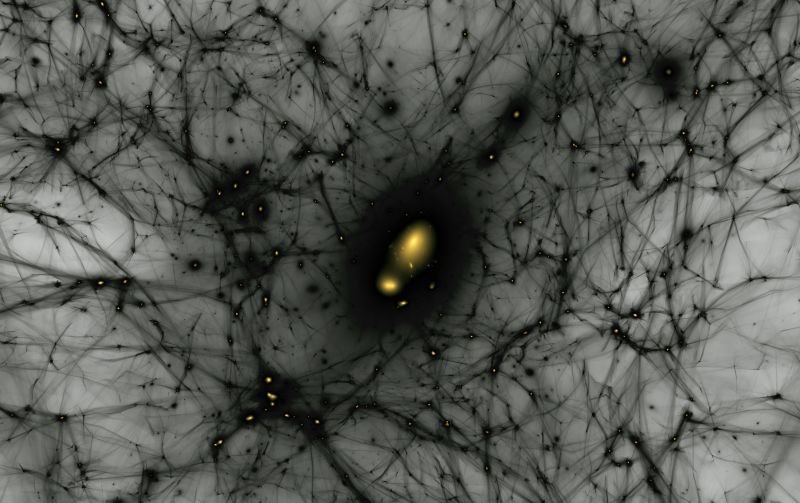
Cristian Galbiati’s work in particle physics usually revolves around dark matter—the elusive substance that makes up most of the universe’s mass. Galbiati focuses on the DarkSide program, which aims to detect this mysterious matter directly. However, when the COVID-19 pandemic halted research activities last spring, Galbiati’s expertise took an unexpected turn. With hospitals strained under the weight of respiratory illness, he realized his skills in gas handling could help build ventilators.
Most particle physicists don’t pivot into medical technologies. But Galbiati and his colleagues understood the urgency of the situation. With a surge in ventilator demand, they adapted their knowledge from handling gases like argon to create a ventilator that utilized more readily available materials. The shift from quantum mechanics to emergency medicine underscores the creativity that fundamental research can unlock. NSF-supported programs like DarkSide nurture this kind of innovation, providing a foundation that extends beyond the lab.
The Mechanical Ventilator Milano emerged from this initiative. The FDA approved it in record time, making it a readily available option as hospitals grappled with critical shortages. This ventilator stands as a testament to the adaptability of scientific research—transforming complexities of the universe into a tool that can save lives. Galbiati and his team mobilized quickly, enlisting help from medical professionals and industry partners. They created a viable solution using common parts that could be mass-produced at lower costs.
Unforeseen Benefits of Basic Research
The ingenuity displayed by Galbiati goes beyond just the ventilator. His exploration for argon in Colorado led to the discovery of a new helium deposit. Helium serves various industries, from MRI machines to fiber optics, demonstrating that fundamental research often produces unforeseen benefits.
Galbiati’s work also includes purifying the argon used in experiments. The techniques developed for this purpose hold potential for advanced medical applications like producing stable isotopes for diagnostic imaging. Each of these threads of discovery feeds into a larger tapestry of scientific advancement, ensuring that basic research not only answers critical questions about dark matter but also serves practical, real-world needs.
Now, as the DarkSide project gears back up, the primary focus returns to understanding one of the biggest mysteries in astrophysics. Yet, the sudden pivot to creating life-saving equipment exemplifies the vital role that scientific inquiry plays during crises. Researchers like Galbiati demonstrate how working at the frontiers of knowledge can lead to innovations that resonate well beyond their initial scope. They redefine the impact of science in society and remind us of the interconnectedness of discovery and human need.
Expand Your Tech Knowledge
Explore the future of technology with our detailed insights on Artificial Intelligence.
Stay inspired by the vast knowledge available on Wikipedia.
TechV1
