
Close Menu
    Facebook X (Twitter) Instagram
    Thursday, June 18
    Top Stories:
    • Stay Active: How Fitness Trackers Empower Heart Disease Patients
    • Vaquita on the Edge: A Digital Lifeline Emerges
    • Saudi Arabia accelerates smart-city projects through Chinese construction deals
    Facebook X (Twitter) Instagram Pinterest Vimeo
    IO Tribune
    • Home
    • AI
    • Tech
      • Gadgets
      • Fashion Tech
    • Crypto
    • Smart Cities
      • IOT
    • Science
      • Space
      • Quantum
    • OPED
    IO Tribune
    Home » Dark Matter: The Cosmic Transformer That Could Create Tiny Black Holes
    Quantum

    Dark Matter: The Cosmic Transformer That Could Create Tiny Black Holes

    Staff ReporterBy Staff ReporterAugust 31, 2025No Comments3 Mins Read
    Share Facebook Twitter Pinterest LinkedIn Tumblr Reddit Telegram Email
    Share
    Facebook Twitter LinkedIn Pinterest Email

    Fast Facts

    1. Dark Matter Insights: A new study suggests that dark matter may accumulate in giant planets’ cores, potentially forming tiny black holes that could validate a superheavy non-annihilating dark matter model.

    2. Black Hole Formation: If heavy dark matter particles don’t self-annihilate, they can collapse into black holes, which may consume entire planets over time.

    3. Exoplanets as Probes: Exoplanet surveys might provide critical evidence for superheavy dark matter, especially in regions rich in dark matter like the Milky Way’s center.

    4. Tech Challenges Ahead: Current technology struggles to detect small black holes, but advancements may eventually allow astronomers to uncover these planet-sized black holes, offering insights into dark matter’s nature.

    Dark Matter Could Transform Planets into Black Holes, Study Reveals

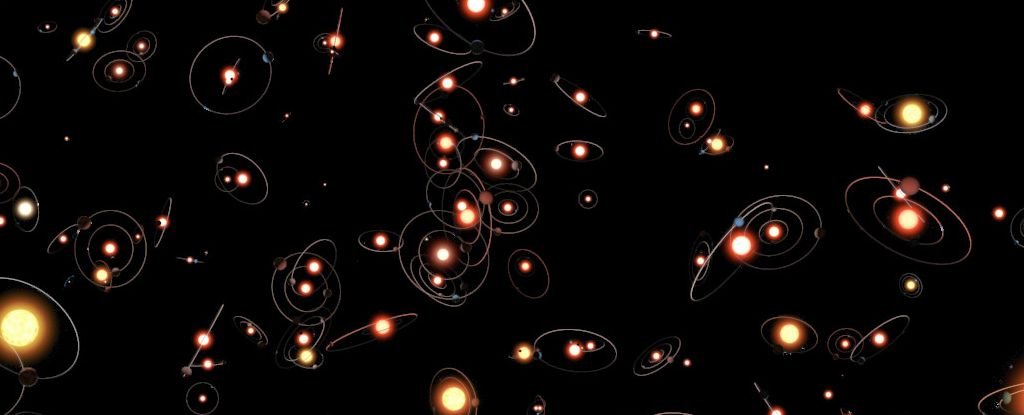
    Recent research suggests that dark matter might play a pivotal role in the formation of black holes within giant exoplanets. Scientists, led by astrophysicist Mehrdad Phoroutan-Mehr from the University of California, Riverside, explored a theory involving superheavy, non-annihilating dark matter. This method proposes that dark matter could accumulate in the cores of these massive planets, eventually collapsing into tiny black holes.

    Dark matter, which makes up about 85 percent of the universe’s mass, remains largely undetectable. Researchers know it exists due to the gravitational pull observed in galaxies, yet its exact nature eludes them. This study offers a new avenue to investigate dark matter’s properties.

    Moreover, the researchers believe that if dark matter particles are heavy enough and do not annihilate, they could sink towards a planet’s core. As this occurs, the particles may become concentrated enough to collapse under gravity. This process could create black holes the size of some planets. Phoroutan-Mehr stated that these tiny black holes could grow and potentially consume their entire host planets.

    The implications are significant. If scientists can find evidence of these planet-sized black holes, it could substantiate the existence of this unique form of dark matter. However, challenges remain, particularly in detecting such small objects. For instance, a black hole with the mass of Jupiter would only measure about 5.6 meters across.

    Despite these hurdles, technological advancements in space observation continue to develop. Enhanced tools may one day enable astronomers to spot these elusive objects. Phoroutan-Mehr noted that identifying a population of planet-sized black holes would strongly support the theory of superheavy non-annihilating dark matter.

    Ultimately, further investigations into exoplanets could provide vital insights into the mysteries of dark matter. As researchers analyze different planets, they may uncover crucial evidence that reshapes our understanding of the universe. The findings of this study appear in Physical Review D, marking a promising step forward in both astrophysics and technology development.

    Discover More Technology Insights

    Stay informed on the revolutionary breakthroughs in Quantum Computing research.

    Stay inspired by the vast knowledge available on Wikipedia.

    QuantumV1

    HPC MSFT Content Quantum VT1
    Share. Facebook Twitter Pinterest LinkedIn Tumblr Email
    Previous ArticleChina’s Ambitious Vision: 300,000 Driverless Taxis by 2030
    Next Article Why I Can’t Ditch My Kindle: One Irresistible Feature
    Avatar photo
    Staff Reporter
    • Website

    John Marcelli is a staff writer for IO Tribune, with a passion for exploring and writing about the ever-evolving world of technology. From emerging trends to in-depth reviews of the latest gadgets, John stays at the forefront of innovation, delivering engaging content that informs and inspires readers. When he's not writing, he enjoys experimenting with new tech tools and diving into the digital landscape.

    Related Posts

    AI

    Run a Local LLM on Your Mac Mini

    June 18, 2026
    Tech

    Stay Active: How Fitness Trackers Empower Heart Disease Patients

    June 18, 2026
    Gadgets

    Gemini Bubble Gets Fresh Gradient Design Expansion

    June 18, 2026
    Add A Comment

    Comments are closed.

    Must Read

    Run a Local LLM on Your Mac Mini

    June 18, 2026

    Stay Active: How Fitness Trackers Empower Heart Disease Patients

    June 18, 2026

    Gemini Bubble Gets Fresh Gradient Design Expansion

    June 18, 2026

    Andrew Tate’s 8 Liquidations & Hayes’ ETH Buy

    June 18, 2026

    Unlocking User Intent: Keywords, Scope, Shape, Clarity

    June 18, 2026
    Categories
    • AI
    • Crypto
    • Fashion Tech
    • Gadgets
    • IOT
    • OPED
    • Quantum
    • Science
    • Smart Cities
    • Space
    • Tech
    • Technology
    Most Popular

    Instagram Plus: Secretly View Stories in Limited Test

    March 31, 2026

    Orbiting Innovations: Fueling Artemis II

    February 16, 2026

    Unlock Your Mind: 5 Weeks of Brain Training for 20 Years of Dementia Defense!

    February 12, 2026
    Our Picks

    RAG Wastes Money — I Built a Cost Control Layer

    May 31, 2026

    Unleashing Creativity: Dive into MIT’s Exciting New Image Editing Revolution!

    July 22, 2025

    Xiaomi Sets Sights on Samsung’s Anti-Snoop Innovation

    May 27, 2026
    Categories
    • AI
    • Crypto
    • Fashion Tech
    • Gadgets
    • IOT
    • OPED
    • Quantum
    • Science
    • Smart Cities
    • Space
    • Tech
    • Technology
    • Privacy Policy
    • Disclaimer
    • Terms and Conditions
    • About Us
    • Contact us
    Copyright © 2025 Iotribune.comAll Rights Reserved.

    Type above and press Enter to search. Press Esc to cancel.