

Top Highlights
- The Stillaguamish Tribe transformed farmland into wetland to restore salmon habitats.
- Tribal members advocate for ecological benefits despite challenges with farming land use.
- Restored marshes support Chinook salmon, vital to tribe’s cultural identity.
- New levees help manage floods, yet highlight conflicts between agriculture and conservation.
A Tribe’s Bold Move for Salmon Restoration
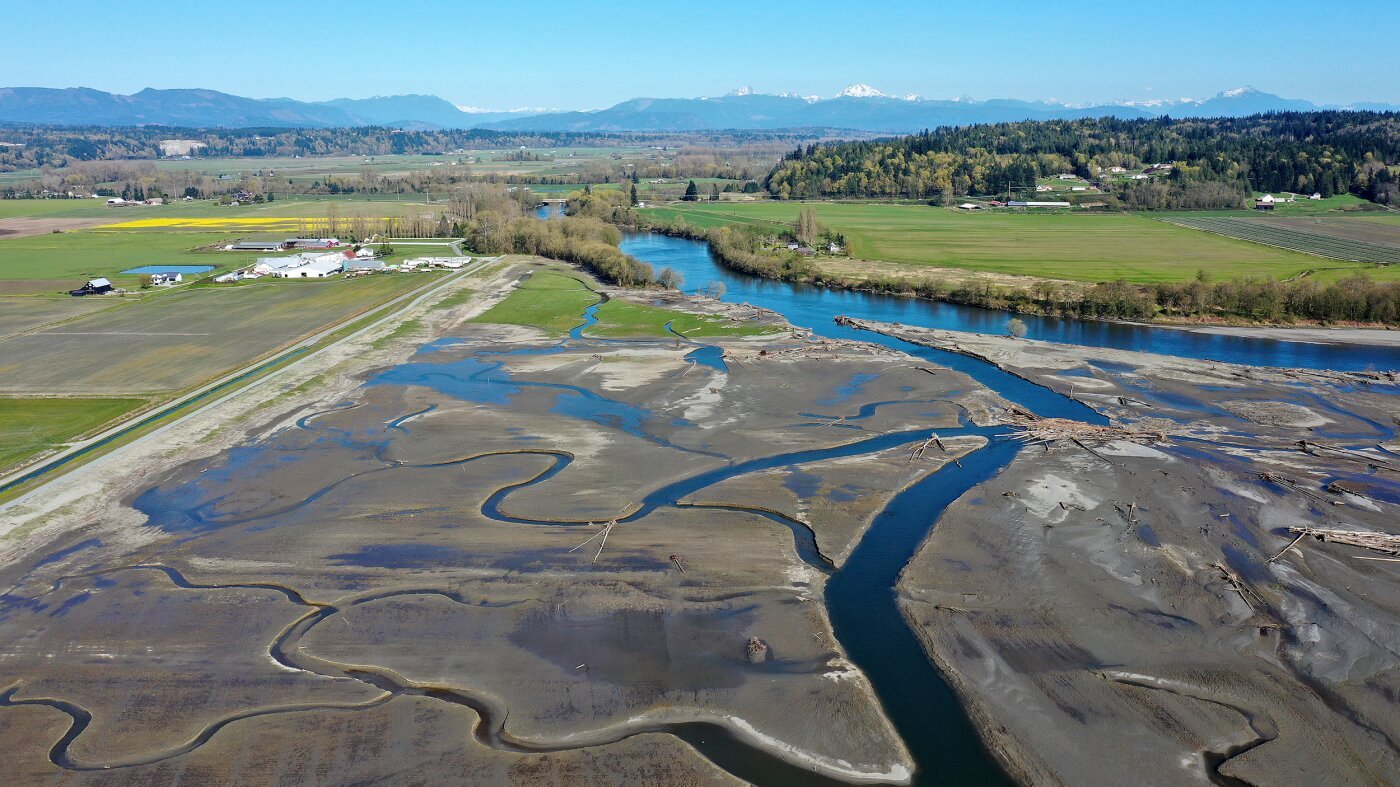
The Stillaguamish Tribe near Seattle has taken a groundbreaking step to save endangered Chinook salmon. They are transforming farmland into wetlands by removing levees that have long kept the tidal river and ocean at bay. This bold action allows the Stillaguamish River to reconnect with its floodplain, restoring vital habitat for salmon—critical for their survival and reproduction.
Scott Boyd, a fisheries manager with the tribe, highlights the significance of these tidal marshes. Historically, this area was a dairy farm. Now, with the creation of a 230-acre wetland, the tribe aims to foster a vibrant ecosystem that supports not only salmon but also other wildlife. The tribe has purchased around 2,000 acres in its traditional territory over the past 15 years, reflecting a deep commitment to restoring the habitat both for their cultural identity and ecological health. Boyd notes that their tribal history is intertwined with salmon. “The salmon has always been important to our people; it is our way of life,” he says.
The restoration project comes at a crucial time, as Chinook salmon face the threat of extinction. Last year, the tribe was limited to a mere 26 fish due to plummeting populations. Tidal marshes serve as nurseries for young salmon, and their restoration may bolster populations in the long run. The project also demonstrates a thoughtful response to environmental challenges. Recent flooding highlighted the need for better flood management. Restored wetlands can absorb floodwaters, reducing risks to nearby communities and agriculture.
Balancing Agriculture and Ecology
While the tribe’s efforts are laudable, they bring to the forefront the complex relationship between land use and community needs. Farmers near the Stillaguamish River, like Tyler Breum, stress the importance of agricultural land. Breum emphasizes, “There’s only so much farmland,” and he worries about the implications of reducing available land for food production. As populations increase, the demand for food rises too, complicating decisions about land use.
The balance is delicate. Farmers require levees to protect their land from flooding, especially in an era of increasing severe weather events. Breum, who faced anxiety during last winter’s storms, points to the necessity of robust flood protection. However, he acknowledges the importance of restoring wetlands for salmon survival. The tribe’s new levee is four feet taller than the old one, potentially benefiting both their habitat restoration goals and agricultural productivity in the long run.
As these efforts unfold, ecological and agricultural communities must engage in ongoing dialogue. The future of both salmon and farming depends on a thoughtful approach that considers their interconnected fates. The Stillaguamish Tribe’s restorative actions may offer valuable lessons for broader efforts to address the urgent challenges posed by climate change and habitat loss.
Stay Ahead with the Latest Tech Trends
Learn how the Internet of Things (IoT) is transforming everyday life.
Access comprehensive resources on technology by visiting Wikipedia.
Space
