

Summary Points
-
Incredible Galactic Winds: NASA’s XRISM spacecraft measures winds from the starburst galaxy M82 traveling at 2 million mph (3.21 million kph), revealing the dynamic processes behind intense star formation.
-
High-Temperature Outflows: The superheated gas at M82’s core reaches 45 million°F (25 million°C), generating immense pressure that propels winds stretching 40,000 light-years, crucial for understanding cosmic ray dynamics.
-
Mystery of Excess Outflow: M82 expels the mass equivalent of seven suns annually, posing a question for astronomers about the fate of the additional three solar masses not accounted for in current models.
-
Advancing Galactic Models: Ongoing observations by XRISM aim to refine 1980s models of starburst galaxies, potentially solving puzzles about their behavior and improving our understanding of the universe.
Powerful Winds from a Star-Forming Galaxy
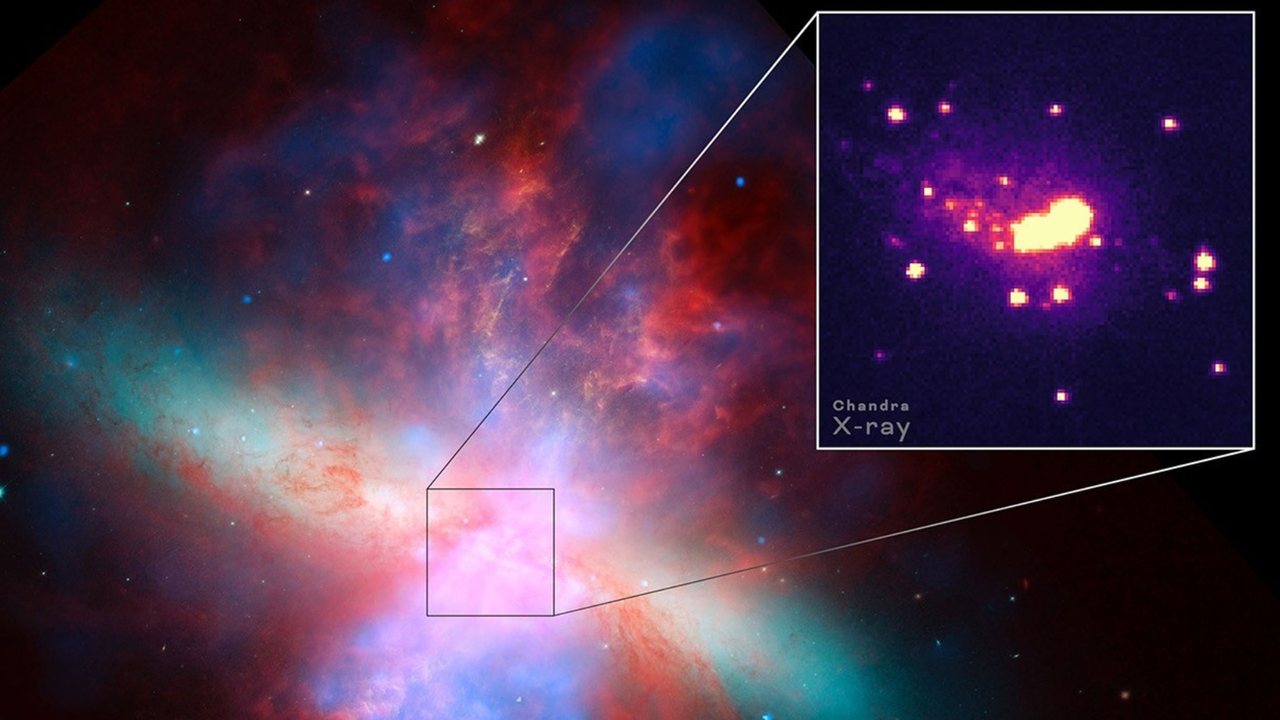
NASA’s X-ray spacecraft XRISM has made a groundbreaking discovery. It detected winds blowing from the star-forming galaxy Messier 82 (M82) at astonishing speeds of 2 million miles per hour. This galaxy, located about 12 million light-years away in the Ursa Major constellation, forms stars ten times faster than our Milky Way. Therefore, astronomers classify M82 as a “starburst galaxy.”
Experts believe these intense winds originate from the galaxy’s core, where supernovas and star formation heat up gas. Erin Boettcher, a team member from NASA’s Goddard Space Flight Center, explained that the XRISM mission allowed for precise measurements of these velocities. Previous models underestimated the speed of these winds, and now scientists recognize that they can reach the galactic edge.
Additionally, M82, often called the Cigar Galaxy, features winds filled with gas and dust that extend roughly 40,000 light-years into space. Space telescopes like Hubble and the James Webb Space Telescope have observed these outflows. The research aims to link these massive winds to stellar activity within M82, including the influence of cosmic rays.
XRISM measured the winds’ extraordinary speeds by analyzing X-ray radiation from superheated iron near M82’s center. The temperature there reaches a scorching 45 million degrees Fahrenheit. This heat generates immense pressure, propelling the winds outward, similar to how air moves in Earth’s atmosphere.
Remarkably, M82 expels the mass equivalent of seven suns each year due to these winds. This raises intriguing questions. If the wind travels steadily at the observed speed, astronomers wonder where the additional three solar masses of gas go. Is some gas escaping the galaxy through other mechanisms? Scientists are eager to find out.
XRISM will continue monitoring M82, which enhances our understanding of starburst galaxies. Previous models developed in the 1980s face new scrutiny as XRISM provides fresh data. This ongoing research offers valuable insights into the universe and informs future technological developments.
As scientists crack the galaxy’s mysteries, they also refine theories about the cosmos. All these advancements highlight the interconnectedness of science and technology, ultimately enriching our knowledge of the universe.
Expand Your Tech Knowledge
Dive deeper into the world of Cryptocurrency and its impact on global finance.
Discover archived knowledge and digital history on the Internet Archive.
SciV1
