

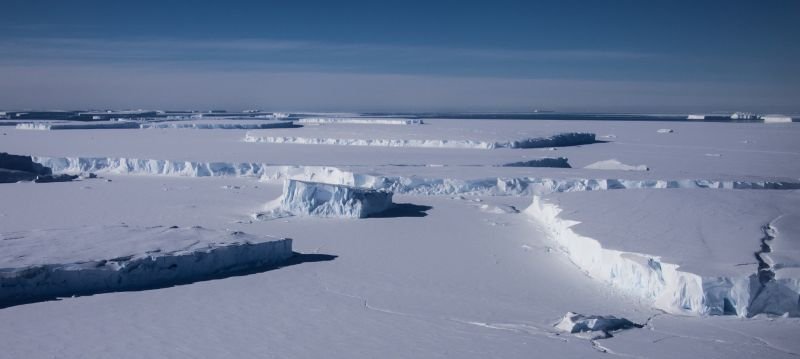
Fast Facts
- Thwaites Glacier is melting rapidly due to climate change, raising sea level concerns.
- The International Thwaites Glacier Collaboration is studying the glacier’s impact on coastlines.
- Over 1 trillion tons of ice melted since 2000, accelerating loss rates.
- Research teams aim to improve predictions about potential sea level rise.
The Urgent Challenge of Thwaites Glacier
Antarctica’s Thwaites Glacier is not just an ice mass; it is a sentinel of change. Researchers consider it “the glacier of greatest concern” due to its potential impact on global sea levels. Located in West Antarctica, this massive glacier, roughly the size of Florida, has already shed over 1 trillion tons of ice since 2000. Every year, its melting accelerates, raising alarm among scientists who fear catastrophic implications for coastlines worldwide. The International Thwaites Glacier Collaboration, a joint effort between the U.S. National Science Foundation and the U.K. Natural Environment Research Council, aims to unravel the complexities surrounding this glacier. The project mobilizes teams to study it from an array of perspectives: land, sea, and air.
Scientists like Erin Pettit and Ted Scambos emphasize the urgency of understanding Thwaites’ future. They underscore a grim reality: it is not a question of “if” sea levels will rise, but “when” and “how much.” Experts estimate that even a partial collapse of the glacier could raise sea levels significantly, endangering coastal cities. Researchers speculate that Thwaites harbors up to one meter of potential sea-level rise. Scientists worry about the warm ocean water melting the glacier from below, particularly at the precarious junction where ice meets sea. This critical point teeters on an underwater ridge, creating a situation where the glacier could rapidly degrade if conditions worsen.
Collaborative Research Efforts
To tackle this enormous task, the Thwaites project employs a multifaceted approach. Six research teams will conduct field studies over the next three years to capture a comprehensive understanding of the glacier’s dynamics. They aim to answer pressing questions about how Thwaites has behaved in the past and predict its future movements. These investigations require extensive logistical coordination. Researchers transport thousands of tons of equipment and supplies through challenging Antarctic terrains and icy waters, showcasing the commitment to this vital research.
Collaboration extends beyond U.S. and U.K. teams. Scientists from South Korea, Sweden, Germany, Norway, Finland, and France contribute expertise to the effort. They work together to refine models that will accurately project Thwaites’ contributions to global sea rise. As researchers gather data, they deliver crucial insights into one of the climate crisis’s most urgent challenges. The complexity of glacier science demands cooperation across borders and disciplines, underscoring the shared responsibility for our planet’s future.
The fate of Thwaites Glacier holds significant implications for humanity. Understanding its trajectory is crucial for planning and managing coastal communities. As the researchers persist in their quest, they illuminate the pressing need for action in response to the challenges posed by climate change.
Expand Your Tech Knowledge
Stay informed on the revolutionary breakthroughs in Quantum Computing research.
Explore past and present digital transformations on the Internet Archive.
TechV1
