

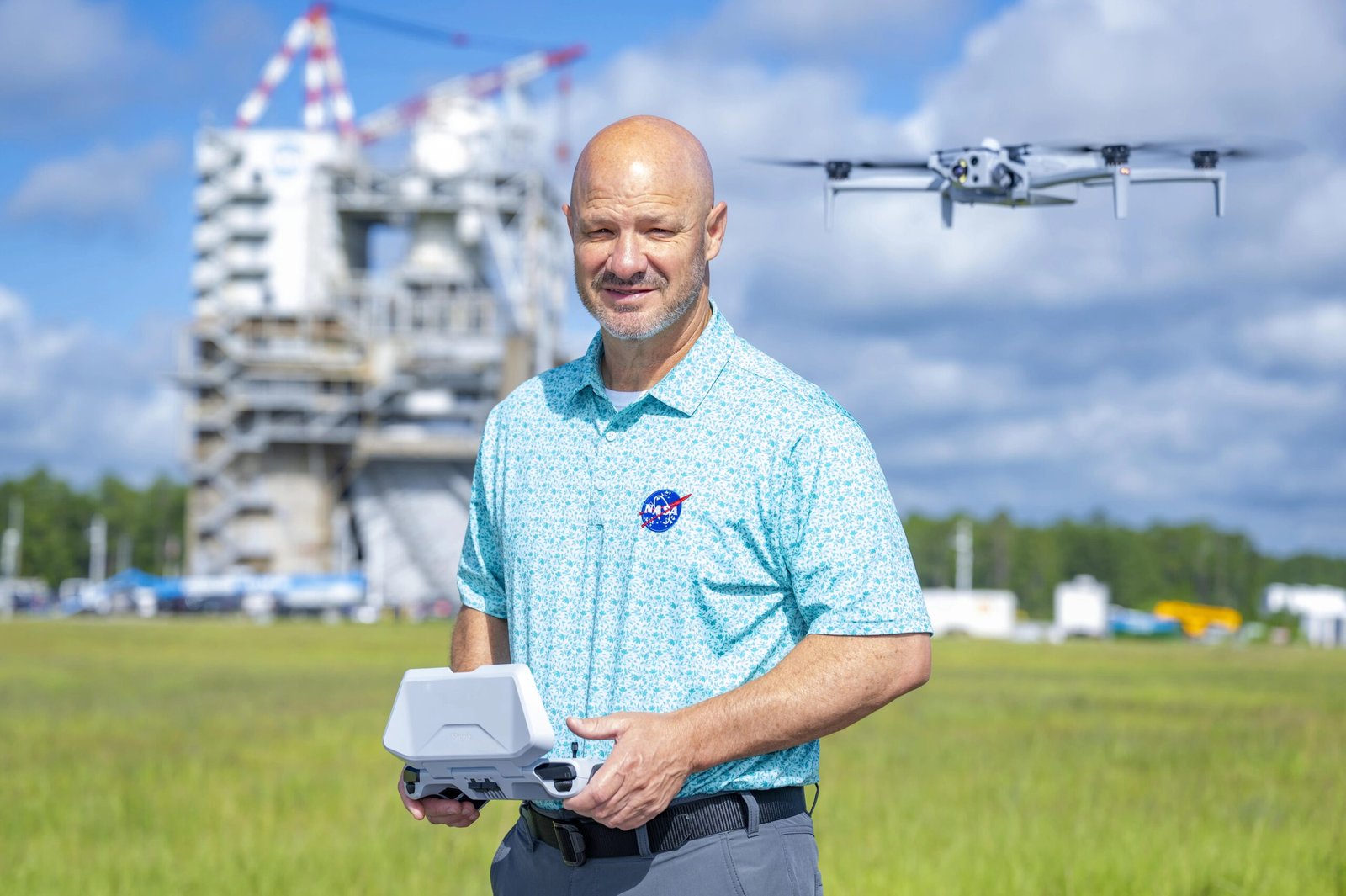
Fast Facts
- Jason Peterson’s role expanded significantly for NASA’s Artemis II mission.
- Growing up near NASA sparked Peterson’s dream of joining the agency.
- His military experience in the Air Force prepared him for intense workloads.
- Peterson played a key role in tracking the Orion capsule’s splashdown.
A Surreal Journey to NASA
Jason Peterson’s role in NASA’s Artemis II mission expanded far beyond his title as range operations manager at the Stennis Space Center in Mississippi. This pivotal role marked a full-circle moment for Peterson, who grew up in DeLisle, just miles from NASA. “You would hear NASA testing, the windows would shake, and you knew they were out there,” he recalls. The sounds of rocket testing ignited his imagination and aspirations, even as he never dreamed he would eventually work for the agency.
Peterson’s path to NASA was unconventional. He started his career in welding, moved on to college, and then served in the U.S. Air Force. His military background spanned 24 years, mainly in airfield and air-to-ground range operations. This experience enabled him to handle the demanding 12- to 16-hour workdays that accompanied the Artemis II mission, which aimed to send astronauts around the Moon.
During the mission, Peterson was integral in supporting video and communication feeds for the launch of NASA’s Space Launch System (SLS) rocket with a crew aboard the Orion spacecraft. He played a vital role in the nearly 10-day mission, which saw astronauts traverse 252,756 miles from Earth. Peterson’s work culminated in a high-impact moment: he was the first on the USS John P. Murtha to locate and track the returning capsule.
Laser-Focused Operation and Future Prospects
Using a high-resolution, multi-sensor camera system, Peterson tracked Orion as it re-entered Earth’s atmosphere from over 400,000 feet. Traveling nearly 35 times the speed of sound, his focus was crucial as he monitored the capsule’s descent. “You are fully locked in, keeping it centered, in focus, and steady,” Peterson explained.
Weeks before the launch, Peterson was at NASA’s Kennedy Space Center in Florida, coordinating crucial systems checks. His work involved preparing and positioning high-resolution cameras and drones to ensure live video coverage of the event. On launch day, he operated drones to capture the scene, maintaining an acute focus on precision amidst the frenzy of preparations.
As Artemis II progressed, Peterson transitioned to San Diego to prepare for the capsule’s splashdown. His team installed high-fidelity cameras to document this historic event. The successful return of the Artemis II crew not only marked a significant achievement but also set the stage for future missions. Next in line is Artemis III, which will further the ambitions of lunar exploration. With experts like Peterson contributing their skills, the journey into space continues to evolve, bridging the gap between dream and reality.
Stay Ahead with the Latest Tech Trends
Dive deeper into the world of Cryptocurrency and its impact on global finance.
Stay inspired by the vast knowledge available on Wikipedia.
Space
