

Top Highlights
- NASA and IBM released an AI model to analyze lunar data.
- The model helps map craters, find volcanic features, and locate water ice.
- It simplifies exploration of NASA’s extensive lunar scientific data.
- AI advances aim to boost discoveries and increase scientific productivity.
NASA and IBM Launch New AI Model for Studying the Moon
NASA has teamed up with IBM to develop a new artificial intelligence (AI) model to analyze lunar data more efficiently. This collaboration aims to help scientists better understand the moon’s surface and find new discoveries more quickly. The new model is called the NASA-IBM Lunar Foundation Model. It is now available for free on Hugging Face, an open-source platform that hosts AI tools.
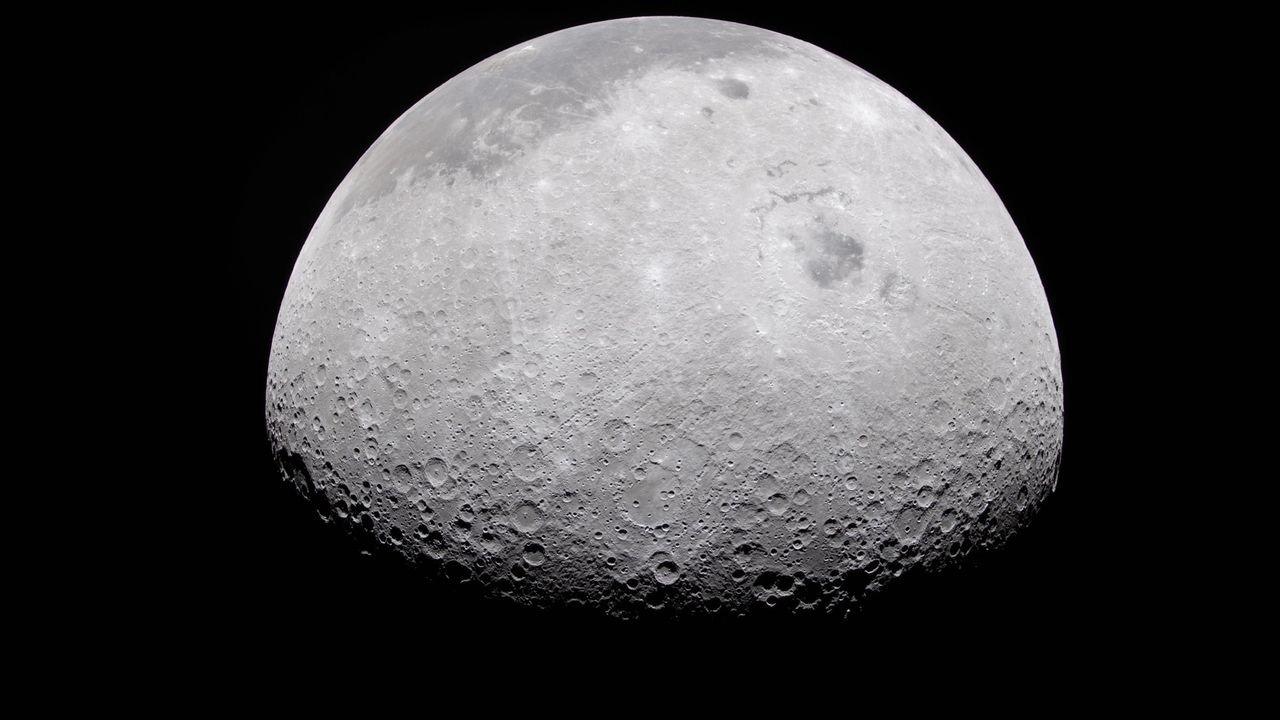
NASA has collected a vast amount of data during its decades of lunar missions. The Lunar Reconnaissance Orbiter (LRO), a NASA spacecraft orbiting the moon since 2009, has gathered more information than all of NASA’s other planetary missions combined. This data includes high-resolution images, maps, and measurements of the lunar surface. Analyzing all this information takes a lot of time and effort from researchers. That’s where AI can make a difference.
The goal of the new AI model is to help scientists process and interpret the moon’s data more easily. According to NASA, it can assist with tasks like mapping craters, identifying young volcanic features, and locating water ice near the lunar poles. These are key areas for future exploration and potential human settlement. NASA’s Kevin Murphy, chief science data officer, said the model makes it easier to explore the data and unlock new scientific discoveries.
Advancing Lunar Science with AI
The AI model was mostly trained on images and data from the LRO mission. Over the past 17 years, the spacecraft has built a nearly complete, high-definition mosaic of the moon’s surface. This extensive dataset provides a detailed view of lunar features, but analyzing it manually would take years. With the new AI, researchers can quickly sift through this wealth of information and identify important features. The model is designed to turn large amounts of data into insights, helping scientists make discoveries faster.
NASA has been exploring AI tools to support scientific work for some time. Previous models focused on Earth observation and heliophysics (the study of the sun and solar environment). The Lunar Foundation Model builds on these efforts, showing how AI can be adapted for planetary science. Space agencies worldwide are interested in these technologies as they aim to improve analysis and reduce costs. AI can streamline workflows and support more ambitious exploration plans.
“The NASA-IBM Lunar Foundation Model shows what’s possible when you bring AI into planetary science,” Murphy stated. “We see a real opportunity to turn large-scale data into new discoveries.” This project exemplifies how AI can help unlock the secrets of the moon, using the vast amounts of data collected over decades of missions.
As the field evolves, more AI models may be developed for different celestial bodies and scientific tasks. NASA’s partnership with IBM represents a promising step toward a future where artificial intelligence helps drive space research and exploration.
Expand Your Tech Knowledge
Stay informed on the revolutionary breakthroughs in Quantum Computing research.
Discover archived knowledge and digital history on the Internet Archive.
Space
