

Fast Facts
- NASA completed the Lunar Environment Monitoring Station (LEMS) for Artemis Moon missions.
- LEMS will deploy sensitive seismometers to study moonquakes and lunar interior.
- Designed for durability, LEMS operates independently, enduring extreme lunar temperatures.
- The instrument supports future lunar science, exploration, and safer astronaut missions.
NASA Completes Essential Science Instrument for the Upcoming Lunar Missions
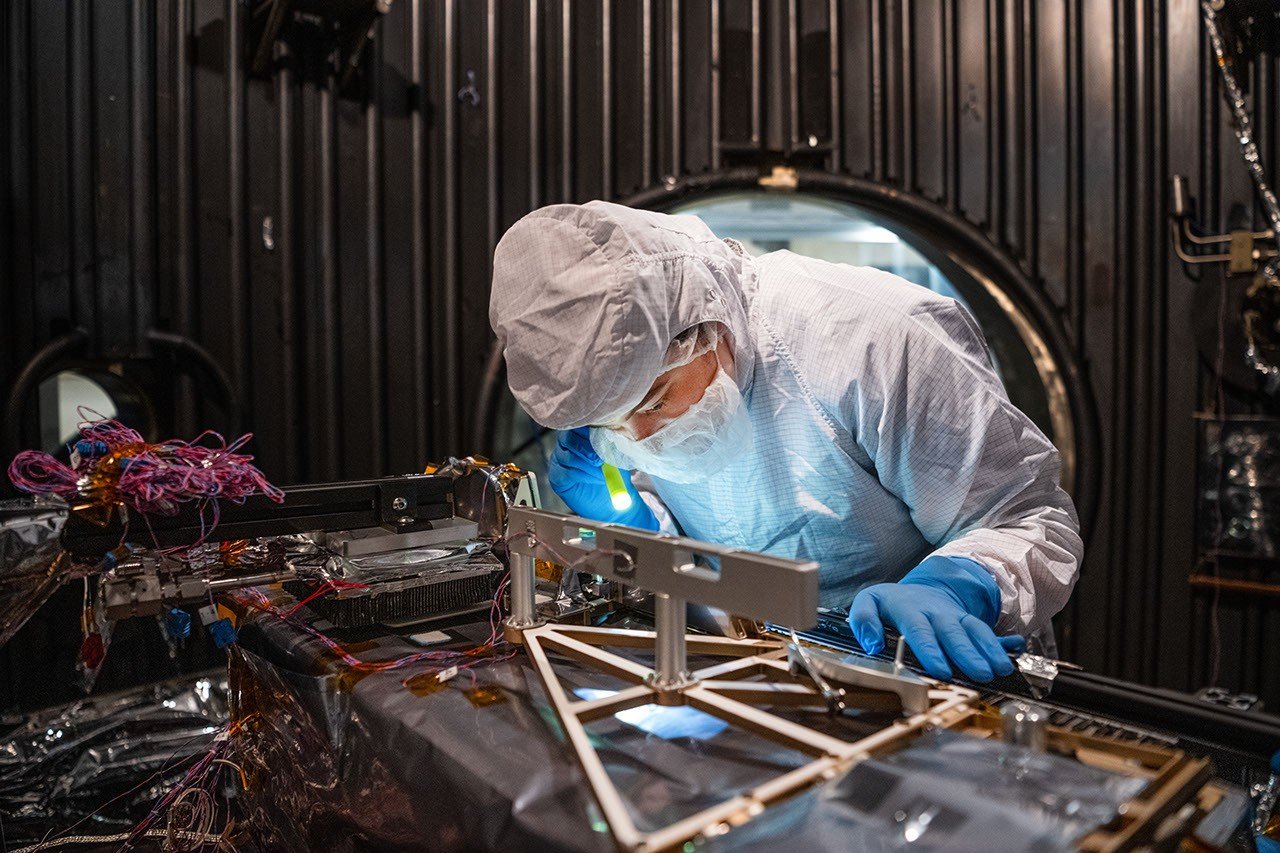
NASA has finished building and testing a new scientific tool designed for astronauts to deploy on the Moon. This instrument is part of the Lunar Environment Monitoring Station (LEMS) and is dedicated to studying the Moon’s interior and seismic activity. Once deployed near the lunar South Pole, LEMS will help scientists learn more about the Moon’s structure and the hazards astronauts might face on the surface.
The LEMS payload includes two sensitive seismometers that detect ground vibrations caused by moonquakes and meteorite impacts. These sensors will gather valuable data about what goes on beneath the lunar surface. They provide a new, detailed look at the Moon’s internal makeup—something scientists have wanted for decades. The instrument’s modular design allows future upgrades or additional tools to be added easily, making it a flexible platform for ongoing lunar research. Currently, LEMS sits in a clean room at NASA’s Goddard Space Flight Center in Maryland, awaiting assignment to an Artemis mission for actual moon deployment.
According to NASA officials, the completion of LEMS marks a major step forward for lunar science. Joel Kearns, a NASA scientist, emphasized that experiments like LEMS will unlock many secrets about the Moon and help prepare safe, sustainable exploration. Behind the scenes, teams across NASA and partner organizations have worked hard to develop innovative instruments that will support future missions and expand humanity’s reach on the Moon.
Building a Legacy of Lunar Seismic Science
LEMS continues a long tradition of lunar seismic research that began during the Apollo missions. Between 1969 and 1972, Apollo astronauts deployed seismometers on the Moon’s nearside region. These early devices recorded about 13,000 moonquakes and other ground vibrations. The data helped scientists understand that the Moon has a layered interior and seismic activity, but the instruments ceased operation in 1977. Since then, scientists have hoped to enhance seismic studies with modern technology and broader coverage.
LEMS will be the first to carry new seismometers designed for future human missions. These sensors are the most compact, sensitive, and energy-efficient ever made for planetary exploration. LEMS weighs just 11 pounds—about the size of a small suitcase—in the Moon’s low gravity. It will operate independently, managing its power from a lightweight solar array that conforms to its shape. The device will run on a pre-set plan, transmitting data to Earth every month, and will maintain a stable temperature despite extreme temperature swings at the lunar South Pole.
Before deploying, LEMS underwent extensive testing to ensure it can survive launch shocks and the harsh environment of the lunar surface. Engineers verified it can endure temperature drops as low as minus 400°F, radiation, and the vibrations of travel to the Moon. The instrument uses advanced insulation materials and innovative thermal management systems to stay operational during the two-week lunar night without external power or heaters. These improvements enable lighter, more energy-efficient instruments that will support future Artemis landings and the upcoming Moon Base.
LEMS is led by the University of Maryland Baltimore County and the University of Maryland College Park. NASA’s Goddard Space Flight Center guides its technical development. The University of Arizona, partnering with Silicon Audio, Inc., supplied the seismometers. Morehead State University in Kentucky will handle the telecommunication system and operate the instrument on the surface. Washington University in St. Louis will oversee data processing and sharing with the scientific community.
Stay Ahead with the Latest Tech Trends
Learn how the Internet of Things (IoT) is transforming everyday life.
Explore past and present digital transformations on the Internet Archive.
Space
