

Summary Points
- MIT developed AI that matches X-rays to preoperative 3D scans in seconds.
- The system, called xvr, adapts to individual patients within about five minutes.
- It achieves high precision, improving safety and speed in minimally invasive surgeries.
- This innovation could expand access to life-saving procedures in remote or emergency settings.
Innovative AI Technique Enhances Surgical Precision
MIT researchers have developed a new AI method called xvr that improves the safety and accuracy of minimally invasive surgeries. During these procedures, doctors use real-time X-ray images to guide tiny instruments inside the body. However, X-ray images are flat and make it hard to locate tools precisely. Traditionally, clinicians manually align these images with preoperative scans like CTs or MRIs, which can be slow and prone to errors. Existing AI tools struggle to perform this alignment reliably across different patients and situations.
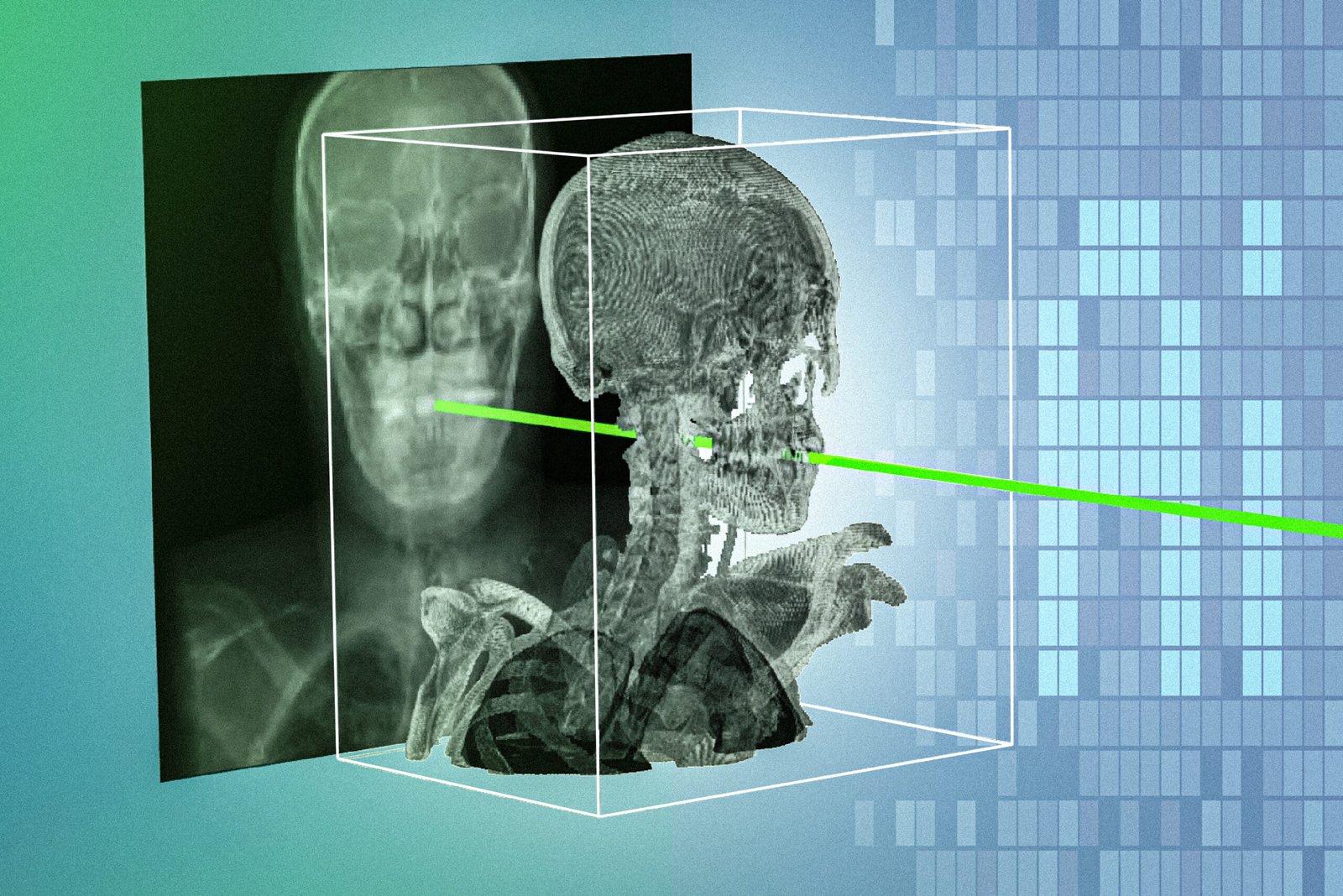
The xvr system automatically matches a patient’s X-ray images to their 3D scans within seconds. It adapts to each patient by creating thousands of synthetic X-rays from their scans using physics-based simulation. This approach ensures realistic images without hallucinations. The AI then aligns real X-ray images with the patient-specific data, offering sub-millimeter accuracy. It takes only about five minutes to personalize the model for a new patient, making it faster than previous methods. Testing shows xvr outperforms older AI systems in accuracy and speed, even during emergency procedures. This advancement could enable safer, quicker surgeries and improve robotic surgical tools, especially in areas with limited access to specialized care.
Implications and Future Directions
Xvr’s ability to accurately match real-time X-rays with preoperative 3D scans can make procedures safer and more accessible. Since many Americans live far from advanced medical centers, faster and more reliable guidance could broaden access to life-saving surgeries like stroke interventions. The technology’s speed and robustness show promise for integrating into clinical settings, including robotic surgeries and emergency care.
Researchers plan to further optimize xvr for real-time use, test its reliability in various scenarios, and expand its capabilities for more complex procedures. By collaborating with surgical robotics companies and hospitals, they aim to turn this AI tool into a practical, widely used solution. While promising, widespread adoption will depend on validation in diverse clinical environments and ensuring that the system can handle moving organs and other real-world complexities.
Stay Ahead with the Latest Tech Trends
Stay informed on the revolutionary breakthroughs in Quantum Computing research.
Stay inspired by the vast knowledge available on Wikipedia.
QuantumV1
