
Close Menu
    Facebook X (Twitter) Instagram
    Monday, June 29
    Top Stories:
    • Australia to Double Fines for Children’s Social Media Violations
    • Intriguing Interstellar Visitor Sparks Search for Alien Technology
    • Breakthrough FDA-Approved Drug Paves Way to Defeat Rare Liver Cancer with Immunotherapy
    Facebook X (Twitter) Instagram Pinterest Vimeo
    IO Tribune
    • Home
    • AI
    • Tech
      • Gadgets
      • Fashion Tech
    • Crypto
    • Smart Cities
      • IOT
    • Science
      • Space
      • Quantum
    • OPED
    IO Tribune
    Home » MIT Physicists Uncover Key Superconductivity Insights in Magic-Angle Graphene
    Quantum

    MIT Physicists Uncover Key Superconductivity Insights in Magic-Angle Graphene

    Staff ReporterBy Staff ReporterJune 29, 2026No Comments2 Mins Read
    Share Facebook Twitter Pinterest LinkedIn Tumblr Reddit Telegram Email
    Share
    Facebook Twitter LinkedIn Pinterest Email

    Top Highlights

    1. MIT and Harvard directly measured superfluid stiffness in magic-angle graphene.
    2. New method enabled measurement in ultra-thin, two-dimensional superconducting materials.
    3. Results suggest quantum geometry influences superconductivity more than conventional theories.
    4. Findings advance understanding of 2D superconductors, aiding future quantum device development.

    Measuring Superfluid Stiffness in Magic-Angle Graphene

    Superconductors allow electricity to flow without resistance, similar to a carpool lane that helps cars move faster. Electrons team up and move smoothly through materials, but how easily they do this depends on certain conditions. One key factor is “superfluid stiffness,” which measures how easily a superconductor’s electron pairs can move. It shows how strongly the material can support superconductivity.

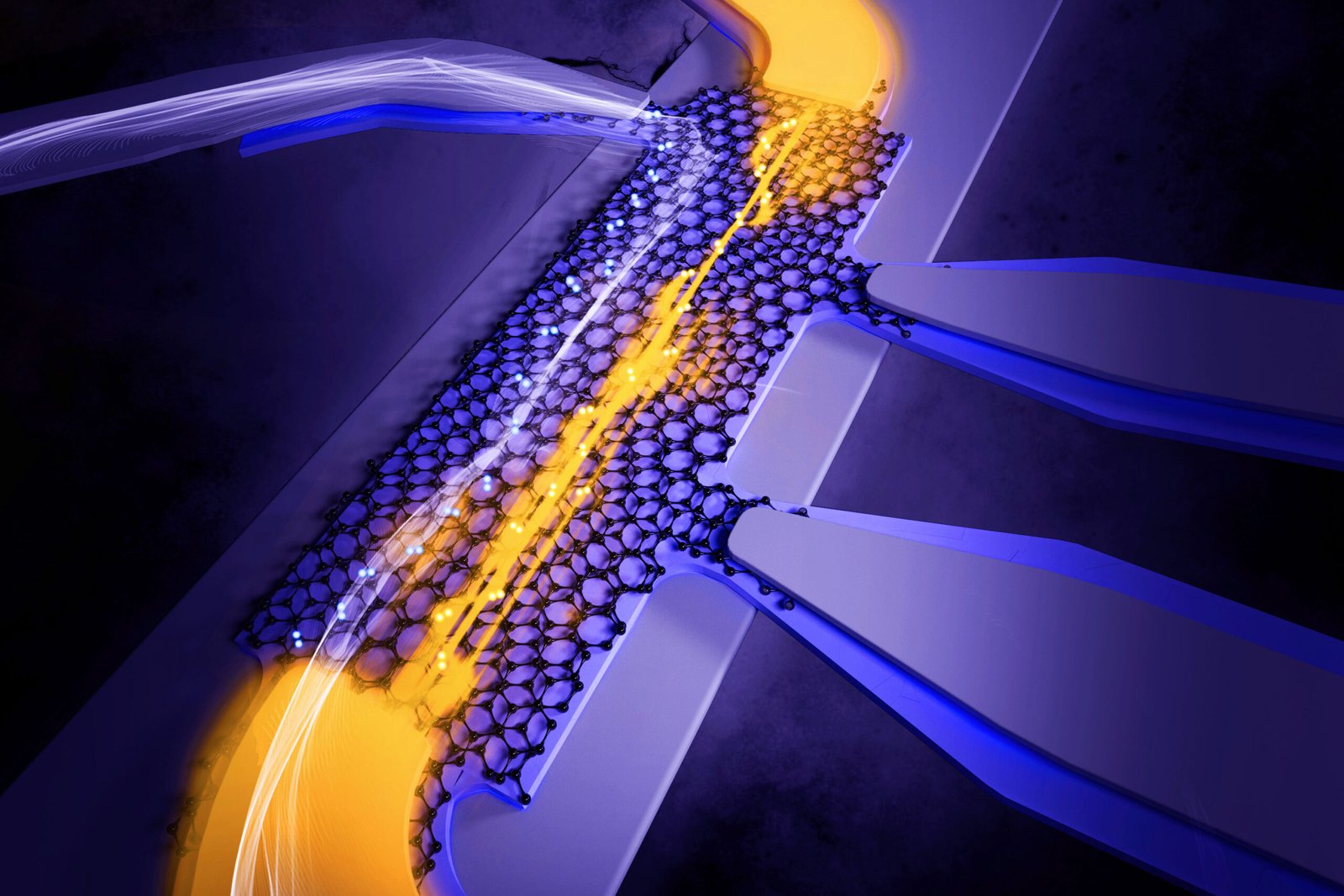
    Researchers at MIT and Harvard have made a breakthrough by measuring this property directly in “magic-angle” graphene for the first time. This special material is made from two sheets of graphene twisted at just the right angle. Such twisting creates unusual properties, including the ability to superconduct. Despite its promise, scientists don’t fully understand how magic-angle graphene becomes superconductive. Knowing its superfluid stiffness helps clarify this mystery.

    To do this, the team developed a new method involving a microwave resonator—a device that vibrates at certain frequencies. They attached the delicate graphene to a resonator made mostly of aluminum, which is known for its superconducting qualities. When they sent microwave signals through this setup, they observed changes in the device’s resonance. These changes reveal the superfluid stiffness of the material.

    Their measurements showed that magic-angle graphene’s superfluid stiffness is much higher than previously expected. This suggests that a concept called “quantum geometry” plays a significant role in its superconductivity. The findings could help scientists better understand how this material works and guide future research on two-dimensional superconductors.

    This new measurement method opens the door to studying other thin superconducting materials. Since many such materials are still unexplored, this work paves the way for advancements in quantum technology and next-generation electronic devices.

    Continue Your Tech Journey

    Learn how the Internet of Things (IoT) is transforming everyday life.

    Explore past and present digital transformations on the Internet Archive.

    QuantumV1

    Cooper pairs cQED HPC Innovation Joel Wang kinetic inductance magic-angle twisted bilayer graphene MATBG microwave resonator Miuko Tanaka Pablo Jarillo-Herrero Quantum quantum geometry Quantum materials Superconducting qubit superconductivity Superfluid stiffness VT1 William Oliver
    Share. Facebook Twitter Pinterest LinkedIn Tumblr Email
    Previous ArticleQualinx QLX3Gx: Secure GPS for Low-Power Devices
    Next Article Australia to Double Fines for Children’s Social Media Violations
    Avatar photo
    Staff Reporter
    • Website

    John Marcelli is a staff writer for IO Tribune, with a passion for exploring and writing about the ever-evolving world of technology. From emerging trends to in-depth reviews of the latest gadgets, John stays at the forefront of innovation, delivering engaging content that informs and inspires readers. When he's not writing, he enjoys experimenting with new tech tools and diving into the digital landscape.

    Related Posts

    Tech

    Australia to Double Fines for Children’s Social Media Violations

    June 29, 2026
    IOT

    Qualinx QLX3Gx: Secure GPS for Low-Power Devices

    June 29, 2026
    Tech

    Intriguing Interstellar Visitor Sparks Search for Alien Technology

    June 29, 2026
    Add A Comment

    Comments are closed.

    Must Read

    Australia to Double Fines for Children’s Social Media Violations

    June 29, 2026

    MIT Physicists Uncover Key Superconductivity Insights in Magic-Angle Graphene

    June 29, 2026

    Qualinx QLX3Gx: Secure GPS for Low-Power Devices

    June 29, 2026

    Intriguing Interstellar Visitor Sparks Search for Alien Technology

    June 29, 2026

    Why I Switched to Multi-Agent Pipeline

    June 29, 2026
    Categories
    • AI
    • Crypto
    • Fashion Tech
    • Gadgets
    • IOT
    • OPED
    • Quantum
    • Science
    • Smart Cities
    • Space
    • Tech
    Most Popular

    Bose Revamps QuietComfort Ultra with Lossless Audio & Extended Battery Life!

    September 7, 2025

    Meet the New Style Icon: DiffusionGemma

    June 10, 2026

    Will $8.3B Bitcoin Options Expiry Spark Another Drop?

    January 30, 2026
    Our Picks

    Unlocking Secrets of Earth’s Greatest Threat

    May 26, 2025

    Anthropic Challenges OpenAI-Backed AI Liability Bill

    April 14, 2026

    Hotstuff Labs Unveils Hotstuff: The DeFi Layer 1 Bridging On-Chain Trading and Global Fiat

    December 6, 2025
    Categories
    • AI
    • Crypto
    • Fashion Tech
    • Gadgets
    • IOT
    • OPED
    • Quantum
    • Science
    • Smart Cities
    • Space
    • Tech
    • Privacy Policy
    • Disclaimer
    • Terms and Conditions
    • About Us
    • Contact us
    Copyright © 2025 Iotribune.comAll Rights Reserved.

    Type above and press Enter to search. Press Esc to cancel.