

Essential Insights
- NASA’s Artemis III mission will test docking between Orion and commercial landers.
- This mission is crucial for reducing risks ahead of Artemis IV lunar landing.
- Artemis III will utilize a “spacer” instead of an upper rocket stage.
- NASA aims to refine mission plans, including astronaut training and communications.
NASA Outlines Preliminary Artemis III Mission Plans
NASA is fast-tracking the Artemis III mission, scheduled for next year. This crewed flight will take place in Earth orbit and will focus on testing essential rendezvous and docking capabilities. These systems will facilitate connections between the agency’s Orion spacecraft and commercial landers developed by Blue Origin and SpaceX. Recent announcements about adding Artemis III to the mission timeline aim to lay the groundwork for upcoming crewed lunar landings in the Moon’s South Pole region.
“Artemis III is one of NASA’s most complex missions,” said Jeremy Parsons, Moon to Mars acting assistant deputy administrator. This mission will involve coordinating multiple spacecraft, integrating new capabilities into the Artemis operations. By designing these interrelated operations, NASA aims to ensure that the Orion spacecraft, crew, and ground teams interact seamlessly with commercial partners. This collaboration is vital for preparing for future lunar landings and establishing a lunar base.
Mission Objectives and Design
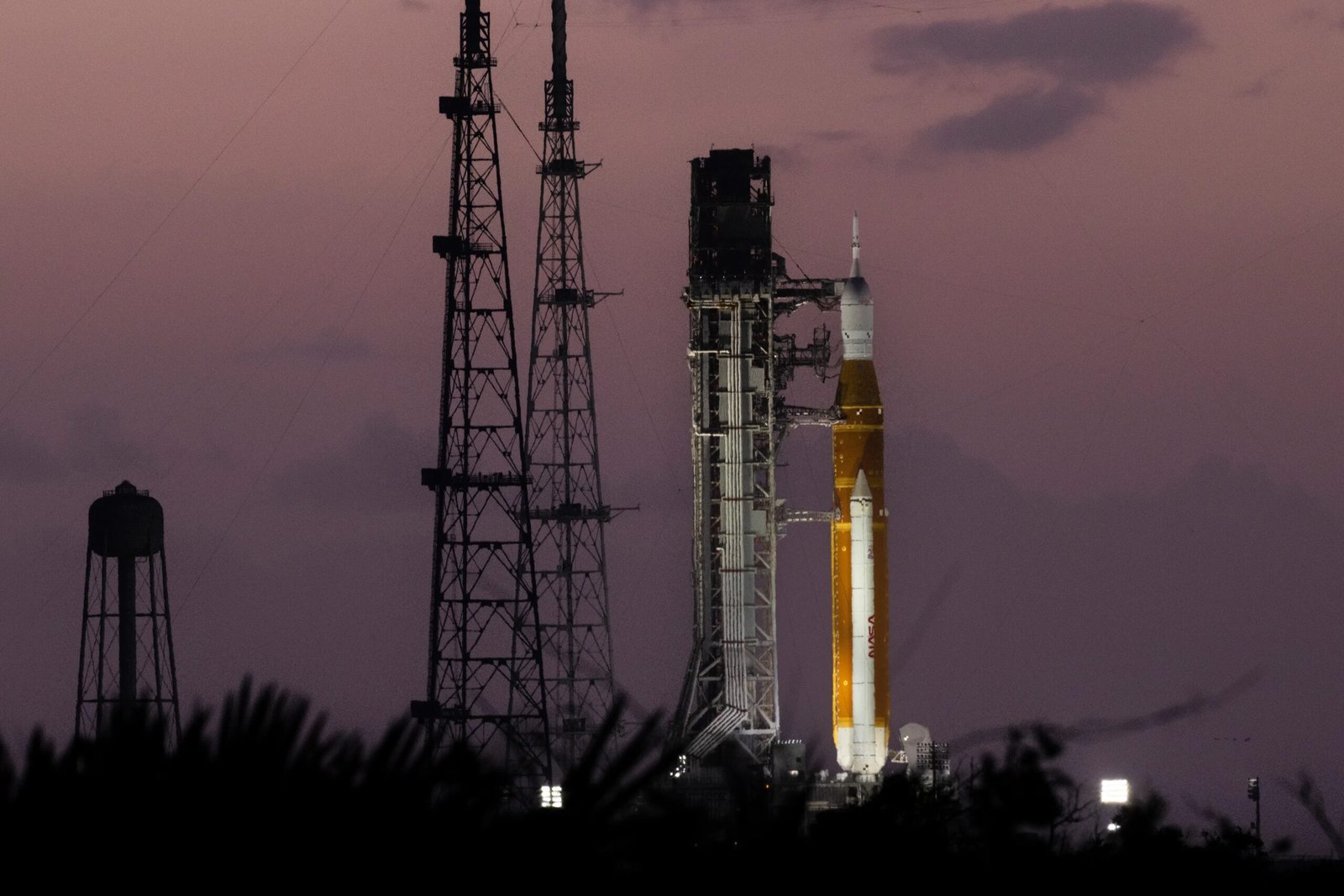
The Artemis III mission has a set of clearly defined objectives. The Space Launch System (SLS) rocket will carry the Orion spacecraft, which will have four crew members on board. Instead of the interim cryogenic propulsion stage usually employed, NASA will utilize a “spacer.” This spacer mimics the mass and dimensions of an upper stage but lacks propulsive capabilities. It keeps the same connection points between the launch vehicle and the Orion stage adapter.
NASA’s Marshall Space Flight Center is rapidly advancing the spacer’s design and fabrication. Production work on the barrel section and rings is already underway, with materials being machined in preparation for welding operations. Once launched into orbit, the European-built service module aboard Orion will help circularize its orbit around Earth. This low Earth orbit offers enhanced mission flexibility, allowing for more launch opportunities compared to a lunar mission.
NASA has also begun to shape the mission’s operational concepts, informed by the capabilities of Blue Origin and SpaceX. While specifics remain under review, astronauts may eventually engage with at least one lander test article during the flight. The crew will spend more time aboard Orion than in previous missions, enabling a thorough assessment of life support systems and the performance of the spacecraft’s docking system. The mission will also explore lander rendezvous and habitation concepts, paving the way for future lunar surface missions.
Future Considerations and Community Involvement
In the coming weeks, NASA will refine detailed plans for the Artemis III flight. Key activities will include identifying astronauts for training, evaluating Axiom’s AxEMU spacesuit interfaces, and determining mission duration and scientific objectives. As the mission planning progresses, NASA is actively soliciting input from the industry on communication solutions, given that the Deep Space Network won’t be in use during the mission.
Additionally, NASA is open to both international and domestic proposals to deploy CubeSats in Earth orbit during Artemis III. The agency’s approach is rooted in a commitment to innovation and exploration. This mission represents a step toward complex lunar explorations and the establishment of a sustainable human presence on the Moon. The lessons learned during Artemis III will be crucial for planning future crewed missions to Mars and beyond.
For further information and updates on Artemis, visit NASA’s Artemis program.
Stay Ahead with the Latest Tech Trends
Stay informed on the revolutionary breakthroughs in Quantum Computing research.
Explore past and present digital transformations on the Internet Archive.
Space
