

Fast Facts
- NASA’s Robotic Servicing of Geosynchronous Satellites mission launched July 21 via SpaceX.
- RSGS aims to enhance in-space servicing, extending spacecraft operational lifetimes significantly.
- DARPA funded RSGS, utilizing twin robotic arms developed by the Naval Research Laboratory.
- Collaboration between government and industry will test advanced robotics in space missions.
The Launch of the Robotic Servicing Mission
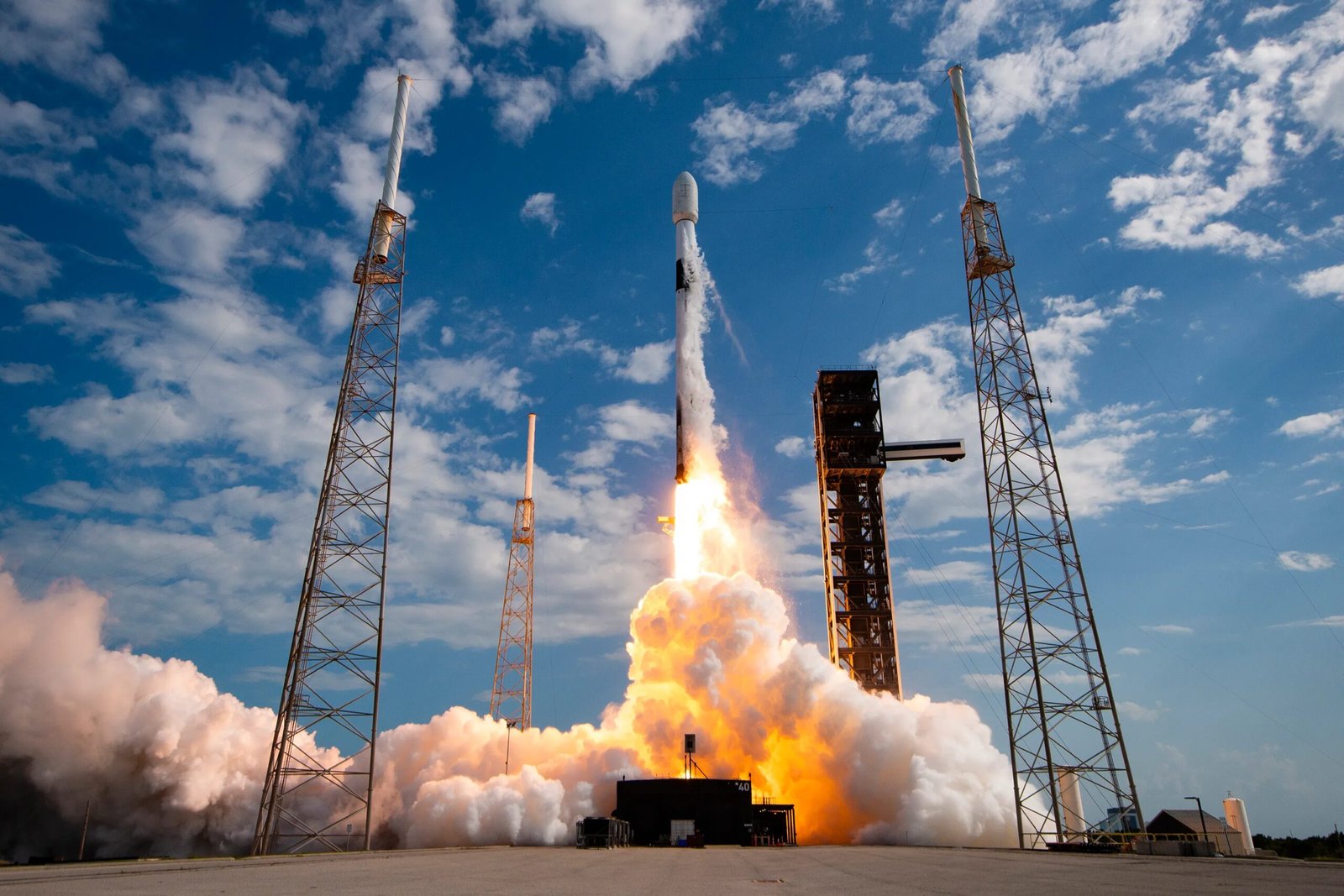
On July 21, a significant milestone in space technology took place. The Mission Robotic Vehicle (MRV) lifted off from Cape Canaveral aboard a SpaceX Falcon 9 rocket. It carries the Robotic Servicing of Geosynchronous Satellites (RSGS) payload, which aims to enhance the capabilities of satellites in orbit. Currently en route to geosynchronous Earth orbit, this mission will use advanced robotics to service existing spacecraft.
The RSGS program is noteworthy for its partnership between various government agencies and industry leaders. Funded by the Defense Advanced Research Projects Agency (DARPA), this initiative utilizes cutting-edge, in-space robotics. The twin robotic arms designed by the U.S. Naval Research Laboratory stand out for their dexterity and capability. These robotic arms will allow the MRV to perform inspections and upgrades on satellites, extending their operational life by adding mission extension pods. This innovative technology enables satellites to remain functional for years, reducing the need for new replacements.
Navigating the Future of Space Infrastructure
The RSGS mission celebrates a collaboration of expertise, including NASA’s contributions. The agency’s Goddard Space Flight Center began supporting RSGS in 2024 as part of an interagency agreement with DARPA. NASA brings its rich history of servicing missions, such as those for the Hubble Space Telescope and the Robotic Refueling Missions on the International Space Station. Its support includes developing advanced simulation and analysis tools, performance verification software, and a team of flight robot operators who will conduct complex operations in space.
With hundreds of satellites in geosynchronous orbit, many are decommissioned prematurely due to fuel depletion or outdated technology. The RSGS program addresses this issue by establishing a U.S. capability to extend spacecraft lifespan. The long-term vision is for more innovative and cost-effective mission designs. As space commerce and exploration evolve, the contributions of missions like RSGS will play a crucial role in enhancing operational efficiency and fostering economic opportunities. By leveraging robotic technology, the United States reinforces its position in space and lays the groundwork for future advancements in satellite management and servicing.
Discover More Technology Insights
Stay informed on the revolutionary breakthroughs in Quantum Computing research.
Explore past and present digital transformations on the Internet Archive.
Space
