

Essential Insights
-
People kept returning: White Sands footprints show people walked the shoreline for nearly 2,000 years, from about 23,500 to 21,700 years ago.
-
The landscape changed dramatically: Lake Otero shrank into a salty mudflat as drought and warming reshaped the region—sometimes within a human lifetime.
-
Children were part of the story: Most measured tracks were from children, alongside prints from mammoths, ground sloths, and other animals.
-
A climate puzzle remains: A brief White Sands drought coincided with abrupt Greenland warming, but scientists still don’t know how the distant climate shifts were connected.
A changing landscape, recorded in mud
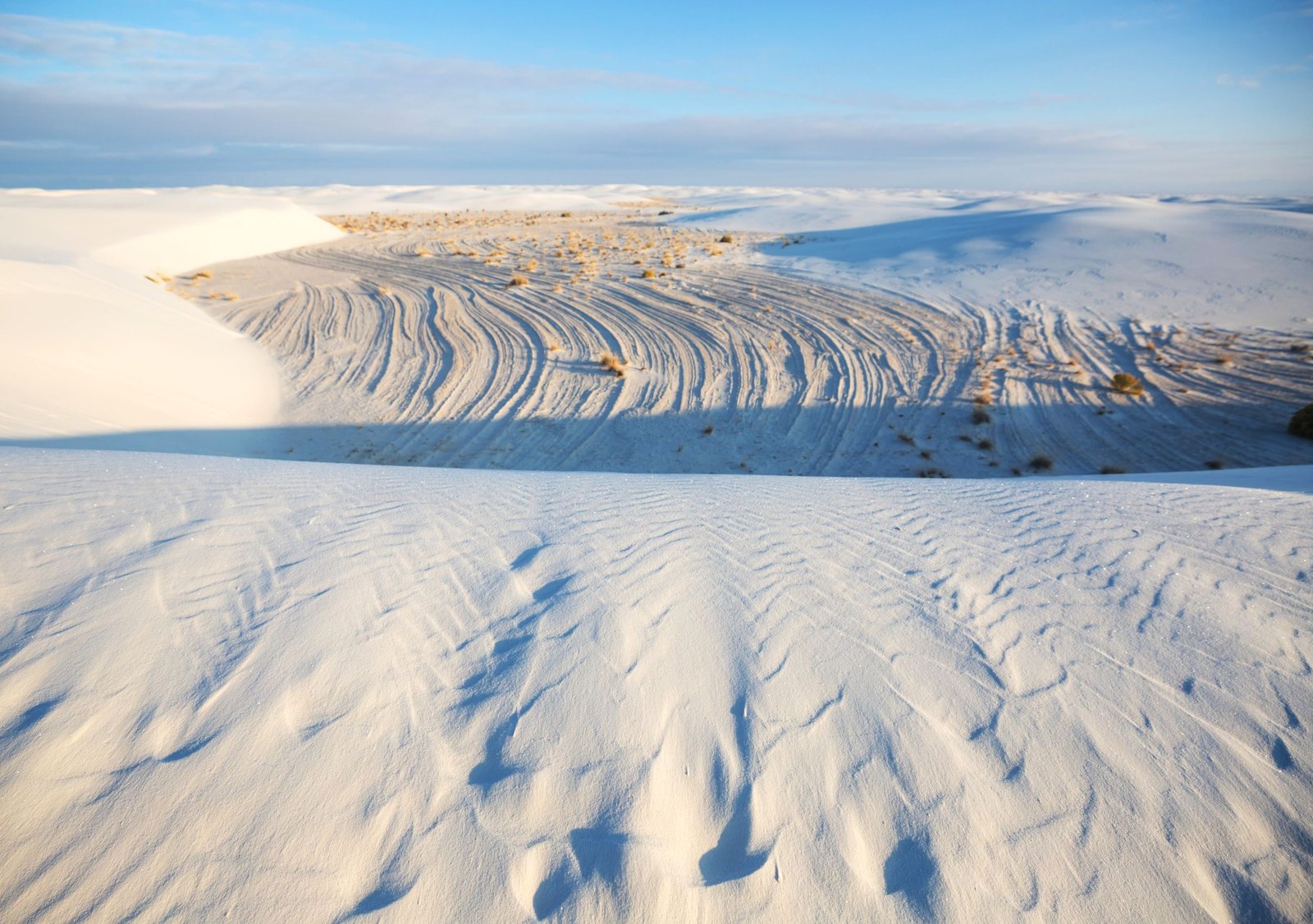
At White Sands in New Mexico, footprints preserve nearly 2,000 years of repeated visits during the last ice age. New dating places them between about 23,500 and 21,700 years ago.
Meanwhile, a lake shrank into a salty mudflat. Pine forests gave way to scrub, and a sharp drought arrived around 23,200 years ago. Later, water returned briefly. The landscape shifted within a human lifetime.
Clues to movement and survival
Researchers found 20 footprint layers, including many tracks likely made by children. Animal prints and marks from loads dragged on poles add further clues. The site shows people crossing the shoreline, not necessarily living there,researchers found no sign of a camp.
Pollen dates helped refine earlier estimates based on water plants, which may absorb old carbon from lake water. Still, footprint counts cannot tell us how many people lived in the region. Foot length also offers only an estimate of age.
A wider lesson, with limits
The record links local drought to a period of abrupt global climate change, but scientists do not yet know how warming near Greenland could have helped dry the Southwest. More sites and climate records could test whether this pattern reached beyond White Sands.
For people today, the tracks offer a vivid reminder: communities have long faced environmental change by returning to places that still offered food, water or safe passage. That lesson matters, but one ancient shoreline cannot provide a universal plan for modern drought. The evidence adds depth to the human story of the Americas and supports Native nations’ longstanding histories.
Discover More Technology Insights
Dive deeper into the world of Space and its vast mysteries.
Access comprehensive resources on space and science by visiting NASA.
ScienceV1
