

Summary Points
Gray whales are increasingly frequenting San Francisco Bay due to food shortages. Many have died from ship strikes during their migration from Mexico to Alaska. A new thermal camera system aims to detect whales and prevent collisions. The gray whale population is declining, highlighting the urgency of conservation efforts.
Addressing a Growing Concern for Gray Whales
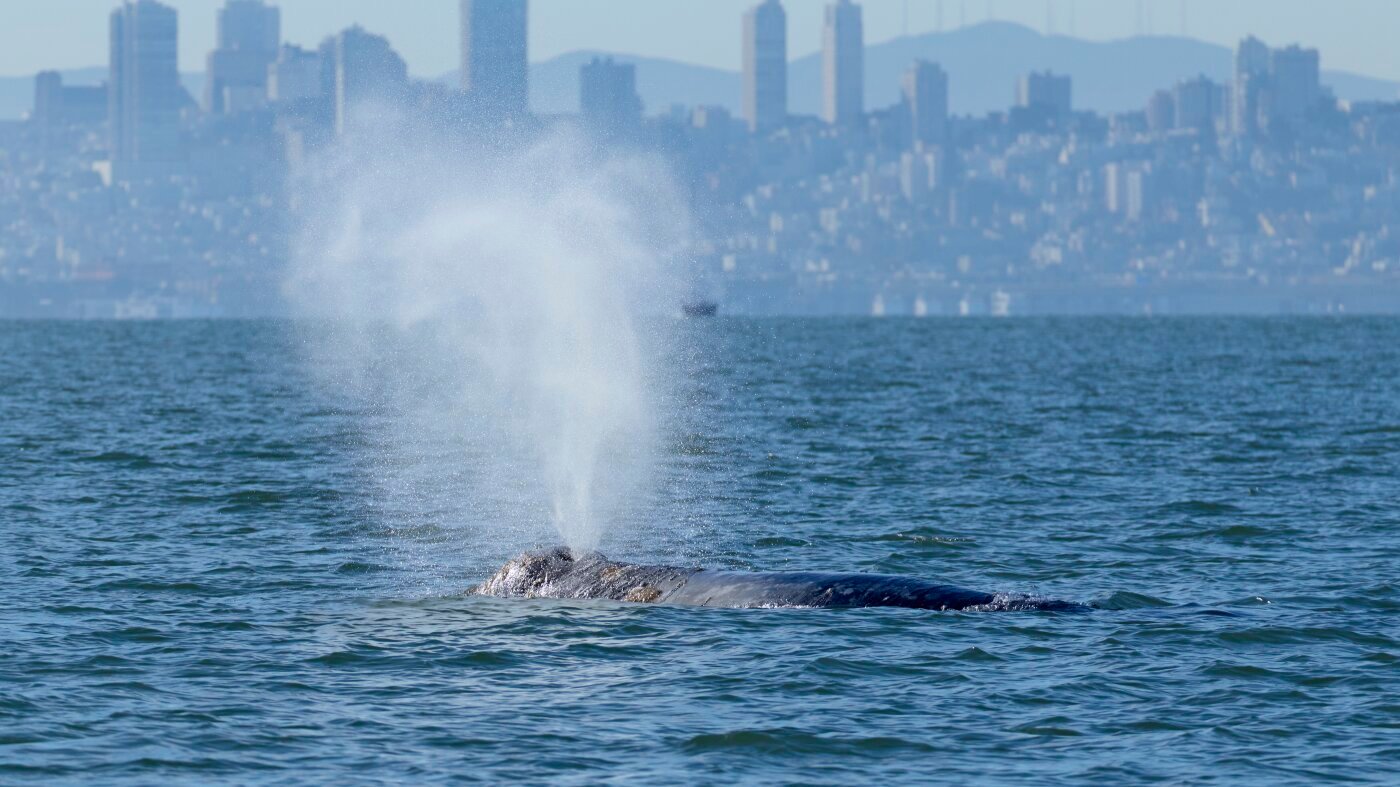
Gray whales are increasingly becoming a common sight in San Francisco Bay. Once rare in this bustling waterway, they now stop here during their long migrations from Mexico to Alaska. These whales are adapting to changing ocean conditions that impact their usual food sources in the Arctic. Unfortunately, their newfound foraging behavior places them in the path of ships, creating a dangerous situation.
This year, seven of the 16 gray whales spotted in the bay died, with evidence suggesting that ship strikes contributed to these tragic losses. Researchers and local officials recognize the urgent need to find solutions. A unique approach involves the installation of thermal cameras that can detect whale exhalations. By identifying these heat signatures, researchers can better track whale movements and alert nearby vessels.
The U.S. Coast Guard uses data from these cameras to notify ships of whale locations, helping to prevent dangerous encounters. Gary Reed, director of Vessel Traffic Service San Francisco, emphasizes that raising awareness about whale locations is crucial for reducing collisions. Early studies indicate that compliance with voluntary safety measures from shipping fleets has been promising, but the challenge remains particularly significant for larger vessels.
Technological Innovations in Marine Conservation
Recent advancements in technology play a critical role in marine conservation. The thermal cameras installed in San Francisco Bay represent a shift in how researchers can monitor marine wildlife. These cameras, sensitive enough to register the warmth of a whale’s breath, can function effectively both day and night. The WhaleSafe website, managed by the University of California, Santa Barbara, disseminates real-time data about whale sightings to assist in protecting these animals.
This initiative not only aims to safeguard whales but also showcases the potential of community-driven solutions. Although the current efforts are voluntary for ships, the collaboration between marine scientists and local ferry operators illustrates a united attempt to protect marine life. As the climate continues to change, researchers remain vigilant. The gray whale population, currently at about 13,000, is a fraction of what it once was, heightening the importance of these measures.
Maintaining a balance between shipping activities and marine conservation poses ongoing challenges. As gray whales adapt to new feeding grounds, the effectiveness of these technological innovations will play a vital role in their future. Innovations like heat-sensing cameras are not just tools, but lifelines for ensuring that these majestic creatures can traverse their migratory paths safely.
Discover More Technology Insights
Dive deeper into the world of Cryptocurrency and its impact on global finance.
Access comprehensive resources on technology by visiting Wikipedia.
Space
